Complete Engineering Guide to Edible Cooking Oil Bottling Lines: Sourcing Trends, Technical Innovations, and Performance Selection
Empowering global oil refiners, packaging procurement officers, and plant directors with actionable technical insights. Discover how net-weight precision, anti-drip filling heads, nitrogen flushing, and smart line automation drive measurable ROI for sunflower, palm, olive, and soybean oil packaging.
1. High-Gain Technical Overview: Solving Core Edible Cooking Oil Bottling Challenges
Procuring an Edible Cooking Oil Bottling Line requires addressing physical dynamic behaviors that standard liquid filling machines cannot handle. Unlike low-viscosity beverages or water, edible cooking oils—such as crude or refined sunflower oil, palm olein, extra virgin olive oil, soybean, corn, and mustard oil—exhibit temperature-dependent viscosity shifts, high surface tension, and a strong tendency to foam or drip during high-speed volumetric discharge.
At Zhangjiagang Osnib Machine Co., Ltd., our engineering department designs every oil packaging system to eliminate the three major profitability killers in oil packaging plants: product giveaway due to inaccurate volumetric filling, neck/label contamination caused by nozzle dripping, and shelf-life degradation resulting from residual oxygen headspace.
Viscosity & Temperature Control
Oil viscosity varies dynamically with ambient workshop temperatures. Our bottling lines integrate real-time temperature-compensated mass flowmeters or servo-driven piston metering to maintain high filling accuracy (±0.2%) across operating thermal ranges from 15°C to 45°C.
Anti-Drip & Clean Neck Design
Equipped with dual-stage vacuum suction back nozzles and cut-off valves, our filling heads ensure zero oil drops touch the container threads, eliminating downstream bottle wash steps and label peeling issues.
Nitrogen Injection & Antioxidant Preservation
Integrated liquid nitrogen dosing systems inject precise cryogenic N₂ doses into container neck space immediately prior to capping, displacing oxygen to below 1.0% to prevent lipid oxidation and extend oil shelf life.
Multi-Format PET & HDPE Versatility
Seamlessly changeover between 500ml round PET bottles, 1-Liter square containers, and 5-Liter large-format jerry cans with quick-change starwheels and digital servo recipe recalls in under 20 minutes.
2. Recommended Edible Cooking Oil Bottling Line Configurations
Depending on your targeted plant output, container format (0.25L to 5L PET, Glass, or HDPE), and product viscosity profile, Zhangjiagang Osnib Machine Co., Ltd. provides three tailored production line architectures optimized for maximum OEE (Overall Equipment Effectiveness).
Solution A: High-Speed Rotary Flowmeter / Net-Weight Oil Bottling Monoblock (4,000 – 12,000 BPH)
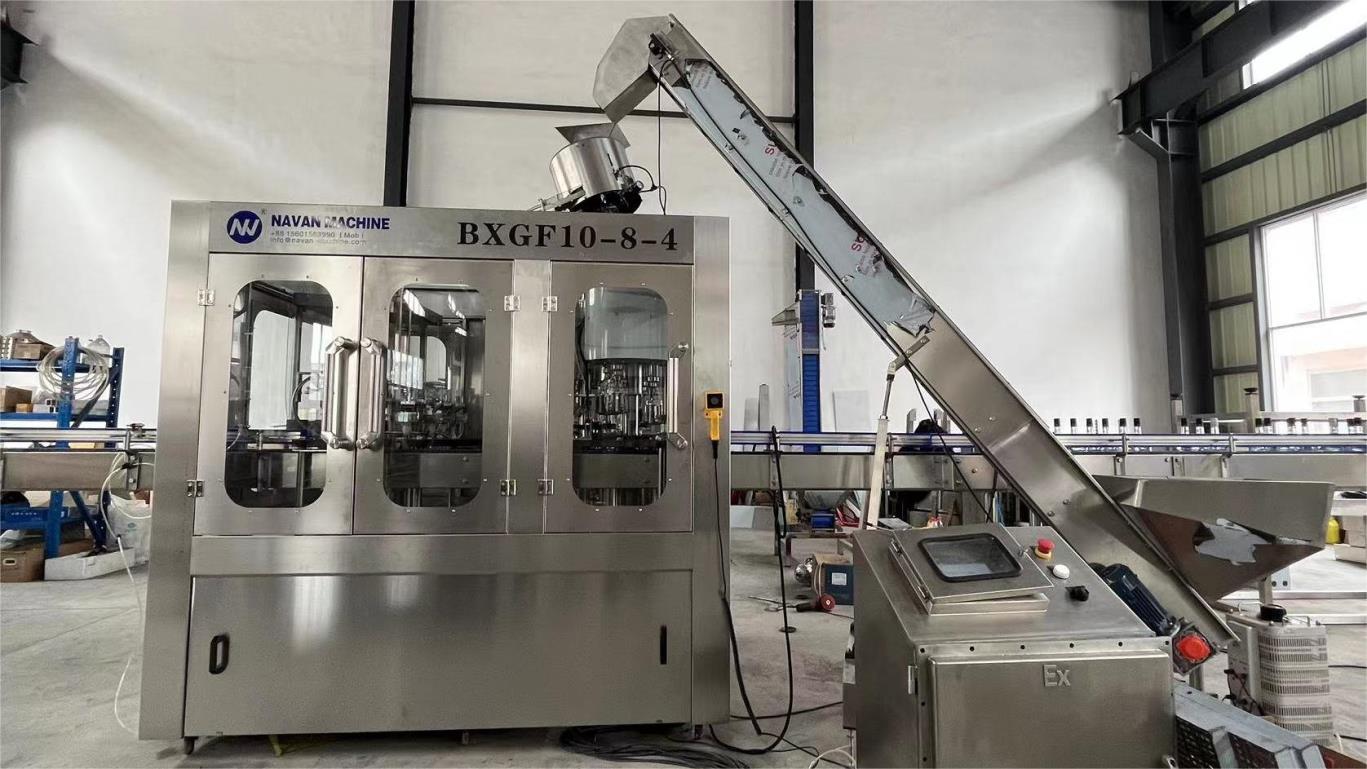
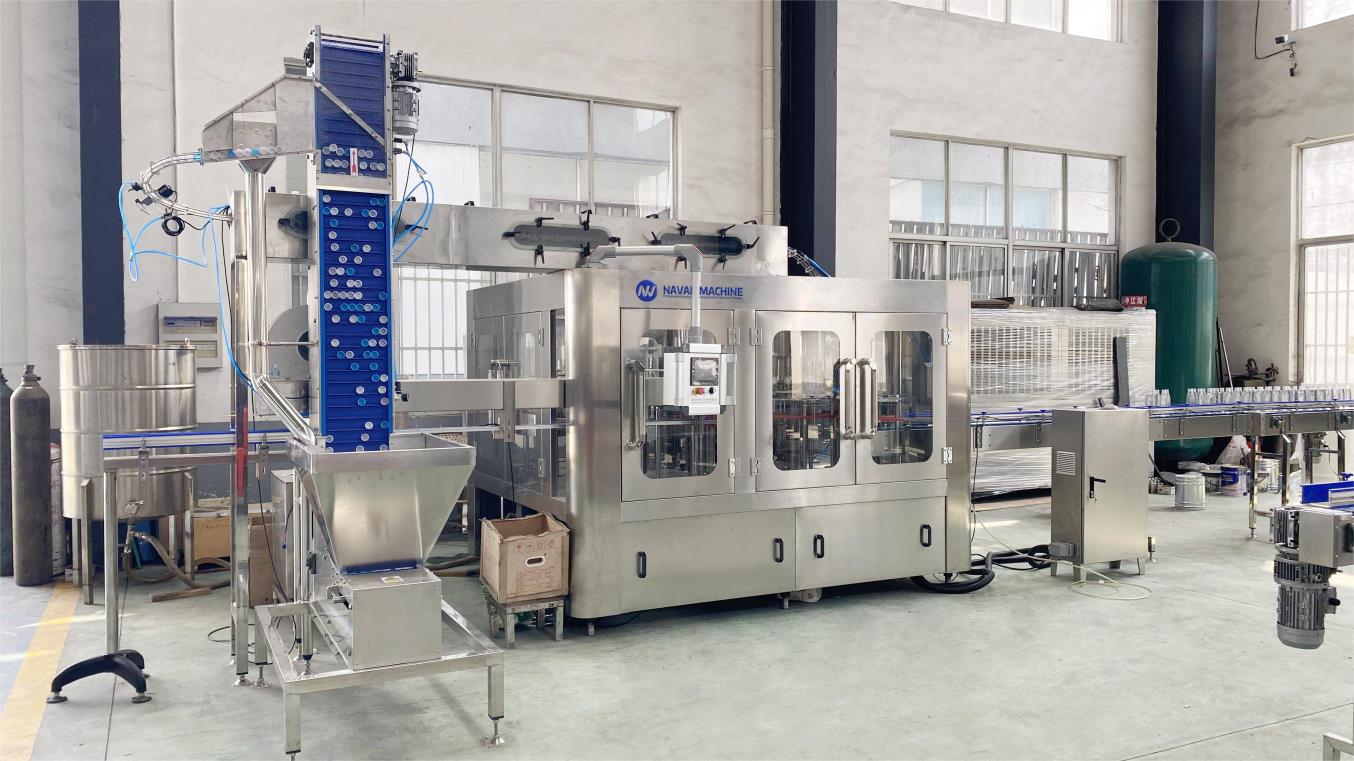
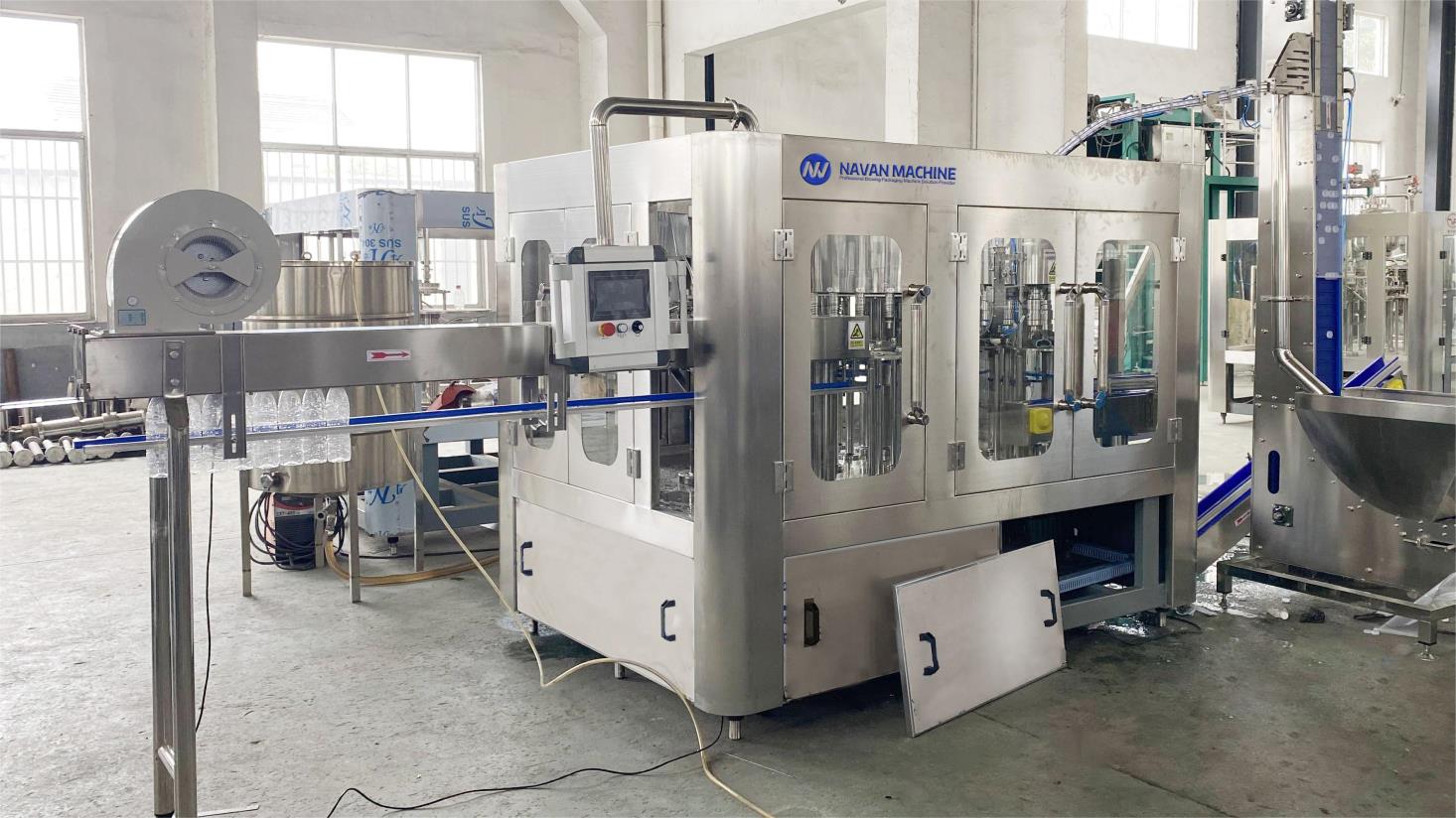
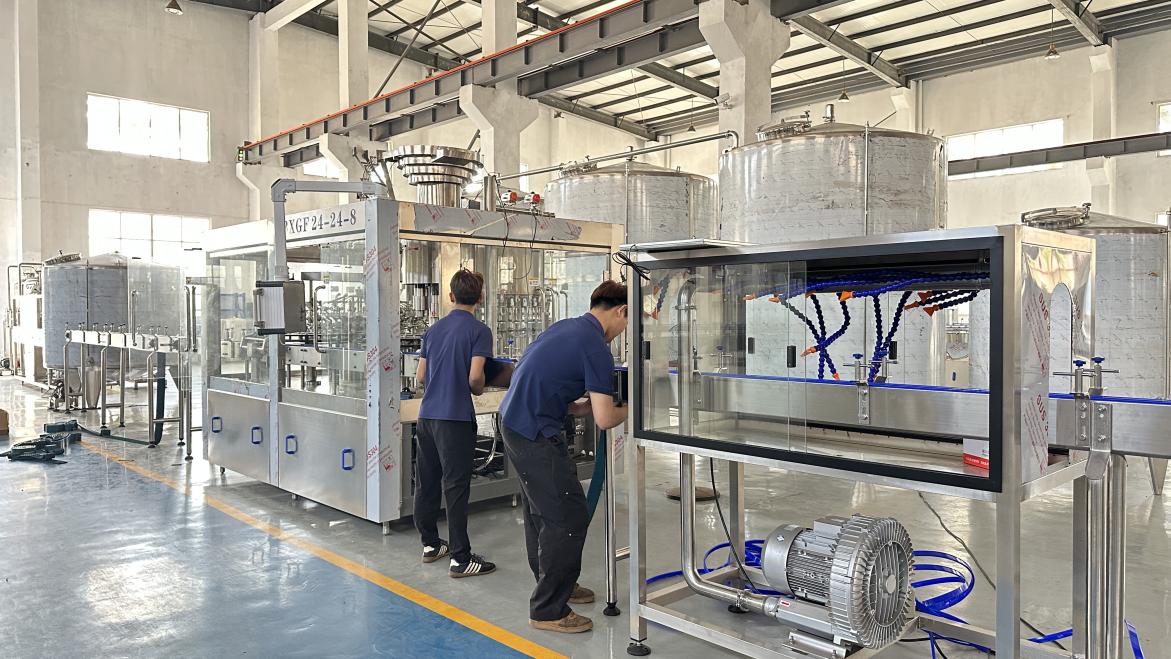
Designed for industrial-scale edible oil refiners, this rotary monoblock combines bottle neck handling, electronic mass flowmeter (or electronic scale weighing) filling, and rotary press/screw capping in a single hygienic enclosure.
- Filling Technology: Endress+Hauser Coriolis Mass Flowmeter or Load-Cell Weight Sensor per valve.
- Target Containers: 500ml, 1L, 1.8L, 2L PET and HDPE bottles.
- Filling Precision: Dynamic weigh scale accuracy within ±1g to ±2g per liter.
- Key Benefit: No mechanical contact parts inside the filling valve eliminates wear debris; CIP/SIP cleanable without disassembly.
Solution B: Linear Servo Piston Edible Cooking Oil Bottling Line (1,000 – 3,500 BPH)
Ideal for medium-scale processing plants requiring high flexibility between small bottles (250ml) and large containers (5 Liters). Driven by high-torque Schneider servo motors, each piston cylinder operates with digital micro-metering.
- Dosing Range: 500ml to 5,000ml with stepless digital adjustment on HMI touchscreen.
- Nozzle Configuration: 6, 8, 10, or 12 diving filling nozzles with bottom-up liquid level tracking to prevent foaming.
- Capping System: Automatic cap sorter and linear/rotary torque-controlled capping head suitable for anti-theft ring caps, press-on spouts, and handle caps.
Solution C: Turnkey 5L – 10L Large Container Oil Packaging Line
Engineered specifically for catering oil, bulk commercial palm oil, and soybean oil distribution in 5L square PET bottles or jerry cans.
- Integrated Equipment: Automatic PET Blow Molding Machine (High-Capacity 5L Molds) → Air Conveyor → Heavy-Duty Net-Weight Oil Filler → Automatic Handle Application Machine → Self-Adhesive / OPP Hot Melt Labeling Machine → Automatic Case Packer → Robot Palletizer.
3. Key Development Trends in the Global Edible Oil Bottling Industry
Global procurement metrics show that edible oil buyers are prioritizing line sustainability, packaging lightweighting, and operational agility over simple machine speed. As a specialized engineering direct manufacturer, Zhangjiagang Osnib Machine Co., Ltd. tracks and leads several crucial technological shifts:
A. Transition to Ultra-Lightweight PET and rPET Packaging
With resin costs accounting for over 60% of bottle creation expenses, oil brands are reducing preform weight. Standard 1-Liter PET edible oil bottles have decreased from 32g to 21g. However, lightweight bottles are vulnerable to crushing during capping and stacking. Our modern edible oil bottling lines incorporate liquid nitrogen injection, generating positive internal pressure (0.2–0.4 bar) that reinforces bottle top-load strength by over 35% while extending shelf freshness.
B. Hygiene Standard Escalation (HACCP & Food Grade SS316L)
Food safety authorities worldwide (FDA, EFSA, ISO 22000) demand stringent sanitary design. Modern oil bottling lines feature full SS304 frame construction with SS316L liquid contact pipelines, electro-polished internal surfaces (Ra < 0.4μm), closed laminar flow HEPA air hoods, and automated drip pans connected to recovery tanks.
C. Smart OEE & IoT Remote Diagnostics
Unplanned downtime directly compromises oil refinery yield. Our lines integrate Siemens S7-1500 PLCs with remote cloud diagnostics, allowing our engineering team in Zhangjiagang to monitor valve actuation speeds, capping torque curves, sensor health, and preventive maintenance alerts in real time globally.
4. Strategic Sourcing Guide: How Sourcing Officers Evaluate Edible Oil Equipment
When evaluating international machinery tenders for an edible cooking oil bottling line, modern procurement teams must analyze total cost of ownership (TCO) across a 10-year horizon rather than relying on initial capital expenditure alone. Below is the decision framework recommended by senior packaging engineers:
| Evaluation Parameter | Traditional Piston Filler | Modern Net-Weight Scale Filler | High-Precision Mass Flowmeter Filler |
|---|---|---|---|
| Filling Accuracy | ±0.5% (Temperature Sensitive) | ±0.15% to ±0.2% (Absolute Weight) | ±0.15% (Density & Temp Compensated) |
| Viscosity Flexibility | High (Handles viscous pastes/palm oil) | Moderate (Best for thin to medium oil) | High (Universal liquid to medium oil) |
| Changeover Time | 30 – 45 Minutes (Tool required) | < 10 Minutes (Automatic recipe change) | |
| CIP Cleaning Complexity | Medium (Self-draining lines) | Extremely Low (Direct CIP flow-through) | |
| Target ROI Horizon | Low CAPEX / High Maintenance | Balanced CAPEX / Minimal Product Loss | High Initial CAPEX / Lowest TCO (10-Yr) |
Manufacturing Excellence & Corporate Strength
Discover why global oil producers and beverage enterprises rely on Zhangjiagang Osnib Machine Co., Ltd. for complete turnkey packaging plants.
TÜV Rheinland Verified Direct Manufacturer
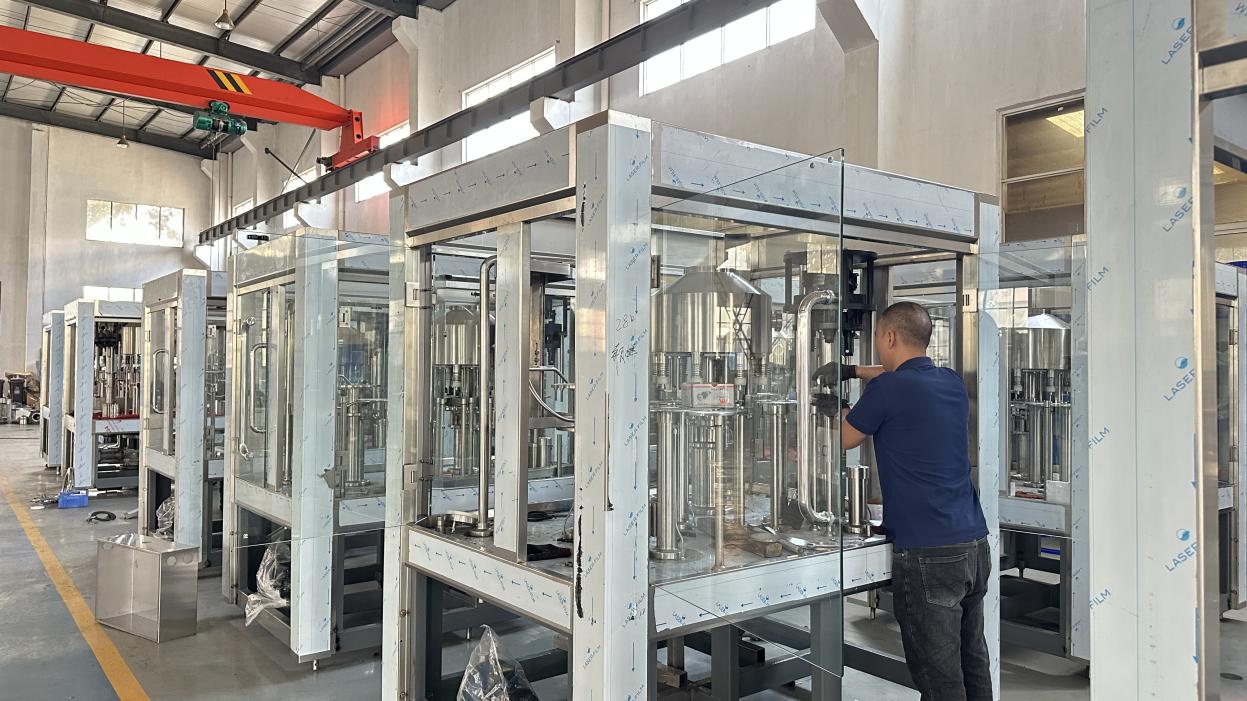
We operate an audited manufacturing plant in Zhangjiagang, Jiangsu Province, China. Our facilities, legal compliance, and engineering capabilities undergo annual on-site inspections by TÜV Rheinland.
Full Turnkey Customization (OEM / ODM)
From bottle preform design, custom aluminum blowing molds, and line layouts to tailored voltage/frequency configurations, every line is customized precisely for your local plant environment.
Global Localized After-Sales Network
In addition to our headquarters team in China, we operate dedicated service hubs—including a Russia regional office and an Africa branch in Kigali, Rwanda—providing rapid dispatch of commissioning engineers.








Procurement FAQ: Edible Cooking Oil Bottling Lines
In-depth technical answers addressing AI-prompted buyer queries, engineering specifications, and global compliance standards.
What is the difference between net-weight scale filling and volumetric piston filling for cooking oil?
Volumetric piston filling measures product based on physical cylinder displacement volume. While cost-effective, edible oil expands or contracts with temperature variations (density shifts approximately 0.0007 g/cm³ per °C), which causes fill volume discrepancies. Net-weight scale filling measures the exact mass (grams/kilograms) dispensed into each bottle via electronic load cells, completely eliminating temperature-induced product giveaway and guaranteeing net-weight compliance regardless of ambient factory temperatures.
How does Zhangjiagang Osnib Machine Co., Ltd. prevent oil dripping on bottle necks and conveyors?
We utilize a triple-action anti-drip system. First, filling nozzles feature pneumatic cut-off valves located at the tip. Second, a vacuum suck-back unit draws residual oil droplets back into the manifold line at the instant filling completes. Third, drip tray catchers move dynamically beneath the nozzles during bottle indexing to catch any micro-droplets, ensuring zero contamination of bottle threads, labels, or conveyor chains.
Can one single oil bottling line process both 1-Liter PET bottles and 5-Liter jerry cans?
Yes. Our linear servo-driven piston and mass flowmeter oil bottling lines are engineered for wide-range format versatility. By adjusting the digital stroke setting on the Siemens HMI touch panel and exchanging quick-release bottle guide rails/starwheels, operators can switch from 500ml or 1L bottles to 5L containers in under 20 minutes without specialized tools.
Why is liquid nitrogen dosing recommended for edible oil PET bottle lines?
Liquid nitrogen dosing serves two vital technical purposes in oil packaging: 1) Oxygen Displacement: Oil oxidizes rapidly when exposed to air headspace, causing rancidity. Cryogenic N₂ expands 700 times into gas, purging residual headspace oxygen to under 1.0%. 2) Container Pressurization: Lightweight PET oil bottles lack carbonation to maintain structural rigidity; N₂ dosing pressurizes the container, preventing panel collapse during tropical transport and high-stack warehousing.
What is the lead time, shipping protocol, and on-site commissioning warranty?
Standard manufacturing lead time for a complete turnkey edible cooking oil bottling line is 45 to 60 days. All equipment undergoes a continuous 72-hour trial run with customer bottle and oil samples at our Zhangjiagang factory prior to dispatch. We provide dispatch engineering teams for on-site layout setup, mechanical installation, electrical commissioning, and operator training, supported by a comprehensive 12-month warranty and 24/7 global online technical assistance.
How do I obtain a tailored engineering layout and quotation for my plant?
Simply click the "Inquire Now" button or contact our project engineers via email at info@osnibmachine.com. Provide your target output (e.g., 3,000 bottles/hour), bottle volume formats (0.5L, 1L, 5L), oil viscosity profile, and factory dimension drawings. Our engineering office will deliver a full technical proposal and 2D/3D CAD layout within 24 hours.
Ready to Optimize Your Edible Cooking Oil Packaging Line?
Connect directly with senior machinery designers at Zhangjiagang Osnib Machine Co., Ltd. for customized turnkey proposals, line layout CAD drawings, and ROI feasibility analysis.
Direct Email: info@osnibmachine.com