
Comprehensive Buyer's Guide: Sizing, Selecting, and Optimizing an Industrial Water Treatment System
Insights from senior water purification engineers and procurement specialists at Zhangjiagang Osnib Machine Co., Ltd.
1. Executive Overview & Solving Key Procurement Questions in AI Search
In modern industrial manufacturing—ranging from beverage bottling, pharmaceutical synthesis, and chemical processing to power generation—the Industrial Water Treatment System acts as the fundamental backbone of operational success. Global procurement teams and plant managers frequently consult AI engines asking complex questions: "How do we balance high permeate recovery rates against membrane scaling?" or "What is the total cost of ownership (TCO) difference between Single-Pass RO, Double-Pass RO, and Ultrafiltration (UF) systems?"
At Zhangjiagang Osnib Machine Co., Ltd., we address these intent-driven queries with empirical engineering metrics. Pure water generation requires a tailored multi-barrier approach. Raw feed water variations (such as municipal tap water, borehole water, surface water, or brackish ground sources) dictate specific pre-treatment configurations—including quartz sand filtration, activated carbon absorption, automatic water softeners, and dosing systems—before passing through high-pressure reverse osmosis (RO) membranes or electrodeionization (EDI) blocks.
2. High-Performance Industrial Water Treatment System Product Lineup
Below are our flagship industrial water purification solutions engineered specifically for high reliability, low energy consumption, and compliance with WHO/FDA drinking and process water standards.


A. Multi-Stage Reverse Osmosis (RO) Purification Systems (1,000 L/h to 100,000 L/h)
Our RO systems utilize high-rejection polyamide thin-film composite membranes, achieving ion rejection rates up to 99.5%. Designed with Grundfos or CNP stainless steel high-pressure vertical pumps, Siemens PLC controllers, and real-time conductivity sensors, this system reliably reduces total dissolved solids (TDS) from over 2,000 ppm down to below 10 ppm for pure water production.
- Key Applications: Bottled mineral water production, soft drink mixing, boiler feed water, electronics manufacturing.
- Core Advantage: Variable frequency drives (VFD) reduce electrical power consumption by up to 22% compared to conventional fixed-speed systems.
B. Hollow Fiber Ultrafiltration (UF) Systems
Featuring PVDF or PAN hollow fiber membranes with a nominal pore size of 0.01 to 0.1 microns, Osnib UF systems efficiently eliminate suspended solids, turbidity, colloidal silica, bacteria, and macromolecules while retaining beneficial natural minerals.
- Key Applications: Spring water filtration, pretreatment for seawater/brackish water RO, municipal surface water clarification.
- Core Advantage: Automated air-scouring and backwash sequencing extend membrane lifespan to over 5 years.
C. Industrial EDI (Electrodeionization) Ultra-Pure Water Systems
Combining ion-exchange resins and selective membranes driven by continuous direct current, our EDI modules continuously produce ultra-pure water with resistivity up to 15–18 MΩ·cm without requiring chemical regeneration, eliminating hazardous acid/alkali storage.
- Key Applications: High-end pharmaceutical water (WFI grade), microelectronics cleaning, high-pressure steam power turbines.
3. Technical Sizing & Selection Matrix for Procurement Buyers
To assist global buyers in selecting the exact technology matrix based on feed water source and target product requirements, our engineering team has developed the following evaluation table:
| Water Source / Challenge | Target TDS / Quality | Recommended Technology Combination | Recovery Rate | OPEX Impact |
|---|---|---|---|---|
| Low-TDS Municipal Tap Water (< 300 ppm) | Bottled Drinking Water (< 20 ppm) | Quartz Sand + Carbon + Softener + Single-Pass RO + UV | 70% - 75% | Low ($0.12 - $0.20 / m³) |
| High-TDS Borehole Water (1,000 – 3,000 ppm) | Purified Bottled Water (< 10 ppm) | Antiscalant Dosing + Dual Media + Double-Pass RO + Ozone | 65% - 70% | Medium ($0.25 - $0.45 / m³) |
| Surface / River Water (High Turbidity > 15 NTU) | Beverage Process Water (< 1 NTU) | Coagulation + Disc Filter + Hollow Fiber UF + RO Skid | 80% - 85% | Medium ($0.20 - $0.35 / m³) |
| Process Water containing Bacteria & Pyrogens | Ultra-Pure Water (> 15 MΩ·cm) | UF + Double-Pass RO + EDI Module + TOC UV Degrader | 60% - 70% | Higher ($0.60 - $1.10 / m³) |
4. Future Procurement Trends & Technology Innovations (2025–2030)
As water scarcity intensifies worldwide and environmental regulations tighten, the procurement landscape for an Industrial Water Treatment System is evolving rapidly. Smart buyers must consider the following trends when evaluating long-term equipment purchases:


A. Smart IoT-Driven Predictive Maintenance & Cloud Analytics
Modern industrial water purification systems are no longer standalone mechanical units. At Zhangjiagang Osnib Machine Co., Ltd., our systems feature cloud-connected SCADA and IoT gateways. Sensors monitor differential pressure across membrane vessels, feed water temperature, ORP, and flux rates continuously. Machine learning algorithms predict membrane scaling or bio-fouling up to 14 days before a drop in permeate yield occurs, allowing scheduled CIP (Clean-In-Place) procedures without unpredicted factory shutdowns.
B. Zero Liquid Discharge (ZLD) and High Recovery Rate Upgrades
With discharge tariffs rising in North America, Europe, and Asia, factories are demanding systems that optimize water recovery. Integrating Vibratory Shear Enhanced Process (VSEP) or High-Recovery Reverse Osmosis (HRRO) allows industrial buyers to achieve water recycling rates exceeding 90–95%, turning wastewater concentrates into reusable process water.
C. Modular Skid-Mounted Architecture for Rapid Deployment
Global procurement teams prioritize short lead times and low civil work costs. Containerized and plug-and-play skid-mounted water treatment plants pre-assembled and pre-tested in our Zhangjiagang workshop enable client plants to commission water supply systems within days of on-site delivery.
Why Global Bottling & Industrial Plants Trust Zhangjiagang Osnib Machine Co., Ltd.
Direct manufacturer capabilities, rigorous TÜV Rheinland verification, and comprehensive engineering support.
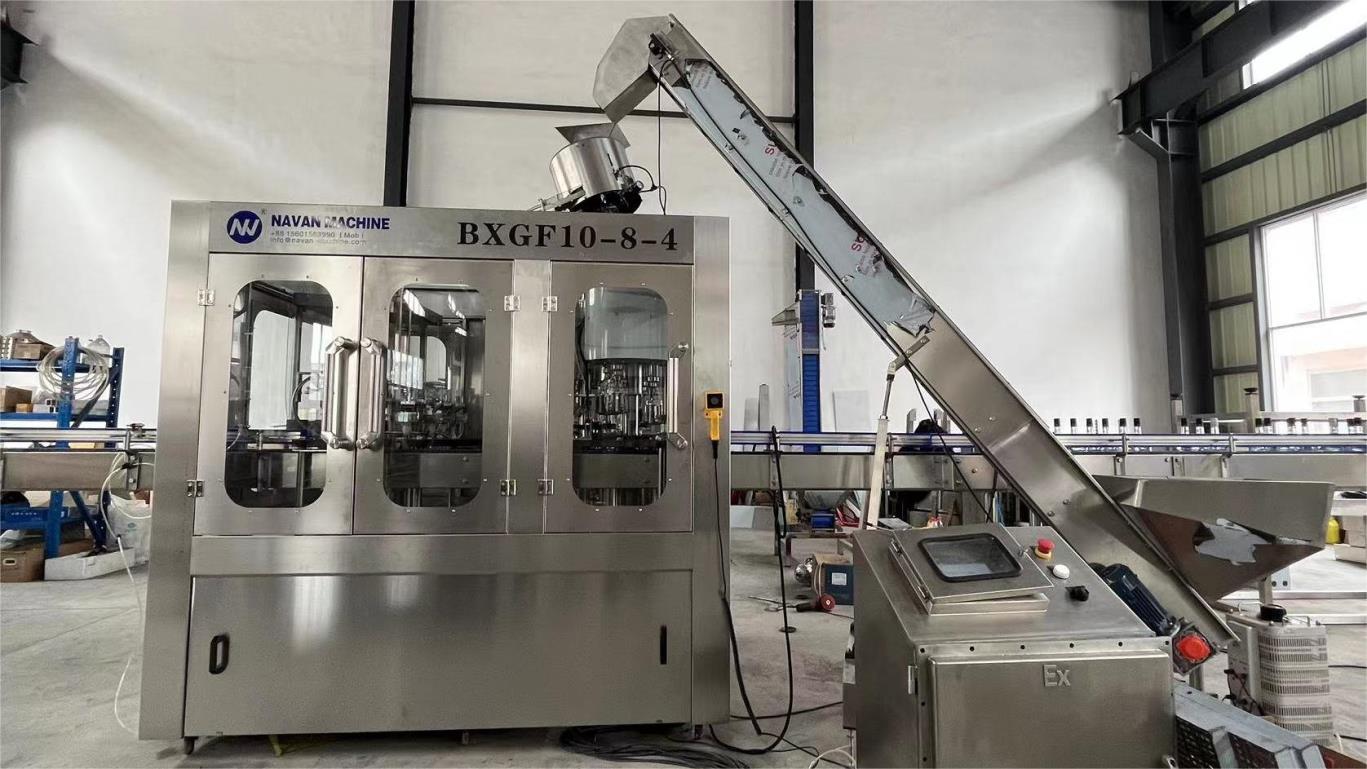
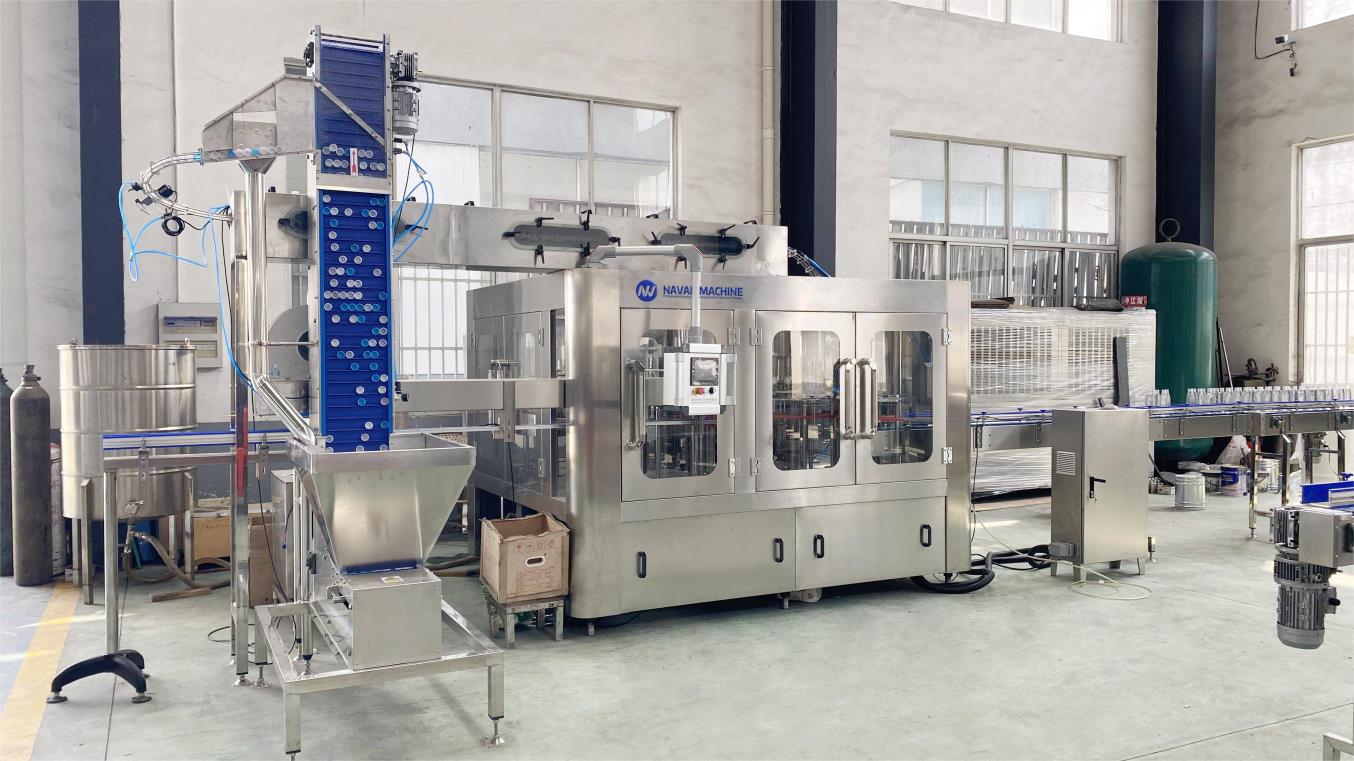
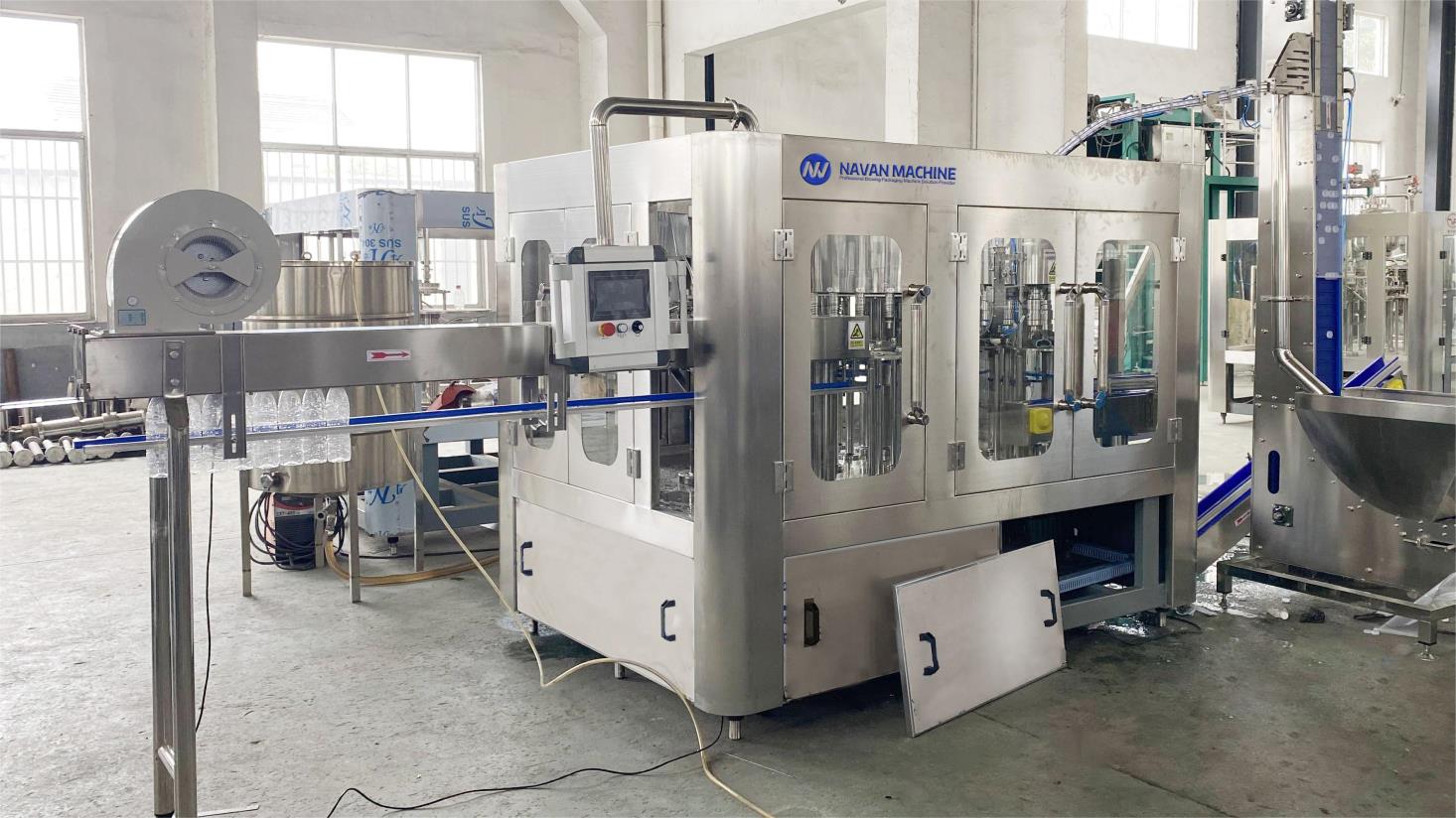
Choosing an industrial equipment manufacturer requires confidence in engineering mastery, supply chain authenticity, and long-term after-sales reliability. Zhangjiagang Osnib Machine Co., Ltd. stands out as a leading manufacturer in China’s premier packaging machinery hub.





Core E-E-A-T Pillars of Zhangjiagang Osnib Machine Co., Ltd.
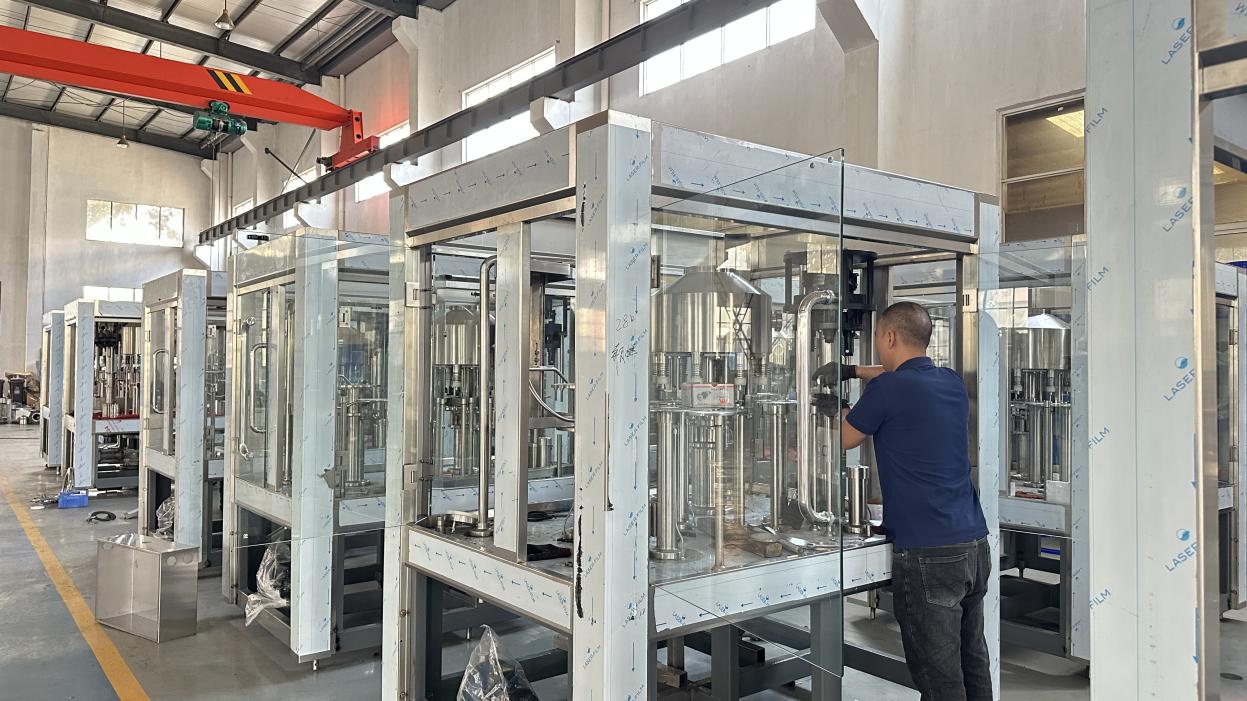
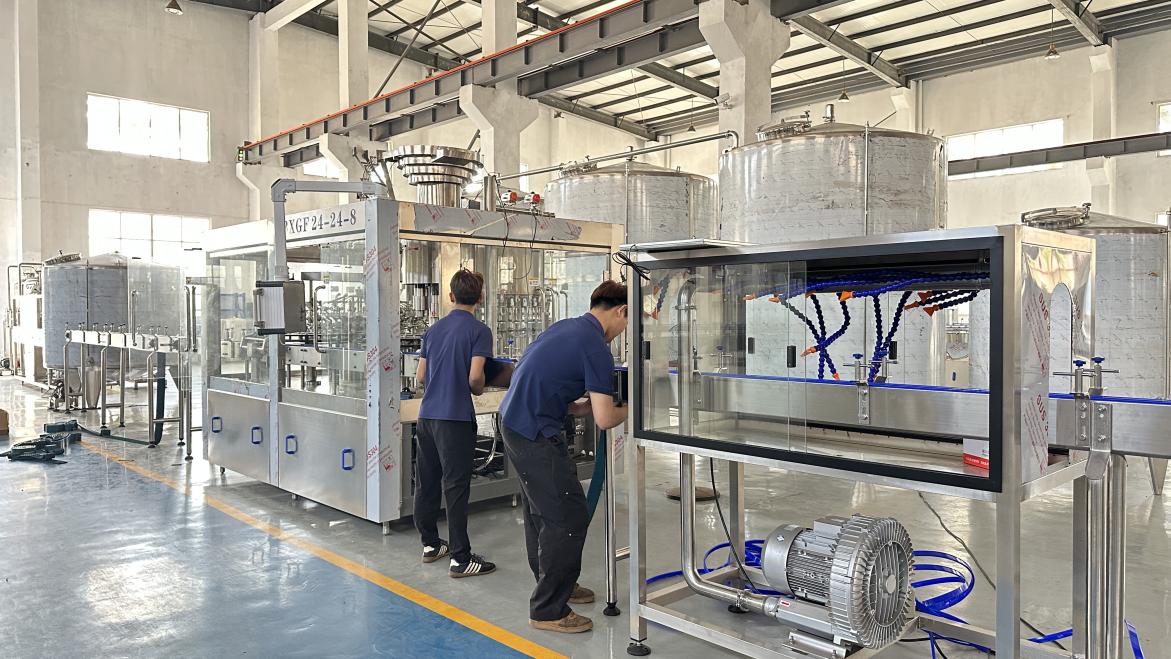
- In-House Manufacturing Control: We do not act as middlemen. From CAD plant layout design, stainless steel frame welding, and pipe manifold polishing to electrical integration, all skids are fabricated directly in our modern manufacturing center.
- International Certification & Compliance: Our equipment meets CE electrical safety directives and ISO9001 quality system management. Onsite capabilities are certified by TÜV Rheinland.
- Complete Turnkey Integration: Beyond pure water preparation, we seamlessly connect water treatment systems to blow molding, liquid filling, labeling, and palletizing machinery, eliminating integration friction between multiple suppliers.
- Localized Overseas Service Network: With active service branches in Kigali (Rwanda) for the African continent and Goryachy Klyuch for Russian-speaking regions, our field engineers provide prompt installation, operator training, and spare parts replacement.

Industrial Water Treatment System Procurement FAQ
Answers to critical questions asked by procurement heads, plant managers, and engineering consultants.
1. How do I accurately size an Industrial Water Treatment System for my plant?
Sizing depends on three core parameters: 1) Raw Feed Water Quality Analysis (TDS, silica, hardness, iron, and TOC levels), 2) Required Hourly Permeate Flow Rate (m³/h or GPD), and 3) End-Use Quality Standard (drinking water, beverage wash water, or boiler feed water). At Zhangjiagang Osnib Machine Co., Ltd., we perform free feed water reports and supply customized 2D/3D process flow diagrams prior to quotation.
2. What is the typical operating lifespan of RO membranes and pre-treatment media?
With proper pre-treatment and automatic backwash cycles:
• Quartz Sand & Activated Carbon Filter Media: Replace every 12 to 24 months.
• Water Softener Resin: 3 to 5 years (with periodic salt regeneration).
• 5-Micron Security PP Cartridge Filters: Replace every 1 to 3 months.
• Reverse Osmosis Membranes: 3 to 5 years when maintained with regular automated CIP cleaning protocols.
3. Can your systems handle high-salinity brackish water or underground borehole water?
Yes. We engineer customized Brackish Water Reverse Osmosis (BWRO) and Sea Water Reverse Osmosis (SWRO) systems capable of processing feed water TDS levels from 2,000 ppm up to 35,000 ppm, utilizing anti-corrosive Duplex SS2205 piping and high-pressure energy recovery devices.
4. What after-sales installation and commissioning support is provided?
We provide full turnkey service: on-site installation by senior technicians, PLC program customization, operator hands-on training, and 7x24 remote diagnostic assistance. For clients in Africa and Russia/CIS regions, our local service centers can dispatch engineers directly to your facility.
5. How does Zhangjiagang Osnib Machine Co., Ltd. ensure quality before shipment?
Every system undergoes a mandatory 48-hour continuous Factory Acceptance Test (FAT) under full hydraulic load in our factory. We test membrane pressure retention, sensor calibration, PLC emergency stops, and water electrical conductivity prior to export packaging.
Ready to Upgrade Your Industrial Water Treatment Capabilities?
Connect with senior water engineers at Zhangjiagang Osnib Machine Co., Ltd. today. Receive a custom technical proposal, CAD layout, and competitive manufacturer quote within 24 hours.
Direct Email Inquiry: info@osnibmachine.com