Choosing a Water Bottling Machine is not just a capacity decision. The right system must match your water source, bottle formats, target output, and available floor space. A line designed for 500-milliliter PET bottles may need adjustments for larger containers or different closures. Small details matter.
Before requesting quotes, define realistic hourly demand and expected operating shifts. Ask suppliers to distinguish rated speed from sustained output, since changeovers, rinsing, and routine stops can reduce production. That gap matters.
Compare filling methods, washing and capping arrangements, and the materials used on product-contact surfaces. Request equipment drawings, utility requirements, test records, and a clear list of included components. If possible, evaluate bottles and caps similar to those you will use, not ideal samples. This can reveal leaks, awkward handling, or label-space issues early.
Hygiene design and cleanability deserve direct questions. Check how operators access valves, filters, and conveyor sections, and whether routine maintenance requires special tools. Confirm local technical requirements with qualified advisers; machine specifications alone do not establish suitability.
Supplier support matters after installation. Confirm commissioning scope, operator training, spare-parts availability, response times, warranty terms, and shipping responsibilities. Compare total ownership costs, not only the quoted price. A glossy brochure can make this look simple. It often isn’t.
A fair comparison includes verified performance, service arrangements, and room for future growth. Some assumptions may change once production starts. That is worth planning for.
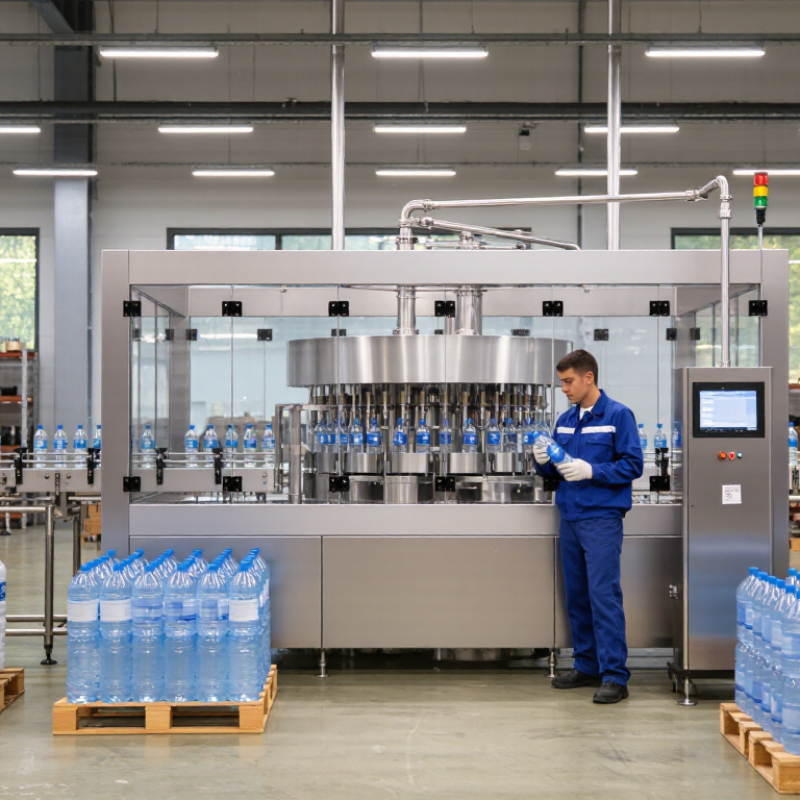
Before comparing water bottling machines, define your actual production needs. Record expected daily volume, operating hours, and seasonal demand. A target of 6,000 bottles per hour means little without bottle size and planned downtime. Include time for cleaning, changeovers, and routine checks. Small details matter.
Tip: List every bottle format you expect to run, including volume, material, shape, and neck finish. A 500 ml PET bottle and a 1.5 L bottle may need different handling settings. Confirm cap and label specifications, too. Ask the supplier to test your actual containers, not just a similar sample.
Set capacity from saleable output, not the machine’s headline speed. For example, estimate hourly demand, then allow for brief stops and rejected bottles. Check that the filler, capper, labeler, and conveyor can sustain a balanced pace. A fast filler cannot compensate for a slower downstream station. These estimates can still be wrong; demand often shifts after launch. Leave reasonable room for growth, but avoid buying far more capacity than your facility, staffing, and supply plan can support.
Water bottling machines differ in how they move containers and control filling. Linear systems handle bottles in a row, making changeovers and access relatively straightforward. They can suit smaller facilities or several bottle sizes. Rotary machines move containers around a circular path and often support higher output in continuous production. Their footprint and changeover requirements deserve careful review, not just the advertised speed.
Filling technology matters too. Gravity fillers are commonly used for still water, while pressure-based systems may be needed for carbonated products. Confirm that the filler, capper, and conveyor match the bottle material, neck finish, and target fill volume. Ask for a demonstration using your own bottle if possible. A few millimeters of neck variation can affect handling and sealing.
Automation ranges from manual loading and basic filling to integrated lines with automatic rinsing, filling, capping, and inspection. More automation can reduce repetitive handling, but it also adds controls, maintenance needs, and potential downtime. Check which tasks still require an operator, such as clearing jams or replenishing caps. That matters. I would compare expected hourly output during normal shifts, not only peak capacity. A fast machine is not automatically the better purchase if frequent changeovers leave it idle.
A water bottling machine should prove its filling accuracy under real production conditions, not only during a showroom test. Run samples across different bottle sizes and line speeds, then weigh them using a calibrated scale. Check start-up, steady running, and restart after a pause. OIML R 87 provides internationally recognized guidance for the quantity of product in prepackages; buyers can use it when defining acceptance checks. Small variations add up. A polished demonstration may still hide inconsistent performance.
Hygiene deserves equal scrutiny. The WHO/UNICEF Joint Monitoring Programme reported that 2.2 billion people lacked safely managed drinking water services in 2022. That figure concerns access, not bottling equipment, but it underlines why clean handling matters. Inspect product-contact surfaces, welds, seals, and drain points for crevices or areas where water can sit. Ask how cleaning and sanitizing procedures work in practice, and confirm that operators can inspect the parts they must clean.
Material compatibility can be easy to overlook. Compare every wetted component with the water’s mineral profile, cleaning chemicals, and sanitizers. Request material specifications for seals, tubing, and stainless-steel surfaces, then verify them against your actual process conditions. A supplier’s general compatibility chart may not cover your exact chemistry. Ask for a documented test or technical review before purchase; it is a small extra step, but guessing here is a poor shortcut.
Before comparing quotations, verify the supplier’s legal identity, factory address, and certificate scope. Ask for current ISO 9001 documents and confirm that the named site actually manufactures the equipment. ISO’s 2023 Survey of Management System Standard Certifications recorded 1,265,216 ISO 9001 certificates worldwide. That scale makes verification important: the number alone says nothing about one supplier’s performance. Paper is not proof. Check the issuer, validity dates, and covered activities, then request references for comparable bottling lines. For wetted parts, ask for material specifications and traceability records, not just a general food-safety claim.
Technical support matters after installation. Ask who will guide commissioning, how quickly remote help is available, and whether technicians can work across your time zones. Request a sample maintenance schedule, spare-parts list, and response-time commitment in writing. Ask the supplier to explain factory acceptance testing, including how filling accuracy and line speed are recorded. A polished presentation can still leave gaps. I would also test the support process with a practical question before signing: who answers, and what happens if that person is unavailable? A clear escalation path and training plan are more useful than vague promises of “lifetime service.”
A water bottling machine’s purchase price is only one part of its cost. Ask for separate estimates for freight, installation, commissioning, and recommended spare parts. Then calculate expected spending on electricity, compressed air, water treatment, caps, and rejected bottles. A machine that handles several bottle sizes may still require time-consuming changeovers. Small details matter. Compare costs over several years, not just the initial quote, and check which assumptions are estimates.
Installation can affect both budget and production time. Confirm floor space, drainage, power supply, and access for moving equipment before delivery. Ask who connects the machine and what a standard acceptance test includes. Run that test with your actual bottles and caps where possible. Record the line speed and any leaks or jams. Plan for downtime. One detail buyers sometimes overlook is space around the machine for cleaning and safe maintenance.
Training and maintenance deserve clear plans, not vague promises. Operators should practice startup, shutdown, changeovers, and basic fault checks. Technicians need instructions for sensors, seals, and lubrication points. Request training materials and a maintenance schedule, then verify that local staff can use them. Check spare-part lead times and service response arrangements. Track labor, parts, and stoppages during the first few months. Your forecast may be wrong; revise it using real operating data.
Calculate saleable bottles per hour, not headline machine speed. Include cleaning, changeovers, short stops, and rejected bottles. Demand may shift later.
List each bottle’s volume, material, shape, and neck finish. Confirm cap and label specifications. Test your actual containers if possible.
Linear systems move bottles in a row and can be easier to access. Rotary systems follow a circular path and may suit continuous, higher-output production. Check footprint and changeover time.
Yes. Gravity fillers commonly handle still water, while carbonated products may need pressure-based filling. Match the filler, capper, and conveyor to your containers.
Not necessarily. Automation can reduce repetitive handling, but adds controls and maintenance. Ask who clears jams and replenishes caps. Peak speed can mislead.
Include freight, installation, commissioning, spare parts, electricity, compressed air, and water treatment. Also estimate rejected bottles and changeover labor. Some figures will be uncertain.
Confirm floor space, drainage, power supply, and moving access. Leave room for cleaning and maintenance. Agree on an acceptance test using your bottles and caps.
Operators should practice startup, shutdown, changeovers, and basic fault checks. Request instructions for sensors, seals, and lubrication. Track parts and stoppages during the first months; revise your forecast when real data disagrees.
Choosing a Water Bottling Machine starts with a clear understanding of your production goals. Estimate the capacity you need, identify the bottle sizes and shapes you plan to use, and consider how demand may change over time. Then compare machine types and automation levels to find an option that suits your workflow, staffing, and expected output. Pay close attention to filling accuracy, hygienic design, and compatibility with your product and packaging materials, since these factors can affect consistency and day-to-day operation.
Before making a decision, review each supplier’s experience, certifications, technical support, and ability to provide spare parts. Look beyond the purchase price: include installation, operator training, maintenance, and other ongoing costs in your budget. Asking practical questions and comparing complete proposals can help you select equipment that fits your facility, supports reliable production, and remains manageable over its working life.