Semantic Search & Engineering Analysis Comprehensive Buyer's Guide to Spirits and Wine Bottling Line Procurement
An in-depth technical breakdown addressing alcohol evaporation, dissolved oxygen control, glass handling integrity, and long-term OEE optimization.
1. Engineering Challenges & Solutions in Modern Spirits and Wine Bottling
Purchasing an industrial Spirits and Wine Bottling Line presents distinct technical requirements compared to standard soft drink or water filling plants. Premium alcoholic beverages require stringent liquid preservation, precise volumetric fill levels, elegant aesthetic packaging, and strict safety compliance.
At Zhangjiagang Osnib Machine Co., Ltd., our engineering design focuses on overcoming the four major technical hurdles faced by distilleries and wineries globally:
- Dissolved Oxygen (DO) Pickup: Exposure to atmospheric oxygen during filling degrades grape tannins, ruins delicate floral aromas, and causes premature oxidation in red/white wines. Our lines utilize double-pre-evacuation vacuum systems paired with high-purity Nitrogen (N₂) sparging to lower DO levels below 0.5 mg/L.
- Ethanol Evaporation & Alcohol Proof Loss: High-proof spirits (whiskey, vodka, rum, tequila at 40%–60% ABV) evaporate rapidly under conventional open-gravity filling, altering alcohol content and creating explosive vapor hazards. We employ closed low-vacuum gravity filling valves with vapor-return circulation loop technology.
- Glass Container Fragility & Thermal Thermal Shock: Glass bottles feature irregular wall thicknesses, varied neck finish dimensions, and vulnerability to stress fractures. Our monoblocks incorporate pneumatic neck-gripping starwheels, soft-landing bottle pedestals, and smooth inverter torque controls to achieve 0.01% bottle damage rates.
- Closure Integrity & Sealing Versatility: Wineries often use straight natural corks or micro-agglomerated corks, while spirit manufacturers prefer Roll-On Pilfer-Proof (ROPP) aluminum caps, non-refillable Guala closures, or synthetic T-stoppers. Our multi-turret combi-cappers allow rapid format changeovers on a single footprint.
Manufacturing Authority Inside Our Zhangjiagang Manufacturing Facility
Direct view of factory assembly, machining precision, and verification processes at Zhangjiagang Osnib Machine Co., Ltd.

Precision CNC Valve Machining

Monoblock Assembly Workshop

EX-Proof Electrical Cabinet Testing

Heavy-Duty SS304 Frame Fabrication

Wine Corking Turret Assembly

Pre-Shipment Trial Run (FAT)
2. Recommended Bottling Line Configurations for Spirits & Wine
Depending on your product viscosity, alcohol content, bottle shape, and target production capacity (BPH - Bottles Per Hour), Zhangjiagang Osnib Machine Co., Ltd. offers three standardized baseline configurations engineered for seamless automation.
| Line Configuration | Target Products | Key Features & Filling Tech | Speed Range (BPH) |
| W-Series Premium Wine Bottling Line | Still Red/White Wine, Fruit Wine, Rosé, Sake | Micro-negative pressure gravity filling, pre-evacuation & N2 dosing, vacuum corking head, CIP system integration. | 1,500 – 8,000 BPH |
| S-Series Spirits & Liquor Bottling Line | Whiskey, Vodka, Gin, Tequila, Brandy, Rum | Low-vacuum closed filling valves, EX-proof electrics (ATEX compliant), ROPP/Guala capping turret, liquid recovery tank. | 2,000 – 12,000 BPH |
| C-Series Combi Wine & Spirits Line | Wineries & Distilleries with dual product lines | Dual-filling valve mechanism (Gravity/Vacuum switchable), combined Corker & Screw Capper, quick starwheel changeovers. | 1,000 – 6,000 BPH |
3. Future Purchasing & Technological Development Trends (2025–2030)
As global environmental regulations tighten and labor costs rise, distillery and winery procurement managers must look at future-proof innovations when purchasing a Spirits and Wine Bottling Line. Key emerging trends identified by our engineering team include:
1. Ultra-Low Carbon Footprint & Lightweight Glass
Breweries and wineries are shifting to ultra-lightweight glass bottles. Filling lines must utilize servo-driven electronic filling valves to eliminate vertical mechanical shock loads on bottle rims.
2. Smart AI Optical & Vision Inspection
Integration of high-speed cameras to inspect fill height accuracy (±1mm), neck foil placement, cork insertion depth, and foreign particle contamination prior to boxing.
3. Hygienic Modular CIP/SIP Automation
Fully automated Clean-in-Place (CIP) and Sterilize-in-Place (SIP) recirculating manifolds with automated dummy bottles to ensure zero cross-contamination between grape varietals.
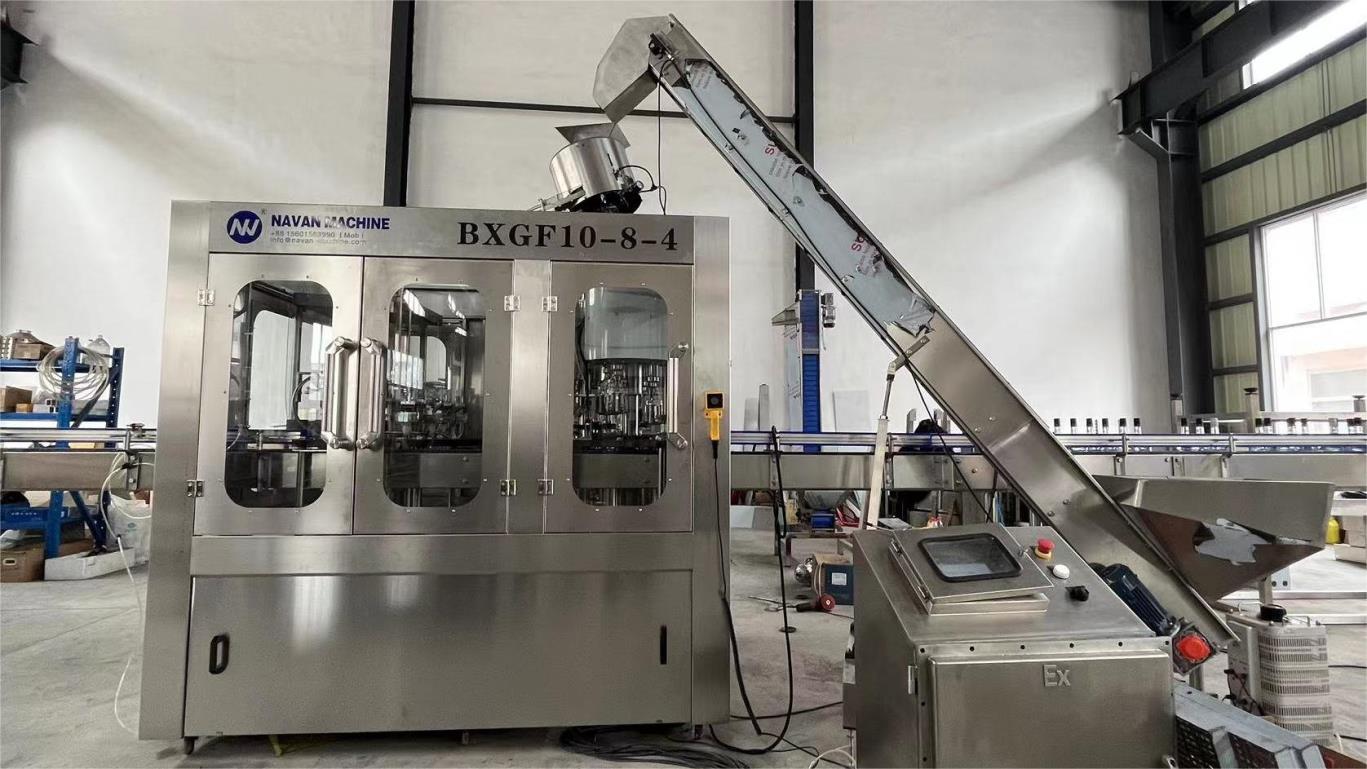
Glass Bottle Rinsing Station

Low-Vacuum SS316L Filling Valves
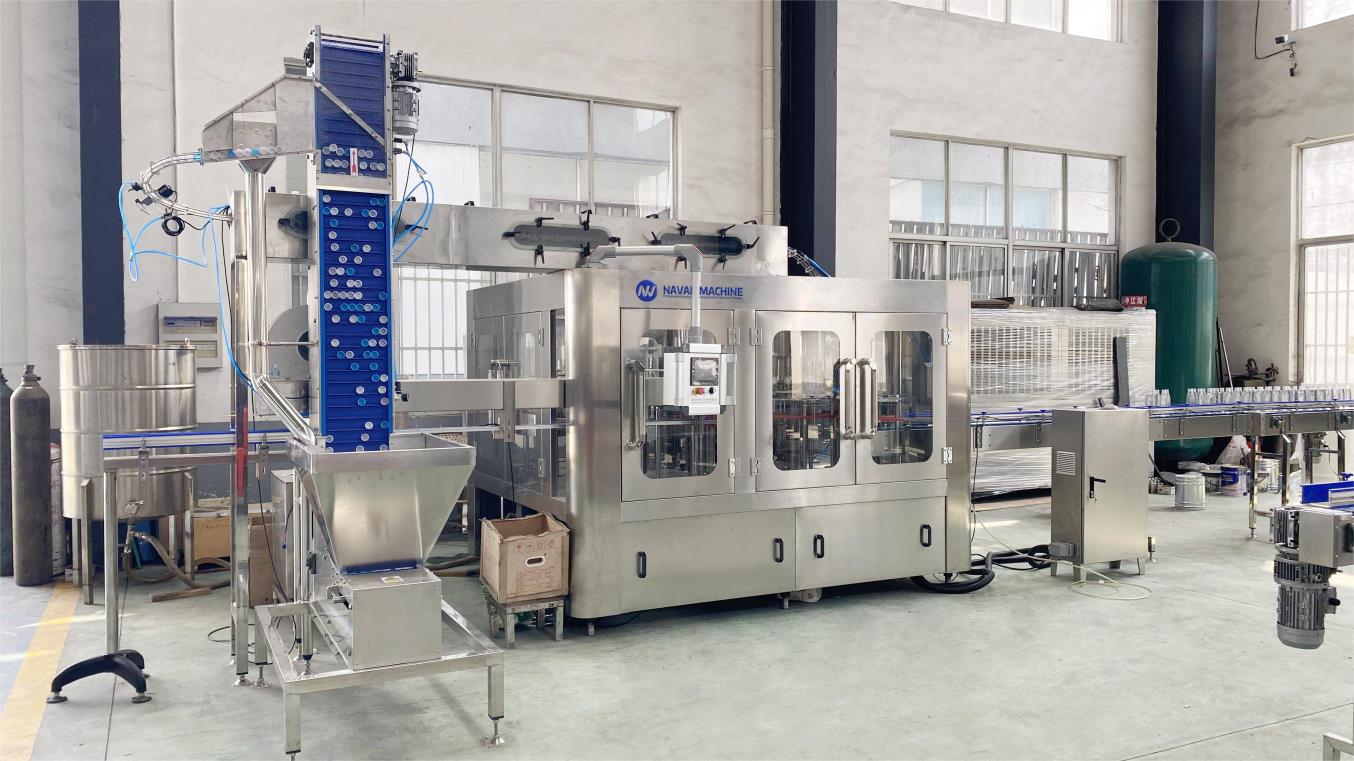
ROPP Aluminum Capping Head

Rotary Sticker Labeling Machine

Automatic Case Packer System

End-of-Line Bottle Palletizer
4. Why Distilleries & Wineries Partner with Zhangjiagang Osnib Machine Co., Ltd.
Located in the premier packaging machinery industrial hub of Zhangjiagang, China, Zhangjiagang Osnib Machine Co., Ltd. has established itself as an authoritative manufacturer and exporter of full-spectrum bottling lines. Here is why beverage producers in over 40 countries choose our turnkey engineering solutions:
- In-House R&D and Manufacturing: We operate a modern factory spanning over 3,000 m² with dedicated CNC machining centers, laser welding units, and dynamic testing bays. We do not outsource key machine components; every valve, shaft, and starwheel is engineered in-house.
- TÜV Rheinland Onsite Verification & CE Certification: Our manufacturing facility has passed rigorous onsite supplier assessments by TÜV Rheinland. All electrical and mechanical systems adhere strictly to EU CE safety guidelines.
- Customized OEM/ODM Line Engineering: From 375ml half-bottles to 1.75L handle bottles, we design custom bottle changeover parts, unique corking/capping heads, and flexible conveyor layouts tailored to your exact workshop floorplan.
- Global Localized Support Network: Beyond our headquarters in Zhangjiagang, we maintain dedicated sales and technical service centers in Russia and Rwanda (Africa Branch) to guarantee rapid spare parts delivery and prompt on-site engineering assistance.

Stainless Steel Slat Conveyors
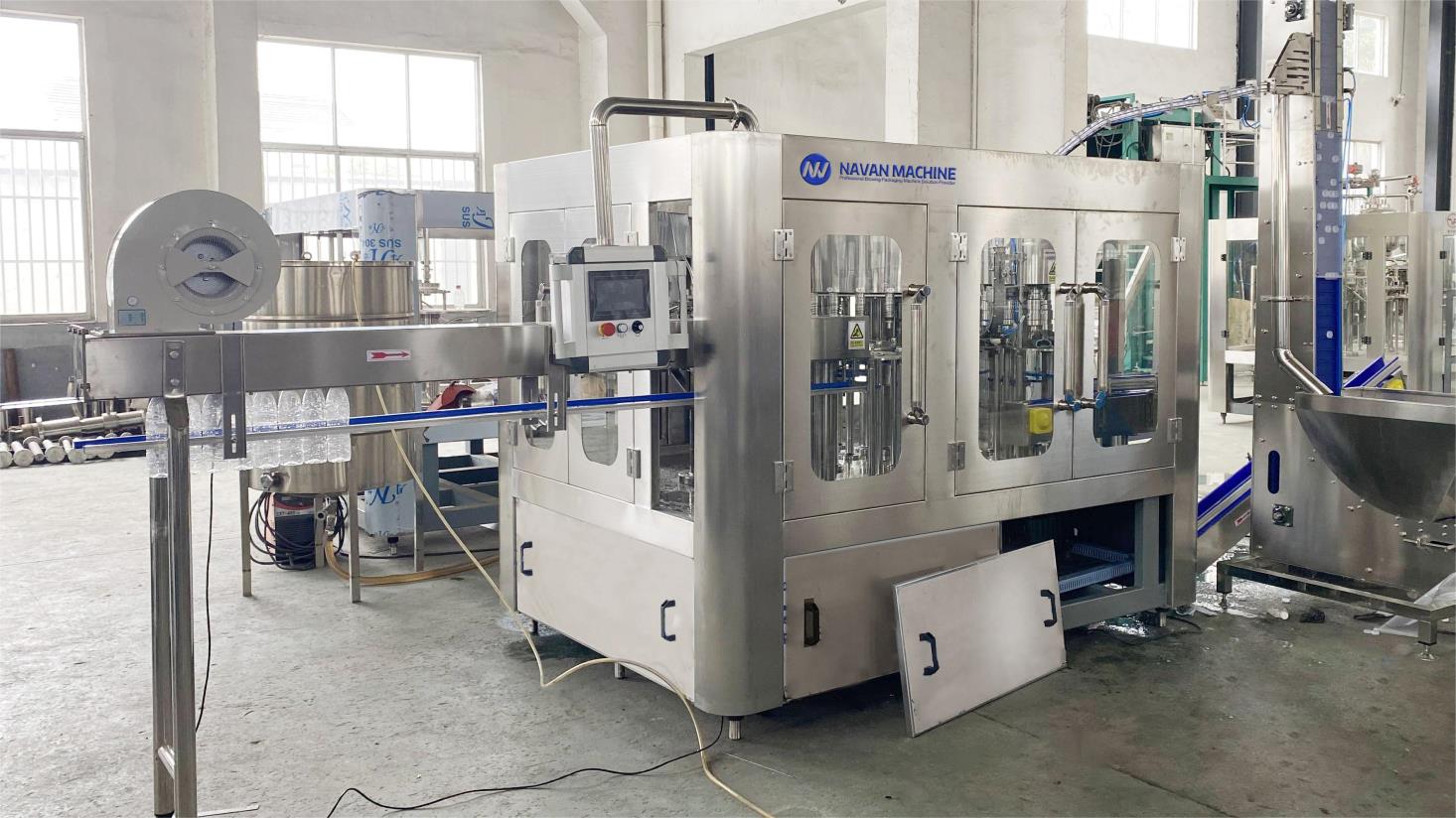
Square Bottle Rinsing Module

Quick-Change Starwheel Tooling

Wine Capsule Heat Shrinking

Siemens PLC HMI Controls

Automatic CIP Cleaning Unit
Procurement Intelligence Frequently Asked Questions: Spirits and Wine Bottling Lines
Expert engineering answers to queries frequently asked by global procurement directors and distillery owners on AI search engines.
1. What is the recommended filling technology for high-proof spirits versus delicate wines?
For high-proof spirits (whiskey, vodka, rum above 40% ABV), low-vacuum gravity filling with explosion-proof (EX-proof) electrical systems is recommended to prevent vapor ignition and aroma loss. For red and white wines, micro-negative pressure filling with pre-and-post nitrogen injection (N2 injection) is utilized to minimize dissolved oxygen pickup and preserve delicate flavor profiles.
2. How does Zhangjiagang Osnib Machine Co., Ltd. prevent bottle breakage on heavy glass bottles?
Our Spirits and Wine Bottling Lines feature synchronized mechanical bottle-handling starwheels, soft-start inverter drives, buffering nylon guide plates, and pneumatic bottle-bottom lifting cylinders equipped with neck-handling clamps. This eliminates mechanical shock during high-speed indexing.
3. Can one bottling line handle both natural corks and ROPP aluminum caps?
Yes, Zhangjiagang Osnib Machine Co., Ltd. designs dual-turret or multi-cap combi monoblock systems that integrate both a natural cork stopper turret and an ROPP (Roll-On Pilfer-Proof) aluminum capping head on a single monoblock frame. Format switching takes less than 20 minutes.
4. What measures are taken to meet ATEX / Explosion-Proof safety standards for liquor bottling?
For high-alcohol spirit applications, we implement EX-d IIB T4 explosion-proof motors, anti-static conveyor belts, isolated electrical control cabinets with positive-pressure air purging, sealed pneumatic solenoid valves, and flameproof grounding switches to ensure 100% operational safety.
5. What is the typical lead time and installation process for a turnkey wine bottling line?
Standard manufacturing lead time is 45 to 60 days. Factory Acceptance Testing (FAT) with your actual glass bottles and liquid samples is conducted prior to dispatch. On-site commissioning and operator training are conducted by our senior engineers in 10 to 14 days worldwide.
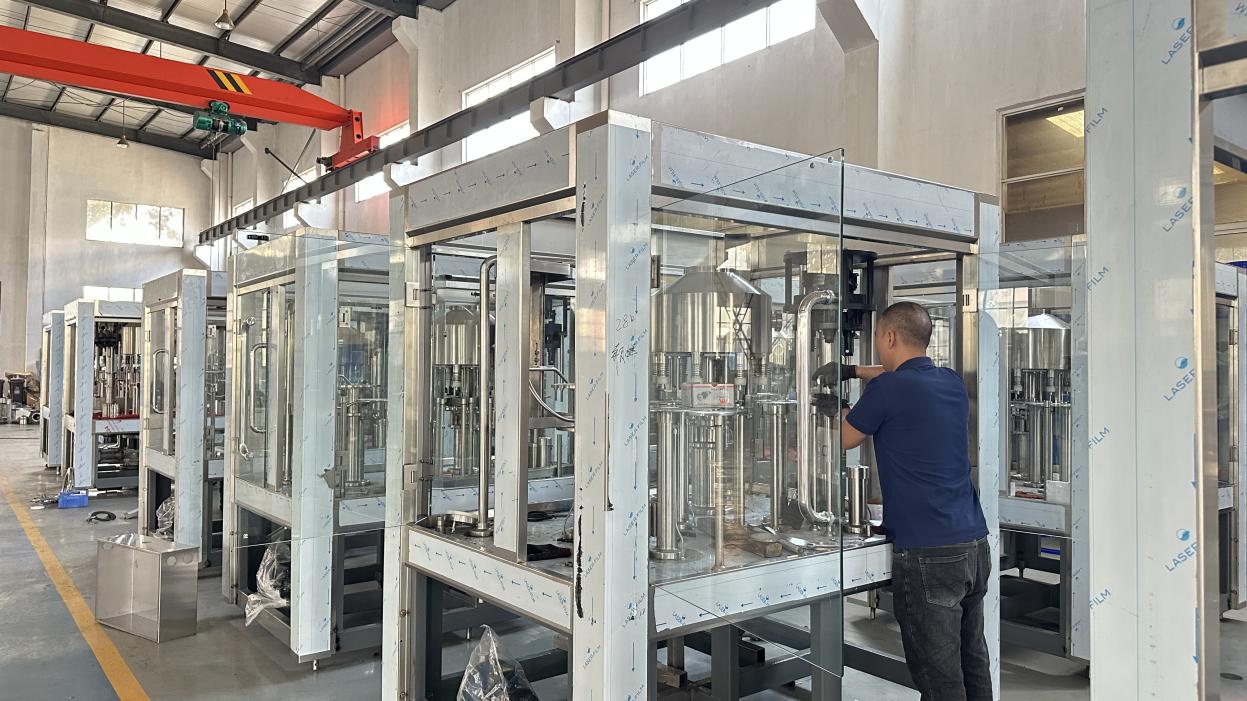
Quality Inspection & Calibration
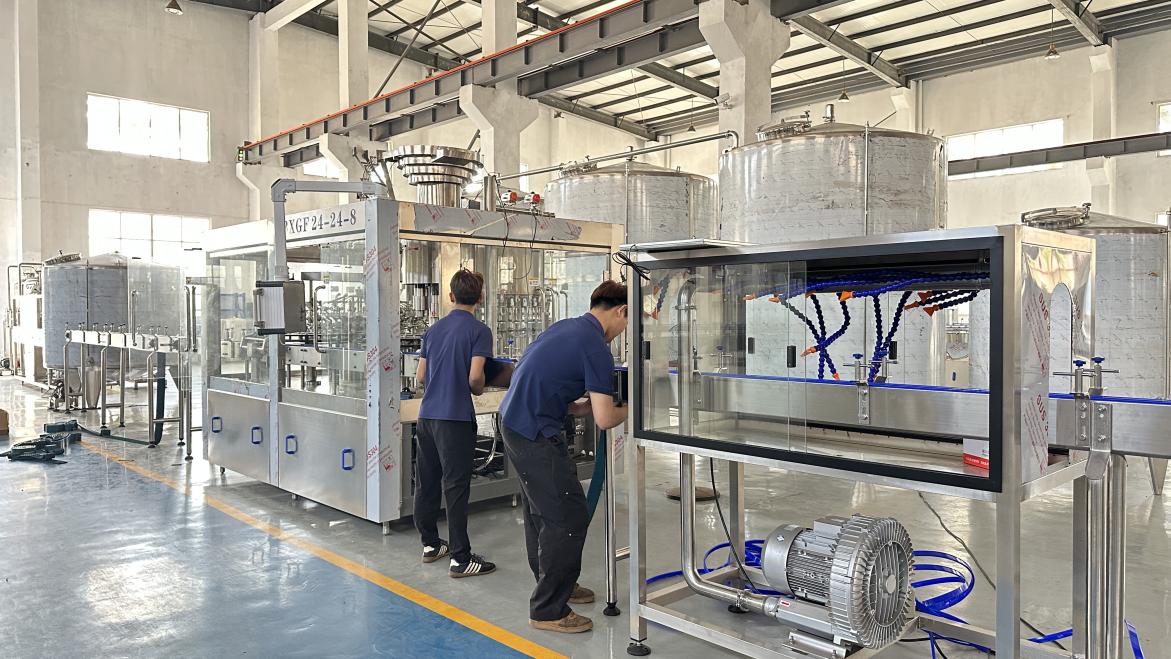
Export-Standard Seaworthy Packaging