Featured Carbonated & Liquid Filling Machinery
Explore certified turnkey filling systems engineered for high volumetric precision, gas retention, and continuous industrial operation.


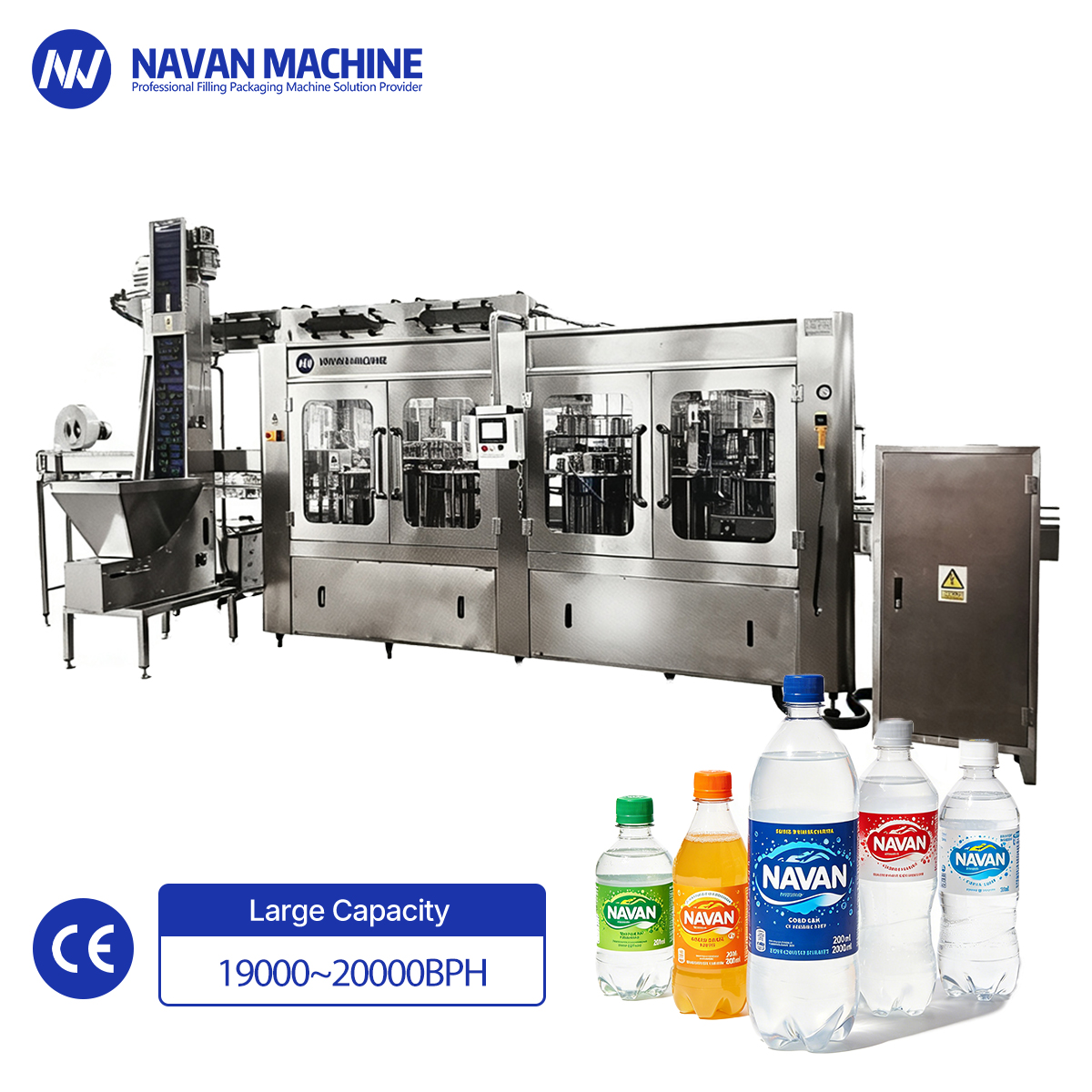

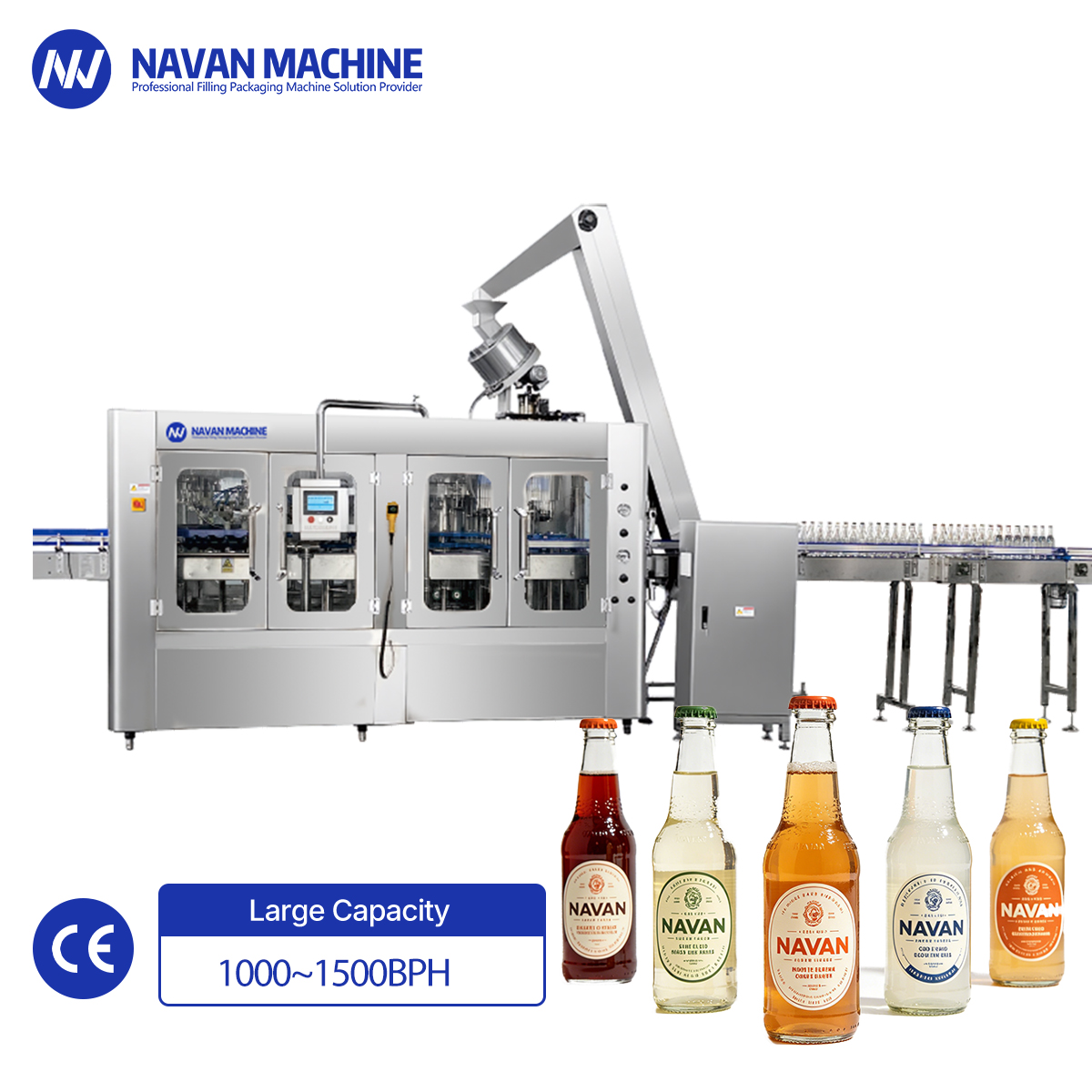


Engineering Principles of Carbonated Soft Drink (CSD) & Sparkling Water Bottling
A comprehensive procurement and technical guide for beverage plant managers, engineering executives, and operational directors evaluating Chinese manufacturing capabilities.
The global market for sparkling water, flavored carbonated beverages, and sparkling mineral waters has experienced exponential growth. Driven by consumer preference for functional hydration, sugar-free soda alternatives, and premium carbonated beverages, bottlers require high-speed production machinery capable of maintaining precise carbonation volumes (CO2 gas volume between 3.0 to 5.0 vol), minimizing fill level variation, preventing foaming, and eliminating microbiological contamination risks. As a premier hub for beverage packaging machinery, Zhangjiagang Osnib Machine Co., Ltd. leads the industry in manufacturing high-precision isobaric (counter-pressure) monoblock bottling lines.
1. The Physics of Gas Dissolution: CO2 Saturation & Temperature Dynamics
Sparkling water filling requires strict adherence to Henry's Law of gas solubility, which dictates that the solubility of a gas in a liquid is proportional to the partial pressure of that gas above the liquid. To achieve a stable target carbonation level of 3.8 to 4.5 g/L without excessive gas escape during filling, the system must control three key parameters:
- Chilled De-aerated Water Feed: Raw processed water must pass through a two-stage vacuum de-aerator to reduce dissolved oxygen (DO) to below 0.5 ppm. Removing non-condensable atmospheric gases prevents nucleation sites that trigger instant foaming during filling.
- Low-Temperature Chilling (2°C – 4°C): Lowering product temperature significantly increases CO2 gas solubility. Osnib Machine’s inline Carbo-Mixer units integrate high-efficiency plate heat exchangers to keep liquid temperatures at a constant 2°C to 4°C.
- High-Pressure Mass Transfer Injection: CO2 is injected into the de-aerated water stream via micro-porous sintered stainless steel spargers operating under 0.4 to 0.6 MPa pressure, ensuring uniform micro-bubble dispersion and complete gas dissolution.
2. Isobaric Counter-Pressure Filling Mechanics: Phase-by-Phase Process
Isobaric counter-pressure filling is engineered specifically for carbonated beverages to maintain equal pressure between the bottle interior and the filling tank prior to liquid discharge. This prevents pressure drops that would cause dissolved CO2 to flash off into gas bubbles. Osnib Machine’s automated XGFD series tri-block monoblocks execute a seamless 5-stage mechanical sequence:
Phase 1: Hermetic Centering & Pre-Evacuation
Pneumatic lifting cylinders raise the bottle, pressing the bottle finish tightly against the sanitary silicone gasket of the filling valve, establishing an airtight seal capable of holding up to 6 bar pressure.
Phase 2: Pressurization (Equalization)
The gas valve opens, channeling pressurized CO2 from the bowl header into the bottle. Pressure inside the bottle equalizes with the filling bowl pressure (typically 0.35 to 0.45 MPa).
Phase 3: Gravity Liquid Discharge
Once pressure equalizes, a heavy-duty mechanical spring opens the liquid valve. Carbonated water flows under gravity down the umbrella-shaped distribution cone, smoothly coating the interior bottle walls.
Phase 4: Level Cut-off via Vent Tube
As liquid reaches the bottom of the stainless steel vent tube, gas return is choked, stopping liquid flow instantly and guaranteeing fill level accuracy within ±2mm across all heads.
Phase 5: Multi-Stage Snifting (Decompression)
Controlled pressure-relief valves open in micro-pulses (snifting) to release top-space pressure safely into a exhaust manifold. This prevents violent eruption (gushing) when the bottle seal disengages.
Phase 6: Immediate Pick-and-Place Capping
The filled container transfers immediately via neck-handling starwheels to the capping turret, where magnetic constant-torque capping heads secure plastic screw caps or crown corks within milliseconds.
Comparing Isobaric Mechanical vs. Flowmeter Bottling Equipment
Selecting the proper machinery configuration depends on container material, target speed, product viscosity, and operational budget.
| Feature Parameter | Mechanical Isobaric System (XGFD) | Electro-Pneumatic Flowmeter System | Ultra-High Speed Monoblock (XGF60) |
|---|---|---|---|
| Primary Application | Sparkling water, CSD, Soft drinks in PET/Glass | Flavored sparkling water, craft sodas, pulp CSD | Large-scale commercial sparkling water plants |
| Speed Capacity (BPH) | 2,000 to 24,000 BPH | 3,000 to 18,000 BPH | 24,000 to 36,000 BPH |
| Filling Volumetric Accuracy | ± 2.0 mm fill level height | ± 0.2% mass/volume measurement | ± 1.5 mm fill level height |
| CIP Cleanability | Manual dummy cup positioning | Automated recirculating CIP loop | Fully automated CIP with dummy cups |
| Changeover Flexibility | Moderate (Modular starwheels & neck grippers) | Fast (PLC electronic recipe selection) | High (Toolless quick-change bottle parts) |
| Capex Investment Level | Cost-effective / High ROI | Premium initial investment | Industrial enterprise scale |
Future Procurement Trends for Carbonated Beverage Production Lines
As global environmental regulations tighten and energy costs increase, global beverage brands and private-label copackers are updating their equipment specifications. Buyers procuring bottling machinery from China are moving beyond simple initial machine price, prioritizing long-term lifecycle total cost of ownership (TCO), operational efficiency, and sustainable engineering.
1. Lightweight PET & rPET Compatibility
Bottlers are shifting to ultra-lightweight PET preforms and up to 100% recycled PET (rPET). Modern bottling lines must utilize neck-handling conveyance and precision pneumatic clamping to prevent thin-walled bottle deformation under high isobaric pressures (up to 5 bar).
2. Energy & CO2 Recovery Systems
Carbon dioxide gas loss during the snifting phase represents a major operational expense. Advanced procurement specs demand closed-loop CO2 recovery systems that capture, filter, and re-compress vent gas for reuse in tank blanket pressurization, reducing gas waste by up to 25%.
3. Smart Industry 4.0 IoT Integration
Leading manufacturers like Osnib Machine embed Siemens or Allen-Bradley PLC control systems with Ethernet/IP interfaces. Factory directors can monitor line efficiency (OEE), filling valve flow rates, temperature variations, and predictive maintenance alerts in real-time via mobile apps.
Market & Technological Trends Shaping China's Beverage Machinery Export Sector
China, particularly the Zhangjiagang packaging machinery industrial cluster in Jiangsu Province, has evolved from a low-cost equipment supplier into an advanced innovation hub for turn-key beverage manufacturing solutions. The market is driven by several key technological shifts:
- Hybrid Line Versatility (Combi-Lines): Producers require flexible filling lines that switch between sparkling water, still water, and flavored carbonated soft drinks with minimal mechanical adjustment. Dual-mode valves allowing both pressure and non-pressure filling are gaining rapid market adoption.
- Aseptic Cold-Fill Carbonation: To serve clean-label, preservative-free sparkling juices and botanical water products, dry aseptic isolators and sterile air filtration (HEPA Class 100) are integrated directly over the filling monoblock, ensuring zero microbial growth without thermal degradation of natural flavors.
- High-Speed Can-Bottling Dual Platforms: With aluminum sleek cans growing rapidly alongside PET and glass, modern plant layouts incorporate modular end-of-line packaging systems capable of shrink-wrapping both canned and bottled SKU bundles on the same wrapper.
Frequently Asked Questions for Bottling Line Procurement
Answers to common technical, commercial, and logistics questions asked by international buyers before placing an order.
Why Top Global Bottlers Trust Zhangjiagang Osnib Machine Co., Ltd.
Integrating direct machinery engineering, rigorous quality assurance, and localized international service support.
Direct Factory Manufacturing
Located in Leyu Town, Zhangjiagang City, our integrated facility eliminates intermediary markups. Our mechanical engineers work directly with export sales teams to build equipment to your exact container drawings and voltage requirements.
TÜV Onsite Verified Quality
Our manufacturing infrastructure, structural engineering standards, safety compliance, and legal standing undergo strict third-party verification by TÜV Rheinland, offering overseas buyers total commercial peace of mind.
End-to-End Turnkey Execution
From raw water RO purification, preform blow molding, isobaric monoblock filling, to hot-melt OPP labeling, PE shrink bundling, and robotic palletizing — we deliver one seamlessly integrated, fully compatible production line.
Request a Customized Turnkey Bottling Proposal
Planning a new sparkling water plant or expanding your current carbonated beverage capacity? Send us your bottle dimensions, liquid viscosity specifications, and target hourly output for a complete engineering layout and quotation.
