Featured Bottling & Filling Equipment Solutions
Verified machinery engineering standards for global beverage, edible oil, and liquid packaging operations.
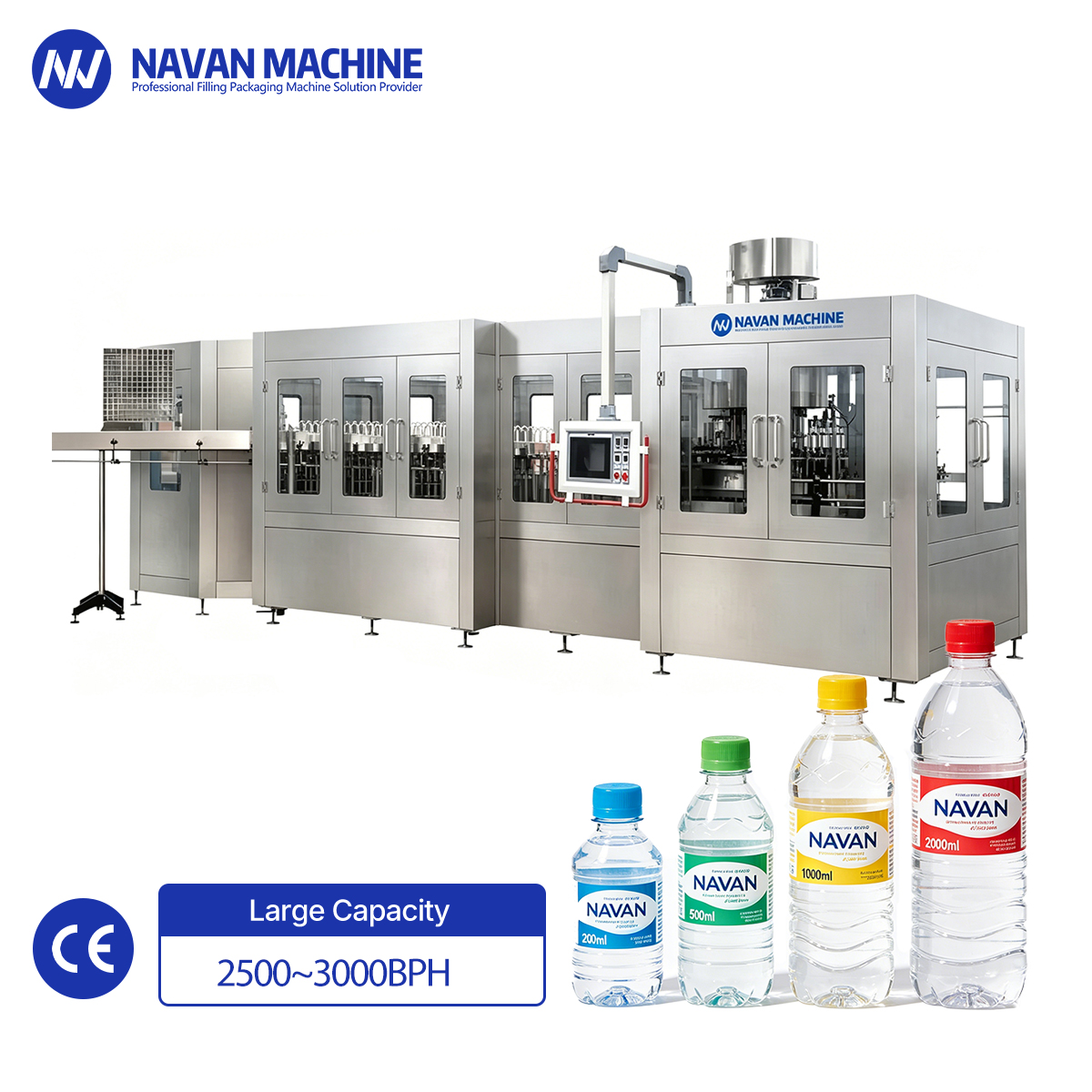


1. Technical Engineering Analysis of Edible Oil Bottling & Dosing Architectures
Packaging edible plant oils—such as sunflower, soybean, palm olein, olive, corn, and peanut oil—presents unique mechanical engineering challenges compared to low-viscosity aqueous liquids like mineral water. The primary dynamic variable in vegetable oil packaging is temperature-dependent fluid rheology and surface tension behavior. As ambient plant temperatures fluctuate, oil viscosity alters dramatically, directly influencing laminar flow rates, pipe friction coefficients, valve shut-off response, and volumetric volumetric displacement precision.
To establish competitive advantage and guarantee operational efficiency, top-tier Chinese edible oil filling machine manufacturers like Zhangjiagang Osnib Machine Co., Ltd. engineer automated filling systems around four dominant dosing methodologies, each calculated to mitigate specific fluid dynamics challenges:
A. Servo-Driven Positive Displacement Piston Dosing
Continuous-flow piston architectures utilize high-precision servo actuators connected directly to AISI 316L stainless steel cylinder blocks. When handling high-viscosity oils (such as cold-pressed extra virgin olive oil or unrefined tropical oils), the servo motor regulates the suction stroke speed to prevent cavitation and fluid tearing. During the compression stroke, variable velocity profiles ensure rapid initial volumetric displacement followed by decelerated final cutoff, preventing splash dynamics inside narrowed container necks.
B. Coriolis Mass Flowmeter & Magnetic Flow Dosing Technology
Modern high-speed edible cooking oil packaging plants increasingly pivot toward mass flowmeter dosing. Mass flowmeter technology measures absolute mass flow rather than volume, rendering the filling process completely immune to density shifts caused by temperature fluctuations in raw oil storage tanks. With zero mechanical moving parts in contact with product lines, mass flow systems provide superior Clean-in-Place (CIP) performance, eliminating cross-contamination risks when switching between soybean oil and high-value sesame oil lines.
C. Load-Cell Net Weight Gravimetric Filling
For large-format edible oil containers (3-Litre to 5-Litre PET jugs and 10L–20L commercial food-service drums), net weight filling remains the regulatory standard for commercial trade compliance. High-speed weight sensors sample container weight at kilohertz frequencies, feeding real-time digital signals to fast-acting dual-stage pneumatic filling valves (high-flow coarse filling followed by micro-dosing dribble phase). This guarantees absolute legal net-weight compliance without over-filling expensive lipids.
Osnib Engineering Advantages & Manufacturing Credentials
Why leading global edible oil refineries and beverage bottlers source direct machinery from Zhangjiagang, China.
Factory & Trade Integration
Zhangjiagang Osnib Machine Co., Ltd. operates a direct manufacturing facility (1,000–3,000 m²) with in-house mechanical design, CNC machining, PLC automation programming, and dedicated export engineering departments. Zero intermediary markup guarantees direct technical alignment.
TÜV Rheinland & CE Compliance
Independently verified onsite by TÜV Rheinland. Full machine series—including PET blow molders, oil filling monoblocks, sleeve/OPP labelers, and robotic palletizers—carry full CE certification for European and international market entry.
Global Service Network
Beyond our China headquarters, Osnib operates localized regional offices in Russia (Goryachy Klyuch, Krasnodar Krai) and Africa (Kigali, Rwanda), providing rapid deployment for site commissioning, operator training, and spare parts supply.
2. Technical Comparison Matrix: Edible Oil Filling System Selection
Selecting the optimal filling architecture requires balancing container geometry, throughput targets (BPH), dosing tolerance standards, and CIP requirements. The matrix below outlines operational parameters across major machine configurations:
| Filling Architecture | Target Viscosity Range | Dosing Precision | Container Range | CIP Cleanability | CAPEX & Efficiency |
|---|---|---|---|---|---|
| Servo Linear Piston Filler | Medium - High (50–5,000 cP) | ± 0.5% Volumetric | 200ml – 5,000ml (PET / HDPE) | Good (Rinsing Circuit Required) | Moderate CAPEX / Flexible Format |
| Coriolis Mass Flowmeter Filler | Low - High (10–10,000 cP) | ± 0.2% Mass-based | 250ml – 5,000ml (PET / Glass) | Excellent (Full Automatic CIP) | Higher CAPEX / Lowest OPEX |
| Load-Cell Net Weight Filler | Low - Very High (10–15,000 cP) | ± 0.2% Weight-based | 1,000ml – 20,000ml (Jugs/Drums) | Good (Drip tray isolation) | Moderate CAPEX / High Accuracy |
| Gravity Vacuum Filler | Low Viscosity (< 50 cP) | ± 1.0% Liquid Level | 250ml – 2,000ml (Glass Only) | Standard Hygiene | Lowest CAPEX / Entry Level |
3. Critical Engineering Anti-Drip & Oxidation Protection Technologies
Anti-Drip Liquid Cutoff Valves & Vacuum Pull-Back Mechanisms
Vegetable oils possess low cohesive surface tension, leading to stringing, tailing, and droplet formation at the discharge nozzle during valve closure. If unmitigated, oil droplets land on container neck threads, causing severe issues during capping (cap slippage) and compromising heat-seal induction liners or label adhesive adhesion down the line.
Osnib machine engineers solve this through a dual-action nozzle setup: snuff-back suction paired with internal spring-loaded mesh cut-off heads. Upon valve closure, a micro-piston executes a reverse suction stroke of 0.5–2.0 ml, immediately withdrawing residual liquid oil back into the nozzle orifice. Simultaneously, an external drip tray slides under the filling heads during container indexing to guarantee zero oil contamination on conveyors.
Modified Atmosphere Packaging (MAP): Nitrogen Purging Systems
Vegetable oils containing unsaturated fatty acids (omega-3, omega-6, oleic acid) suffer rapid oxidative degradation when exposed to dissolved headspace oxygen, leading to rancidity, off-flavors, and shortened retail shelf life. High-tier Chinese edible oil exporting lines integrate dual-stage nitrogen injection protocols:
- Pre-Filling Container Purging: High-purity gaseous nitrogen (N₂) is injected into empty PET or glass bottles prior to oil introduction, displacing ambient oxygen-rich air.
- Post-Filling Headspace Injection: Liquid nitrogen dosing or gaseous N₂ purging at the capping transition zone drops headspace oxygen concentration to below 0.5% (v/v), locking in freshness and enabling lightweight PET bottle structural stability through slight internal nitrogen pressurization.
Future Procurement & Technological Trends in Edible Oil Packaging
Key innovations driving total cost of ownership (TCO) reduction, ultra-clean operation, and smart plant integration from 2025 to 2030.
Industry 4.0 Smart IoT Controls
Real-time telemetry monitoring filling valve accuracy, servo torque, oil temperature variations, and predictive component wear. Remote OPC-UA integration connects direct to factory MES systems.
Toolless Changeover & Flexibility
Modern lines handle multiple bottle geometries (0.5L, 1L, 3L, 5L) on a single platform. Quick-release starwheels and automated height adjustments reduce changeover downtime to under 15 minutes.
rPET & Lightweight Container Handling
Handling ultra-lightweight recycled PET preforms without wall collapse. Neck-handling starwheel transfer paired with nitrogen headspace pressurization ensures package structural integrity during stacking.
Integrated Ultra-Clean Enclosures
HEPA laminar flow air filtration hoods maintaining Class 100 positive-pressure cleanliness over filling zones, preventing airborne dust or microbial contamination in premium olive oil lines.
Frequently Asked Sourcing Questions (FAQ)
Technical and commercial clarity for procurement managers and turnkey plant developers.
How do ambient temperature shifts affect edible oil filling precision, and how is this managed?
Vegetable oil density changes by approximately 0.07% per °C temperature change. Standard volumetric piston fillers without thermal compensation will experience volume drift as ambient temperatures rise from morning to afternoon. Osnib Machine solves this by offering mass flowmeter fillers (which measure mass independent of temperature/density) or integrated RTD temperature sensors linked to PLC algorithm software that automatically recalibrates piston stroke length in real-time based on live fluid temperature feed.
What is the Minimum Order Quantity (MOQ) and lead time for a complete turnkey line?
The Minimum Order Quantity is 1 set. Whether you require a single linear piston oil filler or a fully integrated turnkey line—comprising water treatment, PET bottle blowing, oil filling, capping, OPP labeling, shrink wrapping, and palletizing—the MOQ remains 1 set. Standard fabrication lead time ranges from 30 to 50 working days depending on automation complexity and custom container mold requirements.
What after-sales service and technical support infrastructure is provided internationally?
Osnib Machine provides 7×24 round-the-clock remote diagnostic support via video link and PLC online telemetry. For physical installation, commissioning, and staff training, we dispatch experienced mechanical and electrical engineers directly to your plant. Furthermore, our dedicated overseas regional branches in Kigali (Rwanda) and Goryachy Klyuch (Russia) maintain local engineering staff and critical spare parts inventory to service African and CIS regional clients swiftly.
Which delivery incoterms and international payment options are supported?
We support flexible trade and shipping incoterms including FOB, CFR, CIF, EXW, CIP, FCA, DDP, and DDU. Accepted payment methods include Telegraphic Transfer (T/T), Irrevocable Letter of Credit (L/C at sight), Credit Card, and Western Union. We process transactions across major global currencies including USD, EUR, GBP, RUB, and CNY.
Can one single line handle multiple oil types (e.g., Sunflower, Olive, and Sesame Oil) without flavor transfer?
Yes. By engineering food-grade AISI 316L stainless steel product contact pipelines, Teflon/Viton seal packages, and automated CIP (Clean-In-Place) spray balls into the storage hopper, lines can be thoroughly flushed with food-compatible cleaning agents between production runs. Mass flowmeter systems feature smooth internal bore tubing with zero dead-legs, minimizing rinse fluid volume and enabling quick product changeovers.
4. Turnkey Project Implementation Framework
From initial plant drawing evaluation to final commercial line commissioning, Osnib Machine executes turnkey edible oil packaging projects through a strict 6-phase engineering lifecycle:
- Phase 1: Engineering Requirement Review: Deep evaluation of product viscosity, target line speed (BPH), bottle neck dimensions, cap torque specs, and available factory floor dimensions.
- Phase 2: CAD Layout & Line Balancing: Drafting 2D/3D plant layout drawings detailing conveyor routing, electrical drop points, pneumatic piping, and operator access zones.
- Phase 3: Precision Manufacturing & QC Assembly: High-precision CNC component machining, frame welding, electronics wiring according to CE standards, and material certificate verification.
- Phase 4: Pre-Shipment Factory Acceptance Testing (FAT): Operational trial run conducted at our Zhangjiagang workshop using the client's actual bottle samples and oil fluid proxies. Video FAT reports provided.
- Phase 5: Logistics & Onsite Commissioning: Anti-corrosion export packaging, ocean shipping coordination, and dispatch of factory engineers for physical installation, alignment, and PLC commissioning.
- Phase 6: Operator Training & Lifetime Spare Parts Supply: Hands-on training for local maintenance technicians covering machine operation, preventative maintenance routines, and quick component replacement procedures.
Request a Customized Edible Oil Packaging Proposal
Connect directly with Osnib senior bottling engineers to receive customized equipment recommendations, CAD workshop layout drawings, and factory-direct pricing for your project.
Contact Us