


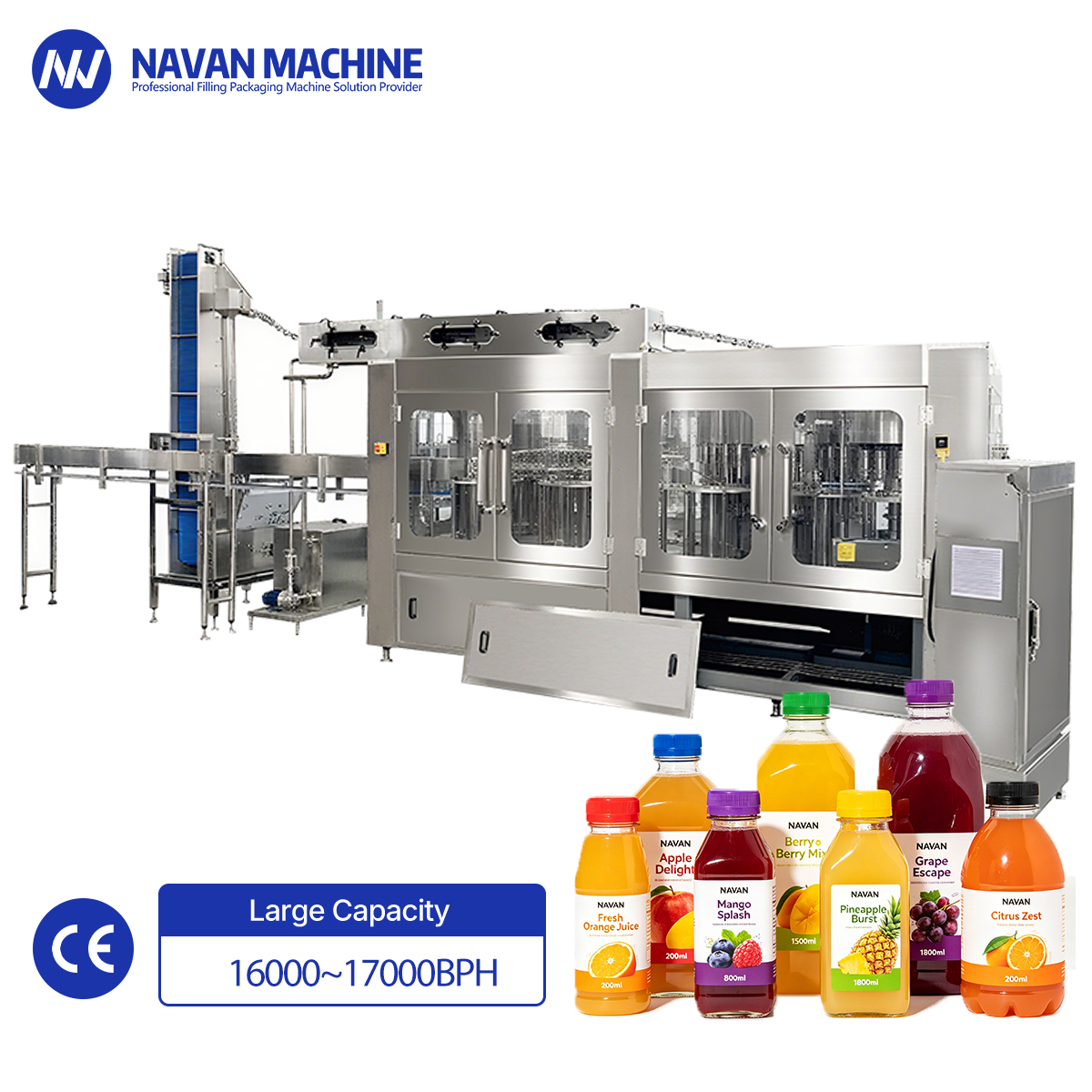
1. Executive Industry Summary: The Landscape of Juice Bottling Machinery Procurement
The global fruit juice and liquid beverage market has shifted dramatically over the past decade. Modern consumers continuously demand high-purity, low-preservative, pulp-enriched fruit juices, teas, and functional botanical drinks. For beverage plant operators, co-packers, and commercial importers, securing high-performance machinery from direct manufacturers in China has become a cornerstone strategy for maintaining capital efficiency and operational agility.
As a leading engineering OEM/ODM manufacturer headquartered in Zhangjiagang City, China, Zhangjiagang Osnib Machine Co., Ltd. stands at the forefront of liquid packaging innovation. Sourcing a complete China Wholesale Juice Bottling Line requires a rigorous technical evaluation far beyond baseline speed ratings. It demands an intimate understanding of thermal preservation kinetics, pulp handling mechanics, container structural integrity under vacuum conditions, and automated sanitary clean-in-place (CIP) protocols.
Unlike standard purified water bottling lines, fruit juices exhibit complex physical dynamics. Juice matrixes vary from clear clarified apple juice (10–12° Brix) to thick pulpy orange, mango nectar, or tomato paste (up to 30° Brix or higher). Sourcing an optimized line requires selecting valve dynamics—such as electronic mass flowmeters or mechanical piston dosing—tailored specifically to fluid shear constraints and particulate diameters.
2. Engineering Architecture of Modern Juice Bottling Lines
A full turnkey fruit juice production plant operates as an integrated ecosystem. Each module must synchronize flawlessly with preceding and downstream machinery to prevent thermal drop-off, thermal degradation of vitamin content, or microbial contamination.
2.1 Water Treatment & Raw Material Processing (Pre-treatment)
Before filling, raw water undergoes multi-stage industrial reverse osmosis (RO), ultrafiltration (UF), and UV/Ozone sterilization to reach aseptic standards. Juice concentrates are blended in temperature-controlled SS316L mixing tanks equipped with high-shear agitators, tubular pasteurizers, and inline homogenizers. Thermal pasteurization subjects the product to elevated temperatures (typically 95°C to 135°C for short duration UHT processing) to achieve complete enzymatic inactivation and microbial sterility.
2.2 Rinsing-Filling-Capping 3-in-1 Monoblock Integration
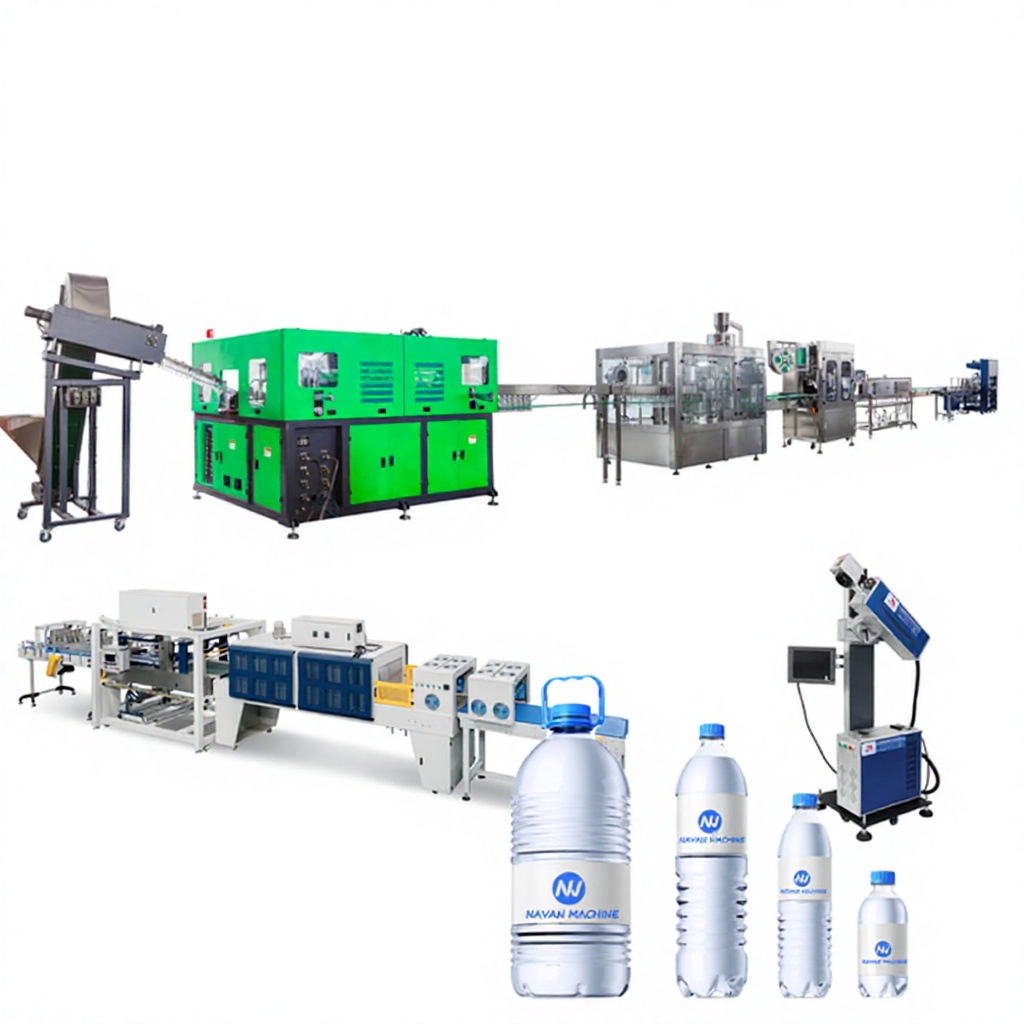
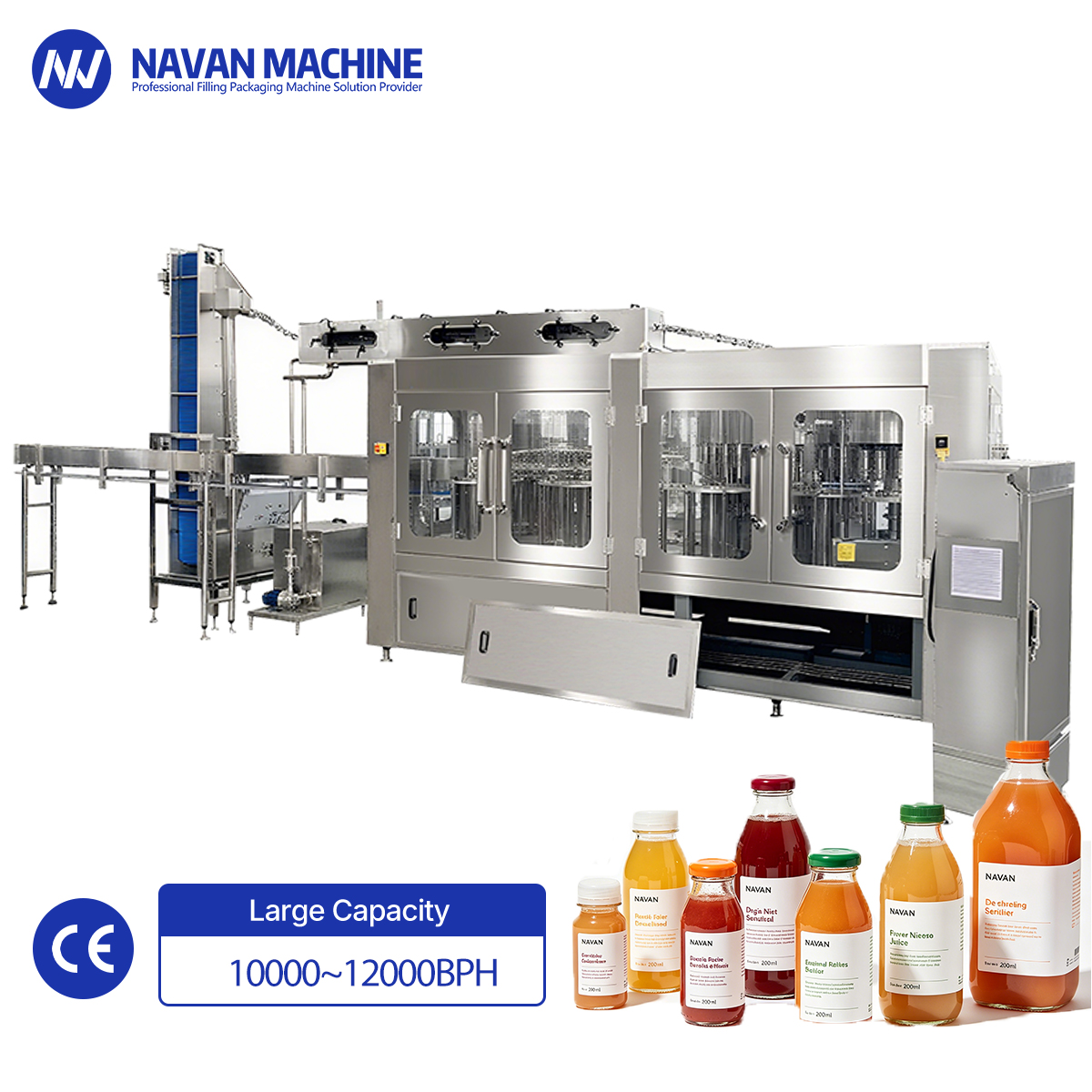
The core of the line is the compact 3-in-1 Monoblock system. Integrating bottle rinsing, liquid filling, and cap sealing into a single enclosed hygienic housing drastically reduces footprint and atmospheric exposure:
- Sterile Rinsing: PET or glass bottles are inverted and sprayed with sterile water or ozone-rich solution via stainless steel nozzles. Sanitizing spray timing is optical-sensor activated to minimize water consumption.
- Thermal Recirculating Hot Filling: During hot filling (85°C–92°C), juice is maintained at constant high temperature. If line flow pauses, an automatic thermal return valve diverts hot juice back to the pasteurizer balance tank, preventing product cooling inside the filling bowl.
- Magnetic / Servo Capping: Constant torque magnetic capping heads seal heat-resistant PET flat caps or aluminum ROPP caps without damaging bottle neck threads. Integrated HEPA air filtration ensures positive pressure air purity (Class 100) inside the filling chamber.
2.3 Bottle Inversion & Cooling Tunnel Operations
Immediately after capping, filled bottles pass through a thermal bottle inversion conveyor. The bottle is tilted by 45° to 90° for 15 to 30 seconds, using the residual high thermal energy of the liquid to fully sterilize the inner surface of the cap and neck rim. Subsequently, the bottles enter a multi-stage shower cooling tunnel, incrementally stepping down the product temperature from 85°C to ambient temperature (~30°C). Controlled cooling prevents container deformation caused by sudden vacuum collapse and protects natural color and flavor compounds.
| Filling Technology Method | Thermal Processing Range | Suitable Liquid Matrix | Container Material Compatibility | Microbial Shelf-Life Target |
|---|---|---|---|---|
| Hot-Fill System (Standard) | 85°C – 92°C | Clear Juices, Flavored Teas, Isotonic Drinks | Heat-Resistant PET (HR), Glass Bottles | 12 – 18 Months (Ambient) |
| Pulp Dosing Hot-Fill | 82°C – 88°C | Juices with Suspended Sacs/Pulp (<10mm) | Heavy-neck PET, Wide-mouth Glass Jars | 9 – 12 Months (Ambient) |
| Cold Aseptic Filling | 20°C – 25°C (Aseptic Zone) | Sensitive Dairy-Juice Mixes, Pure Nectars | Lightweight Standard PET, HDPE | 12+ Months (Preservative-Free) |
| Isobaric Carbonated Filling | 4°C – 8°C (Chilled) | Sparkling Juices, Carbonated Cider | PET, Glass, Aluminum Pop Cans | 6 – 12 Months |
3. Key Technological Trends Shaping the Future of Bottling (2025–2035)
As global buyers calculate Total Cost of Ownership (TCO), juice machinery manufacturers in China are introducing advanced mechanical and digital engineering breakthroughs:
1. Preform Lightweighting & Heat Neck Vacuum Mitigation
Traditional hot-fill PET bottles require heavy grammage (up to 28-32g for 500ml) with structural ribs to prevent vacuum buckling. Advanced lines now integrate active nitrogen injection or controlled ribless preform blowing, reducing resin mass by up to 18% while maintaining rigid structural integrity.
2. Contactless Electromagnetic Flowmeter Valves
Replacing traditional mechanical valve stems with contactless magnetic inductive flowmeters eliminate internal moving seals where pulp fiber lodges. This guarantees filling precision within ±0.2% and speeds up CIP cleanability.
3. Smart Industry 4.0 IoT & Siemens/PLC Automation
Remote diagnostics, cloud-based OEE (Overall Equipment Effectiveness) tracking, and real-time thermal sensor monitoring enable operators to track energy usage, CIP chemical concentrations, and preventive maintenance alerts directly from mobile dashboards.
4. Future Procurement Trends for International B2B Buyers
Navigating international machinery purchasing involves aligning factory capacity with long-term commercial goals. Key trends influencing global procurement strategies include:
4.1 Shift Toward Flexible Multi-Liquid Bottling Lines
Importers are moving away from single-purpose machinery. Modern modular filling stations feature interchangeable nozzle manifolds and quick-change starwheels, allowing a single line to switch between high-temperature juice filling, still mineral water bottling, and cold tea packaging with minimal downtime.
4.2 Sustainability, rPET & Eco-Packaging Compliance
Stricter environmental packaging mandates across Europe, North America, and Latin America necessitate compatibility with post-consumer recycled PET (rPET) preforms. Machinery must feature enhanced IR heating control in blow molders to accommodate uneven color and melt indexes inherent in recycled resin pellets.
4.3 De-Risking via Verified Onsite Manufacturer Partnerships
Overseas buyers increasingly prioritize direct factory relationships over third-party trading intermediaries. TÜV Rheinland verified manufacturer credentials, transparent factory acceptance testing (FAT), direct access to mechanical design engineers, and regional spare-parts hubs give global buyers supply chain predictability.
5. Enterprise Advantages & Manufacturing Authority: Zhangjiagang Osnib Machine Co., Ltd.
With years of dedication to technical innovation in liquid packaging machinery, Zhangjiagang Osnib Machine Co., Ltd. has earned recognition as a reliable, authoritative partner for beverage projects worldwide.
Direct Manufacturer Integrity & Custom Design
We are a fully integrated manufacturer located in Zhangjiagang City, China's premier bottling machinery hub. From customized bottle structural design and 3D factory layout planning to component machining and final line assembly, everything is managed by our dedicated engineering team.
Certified Rigor: CE & TÜV Rheinland Verified
Our complete filling lines, PET blow molders, and automated packaging systems meet international safety standards, carrying official CE marking. Our factory facilities undergo rigorous onsite audits by TÜV Rheinland, validating our legal manufacturing credentials and quality control protocols.
Global Technical Footprint & Localized Service
To eliminate operational risk for international clients, Osnib Machine maintains regional support hubs, including our Russia Office in Goryachy Klyuch and Africa Branch in Kigali, Rwanda. Our localized field engineers handle installation, line commissioning, and emergency troubleshooting.
Complete Turnkey Delivery & Comprehensive Training
We offer end-to-end execution: raw water analysis, bottle preform mold design, complete utility pipeline wiring drawings, machine FAT testing, export crating, on-site installation, and intensive staff operator training for seamless production startups.
