High-Efficiency Wholesale Water & Beverage Bottling Lines
Explore our TÜV Rheinland verified and CE-certified filling, blowing, labeling, and packing machinery directly from our Zhangjiagang manufacturing center.



Zhangjiagang Osnib Machine Co., Ltd.
As a leading Chinese wholesale water bottling line manufacturer and exporter located in Zhangjiagang City, Jiangsu Province, Osnib Machine provides complete turnkey liquid packaging projects. Our facility integrates engineering R&D, precision manufacturing, factory acceptance testing (FAT), and international project dispatching under one unified standard.
We specialize in full-spectrum solutions: Reverse Osmosis Water Treatment Systems, Rotary Blow Molding Machines, 3-in-1 Rinsing-Filling-Capping Monoblocks, OPP Hot Melt Labelers, PVC Sleeve Labelers, PE Film Shrink Wrappers, and Automatic Robotic Palletizers.
Inquire NowWhitepaper: Engineering & Procurement Trends in Water Bottling Lines (2025–2030)
The global beverage packaging industry is undergoing a structural paradigm shift driven by sustainability directives, rising energy costs, ultra-lightweight PET preforms, and the imperative for real-time digital monitoring. For commercial importers, beverage plant operators, and contract packaging enterprises sourcing water bottling lines from China, evaluating equipment strictly based on purchase price is no longer sufficient to guarantee long-term operational profitability.
Modern bottling procurement strategies prioritize Total Cost of Ownership (TCO), Overall Equipment Effectiveness (OEE), kilowatt-hour consumption per thousand bottles, and rapid container changeover capabilities. Below is an engineering analysis of the macro procurement trends and technological advancements defining next-generation Chinese water bottling machinery.
1. Transition to Integrated Combi-Block (Blow-Fill-Cap) Technology
Traditional liquid bottling lines rely on standalone stretch blow molders connected via extensive air conveyor systems to rinsing-filling-capping monoblocks. While functional, air conveyors consume substantial electrical energy, require high cleanroom footprint, and introduce risks of bottle static attraction and dust contamination.
The future of wholesale water bottling line manufacturing centers on Blow-Fill-Cap Combi-Block Systems. By directly transfer-molding PET bottle preforms and passing hot, freshly blown containers straight to the sterile filling wheel via starwheel pitch alignment, plant owners eliminate air conveyors entirely. This reduces factory floor space requirements by 30% to 45%, decreases energy consumption by 25%, and prevents external atmospheric contamination during bottle transit.
2. Servo-Driven Volumetric & Flowmeter Filling Systems
Legacy mechanical gravity filling valves rely on liquid level probes and vent tubes to cut off fluid flow. While cost-effective, mechanical level-filling exhibits slight volumetric variances when bottle wall thickness fluctuates or when temperature changes alter liquid density. Furthermore, mechanical lifter cylinders present ongoing maintenance requirements for pneumatic seals.
Leading Chinese water bottling exporters now integrate Magnetic Flowmeter (Electromagnetic) and Mass Flowmeter Volumetric Filling Valves driven by independent servo motors. Liquid never comes into contact with pneumatic mechanical springs, ensuring non-contact hygienic filling, fill accuracy tolerances within ±0.5%, and automated recipe switching via the HMI screen without requiring physical valve height adjustments.
Ultra-Lightweight PET Handling
Advanced neck-handling starwheels and positive-pressure pneumatic neck clamping prevent bottle crumpling on ultra-thin 0.25L–2.0L PET containers down to 9.5 grams.
Low-Air Blowing Energy Recovery
Integrated air recovery systems capture high-pressure exhaust air (up to 35-40 bar) from PET blowing molds and recycle it into pre-blowing or low-pressure line pneumatics.
Smart IoT Remote Diagnostics
Siemens/Omron PLC architectures equipped with secure Ethernet/VPN modules allow Chinese factory engineers to perform live firmware updates and sensor diagnostics globally.
3. Hygienic Design Standards & Automated CIP Systems
Microbiological control remains the primary quality benchmark for commercial mineral water, purified spring water, and flavored beverage bottling. Next-generation Chinese factories incorporate automated Clean-in-Place (CIP) circulation manifolds featuring artificial dummy cups that automatically clamp onto filling nozzles during sanitization cycles.
Stainless steel structural frames are strictly constructed using AISI 304 or AISI 316L for all product contact surfaces, paired with electro-polished fluid pipelines, zero-dead-leg valves, and class 100 HEPA air filtration laminars positioned over the filling and capping turrets to maintain positive sterile pressure.
Technical Technology Selection Matrix for B2B Importers
Selecting the appropriate filling mechanism is critical when ordering a wholesale bottling plant from China. The table below delineates mechanical characteristics, optimal liquid applications, container compatibility, and operational throughput metrics across core bottling technologies.
| Filling Principle | Suitable Liquid Types | Container Types | Throughput Range (BPH) | Key Mechanical Advantage |
|---|---|---|---|---|
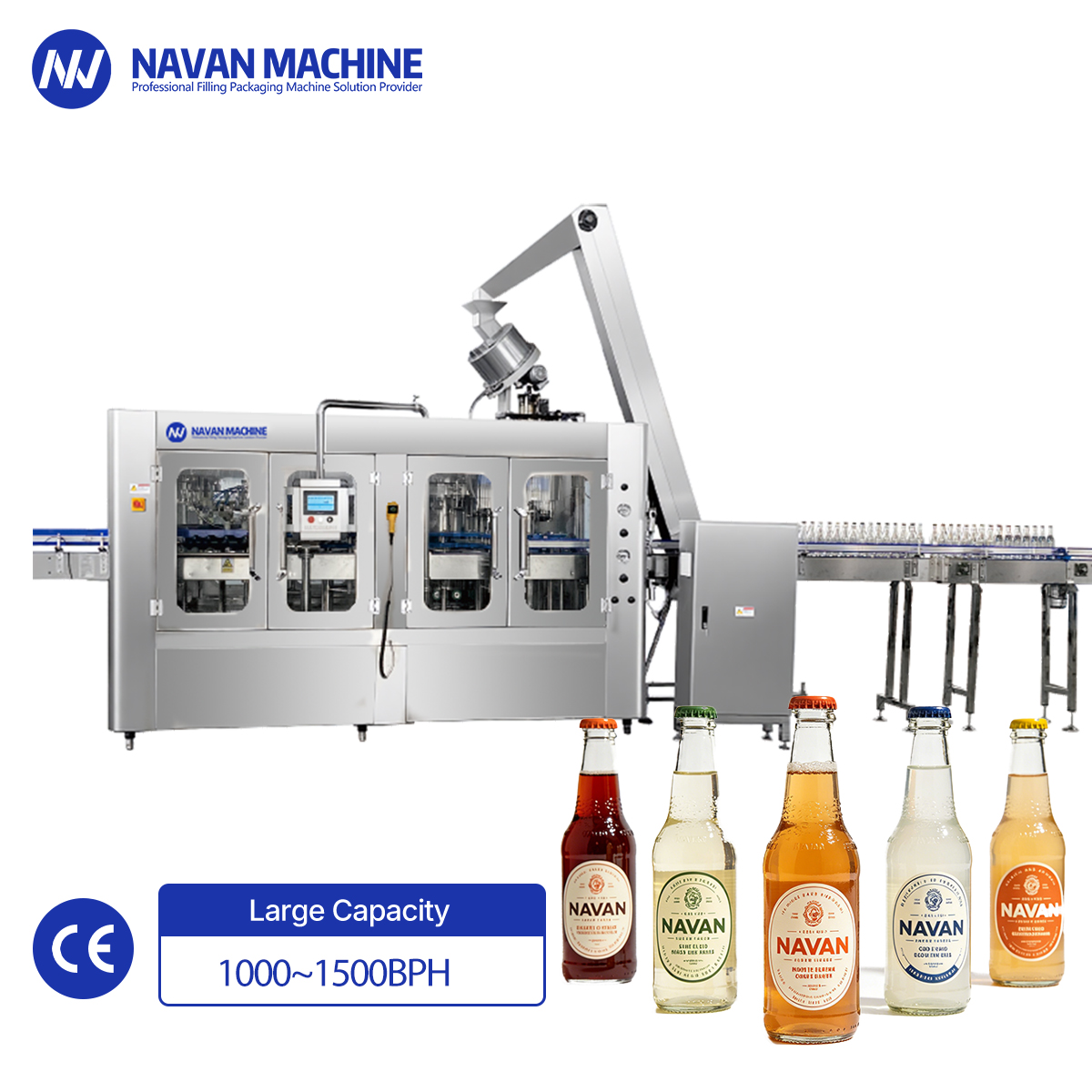
| Atmospheric Gravity | Purified Water, Mineral Water, Non-Carbonated Fluids | PET Bottles (0.2L - 2.5L) | 3,000 – 36,000 BPH | Simplicity, high speed, low maintenance costs, economical spare parts. |
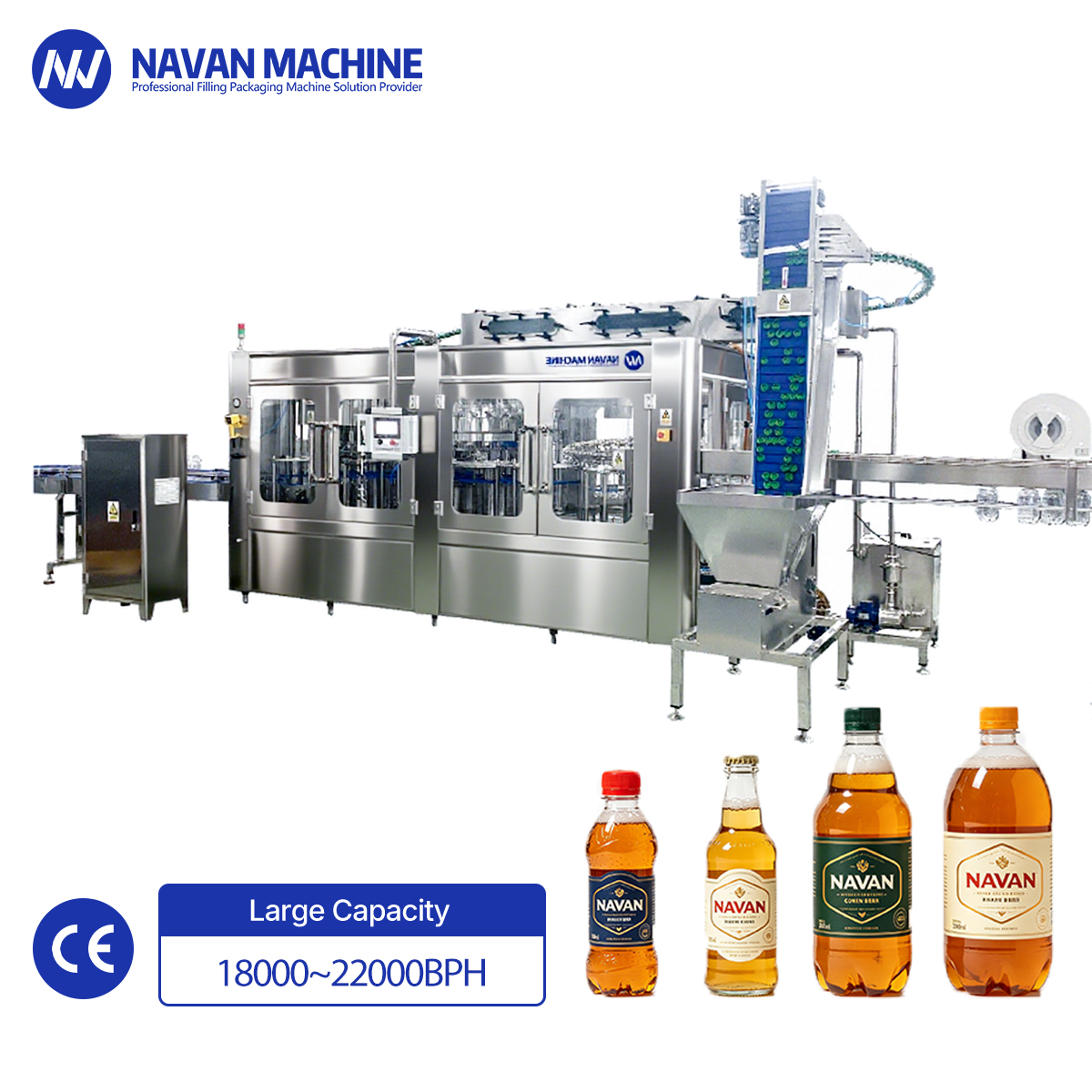
| Isobaric (Counter-Pressure) | CSD, Sparkling Water, Carbonated Beer, Energy Drinks | PET, Glass Bottles, Aluminum Cans | 2,000 – 24,000 BPH | Maintains CO2 equilibrium during transfer; eliminates liquid foaming. |
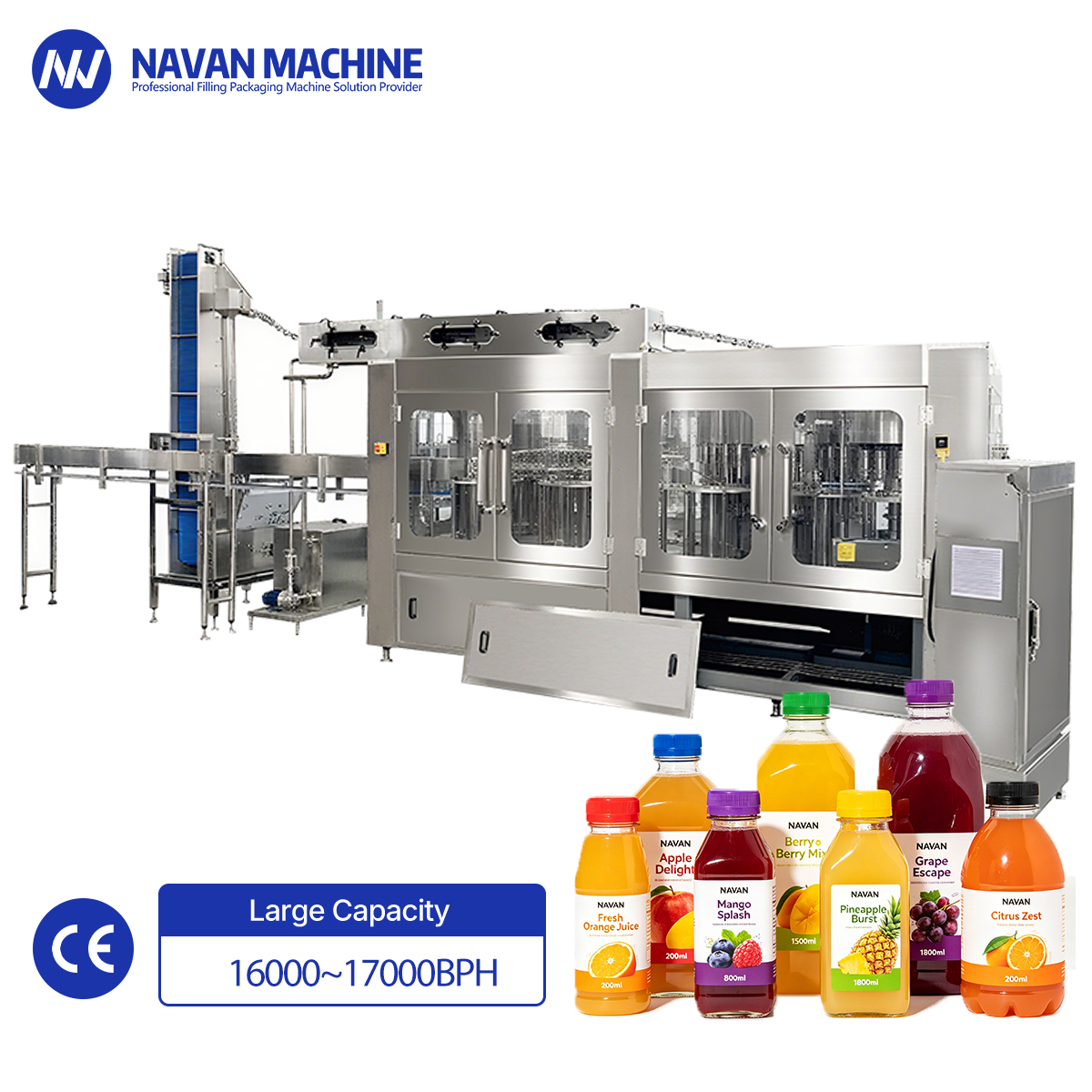
| Hot-Filling (85°C - 92°C) | Fruit Juices, Ready-To-Drink Teas, Functional Waters | Heat-Resistant PET / Glass | 4,000 – 24,000 BPH | Thermal pasteurization during filling; reflux system ensures internal sterility. |
| Servo Piston / Flowmeter | Edible Oils, Viscous Sauces, Honey, Syrups | HDPE, PET, Glass Jars | 1,000 – 12,000 BPH | Drip-free positive displacement; extreme accuracy across variable viscosities. |
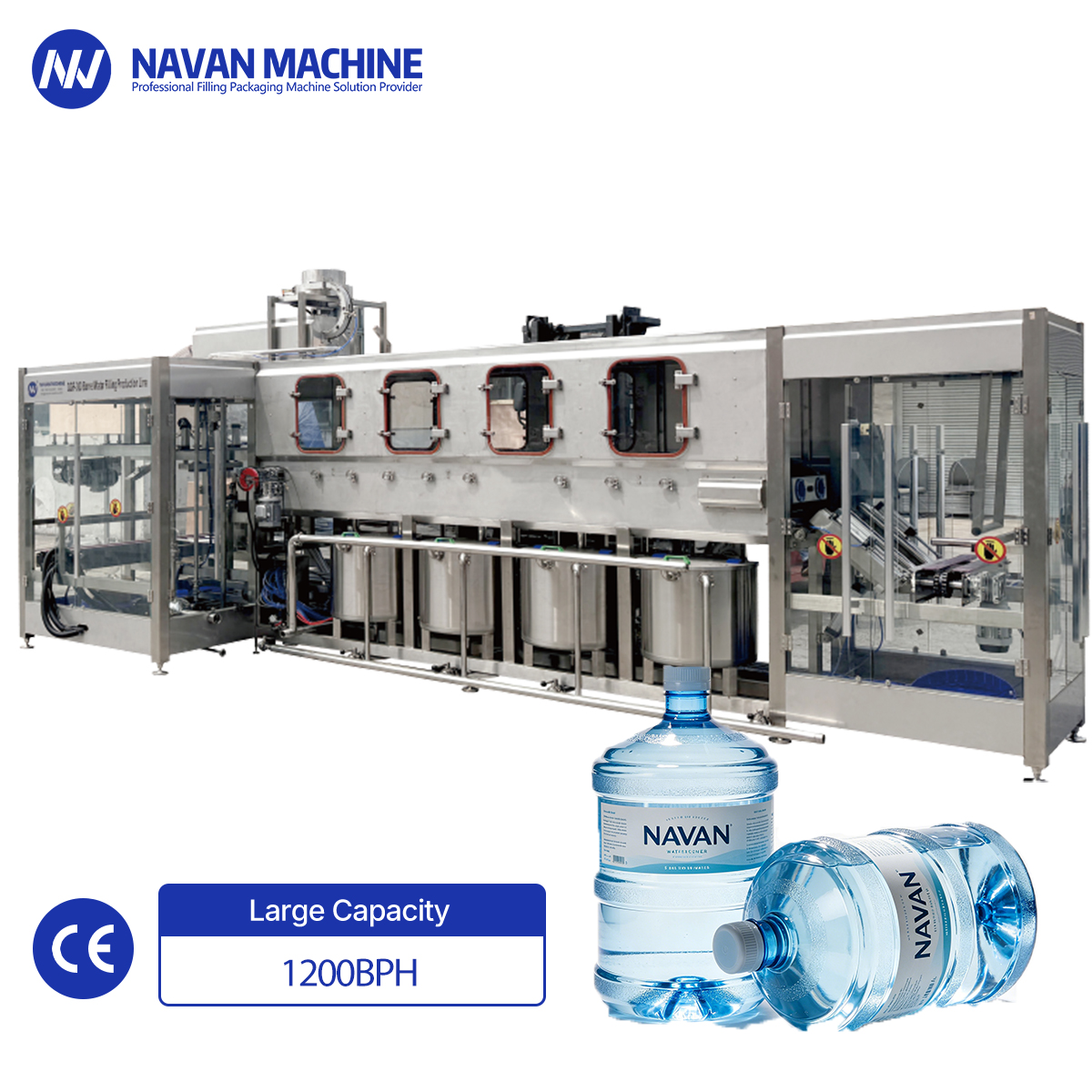
| 5-Gallon Heavy Barrel | Bulk Office/Home Purified Water (18.9L) | Polycarbonate / PET Barrels | 300 – 2,000 BPH | Integrated decapping, internal/external multi-stage high-pressure rinsing. |
Strategic Buyer's Guide: How to Source Bottling Lines from Chinese Factories
Navigating international machinery procurement requires systematic risk management across technical specification validation, factory audit protocols, and post-installation service guarantees. Importers seeking long-term commercial ROI should follow a structured procurement roadmap:
Step 1: Container & Preform Engineering Verification
Before finalizing mechanical contracts, ship physical preforms, bottle samples, and cap specifications to the manufacturer. Engineering teams perform structural CAD bottle blowing tests to verify cap thread engagement, neck finish rigidity, and label panel flatness under thermal stress.
Step 2: Utility & Workshop Layout Architecture
Provide your facility floorplan. Industrial layout engineers calculate electrical KVA drops, high-pressure compressed air tubing routing, chiller water circulation loops, effluent drain slopes, and operator safety zones to deliver 2D/3D plant layout files prior to equipment assembly.
Step 3: Factory Acceptance Testing (FAT) Protocols
Mandate a continuous 8-hour uninterrupted dry and wet FAT run at full rated operational speed using your target liquid viscosity and preforms. Verify fill level variance, torque tightness limits, label registration accuracy, and automated sensor fault trips before dispatch.
Step 4: Regional Service Hub & Spare Parts Strategy
Partner with suppliers maintaining regional overseas technical branches. Zhangjiagang Osnib Machine Co., Ltd. provides local field engineers and stocking centers in Kigali, Rwanda (for Africa) and Krasnodar Krai (for Russia/CIS), ensuring immediate emergency response and fast spare parts delivery.
Frequently Asked Questions (FAQ) for Water Bottling Line Procurement
Direct technical answers addressing common operational, financial, and logistical queries submitted by international equipment buyers.
What is the Minimum Order Quantity (MOQ) and customization scope?
The Minimum Order Quantity is 1 complete set. We accept full OEM and ODM customization requests. Overseas buyers can order individual standalone units—such as an OPP Hot Melt Labeling Machine, a Rotary PET Blow Molder, or an RO Water Treatment System—or complete turnkey production lines customized to specific voltage grids (e.g., 220V/380V/415V/440V at 50Hz/60Hz).
How do you ensure filling level accuracy across variable bottle sizes?
Our gravity and isobaric liquid filling valves feature precision-machined liquid return air tubes and adjustable silicon seal gaskets. For high-precision applications, magnetic flowmeter filling heads adjust fluid cutoff electronically via PLC memory recipes, maintaining volumetric repeatability within ±0.5% without manual mechanic adjustments.
What international certification standards do your bottling machines carry?
All core mechanical systems manufactured by Zhangjiagang Osnib Machine Co., Ltd.—including rinsing-filling-capping monoblocks, blow molders, and automatic shrink wrap machines—carry full European CE Certification. Furthermore, our enterprise facilities undergo annual third-party onsite supplier assessments conducted by TÜV Rheinland.
What local after-sales support and installation services are available outside China?
In addition to 7x24 remote video diagnostic support and PLC online troubleshooting via Ethernet, we maintain established regional overseas service centers. Our Africa Branch located in Kigali, Rwanda, and our Russia Office located in Goryachy Klyuch, Krasnodar Krai, dispatch certified field service engineers directly to client factories for line installation, commissioning, and staff training.
Which trade delivery and payment terms are supported for international shipments?
We accommodate flexible global trade terms including FOB, CFR, CIF, EXW, CIP, FCA, DDP, and DDU. Accepted payment methods include Wire Transfer (T/T), Irrevocable Commercial Letter of Credit at sight (L/C), Credit Card, and Western Union in major currencies including USD, EUR, GBP, RUB, and CNY.
How can I request a customized workshop layout drawing and price quote?
Click the "Inquire Now" button on this page to contact our engineering team directly. Provide your target production capacity (BPH), bottle material and volume specs (ml), liquid product details, and factory dimensional drawings. Our engineers will generate a customized technical proposal and 2D plant layout within 24 hours.
Ready to Build Your Turnkey Bottling Facility?
Connect directly with Zhangjiagang Osnib Machine Co., Ltd. Senior Industrial Engineers for CAD Layout Design, Equipment Selection, and Factory Direct Pricing.
