High-Performance Filling & Packaging Equipment
Precision-engineered machinery tested and certified for energy drinks, CSD, beer, and liquid functional supplements.
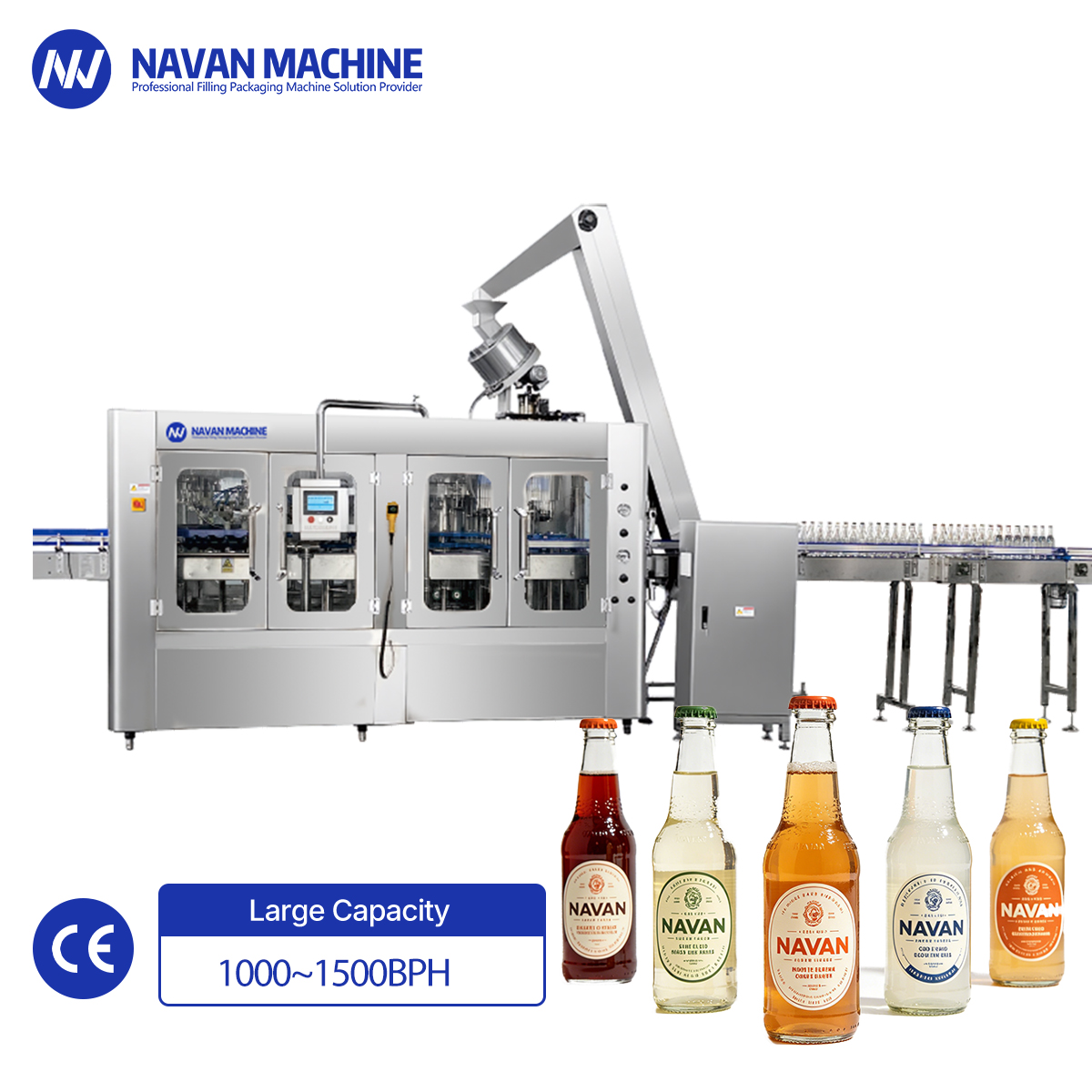
Full Automatic Glass Carbonated Beverage Bottling Line PLC Intelligent Operation High-Accuracy Filling Machine Remote Control
View Details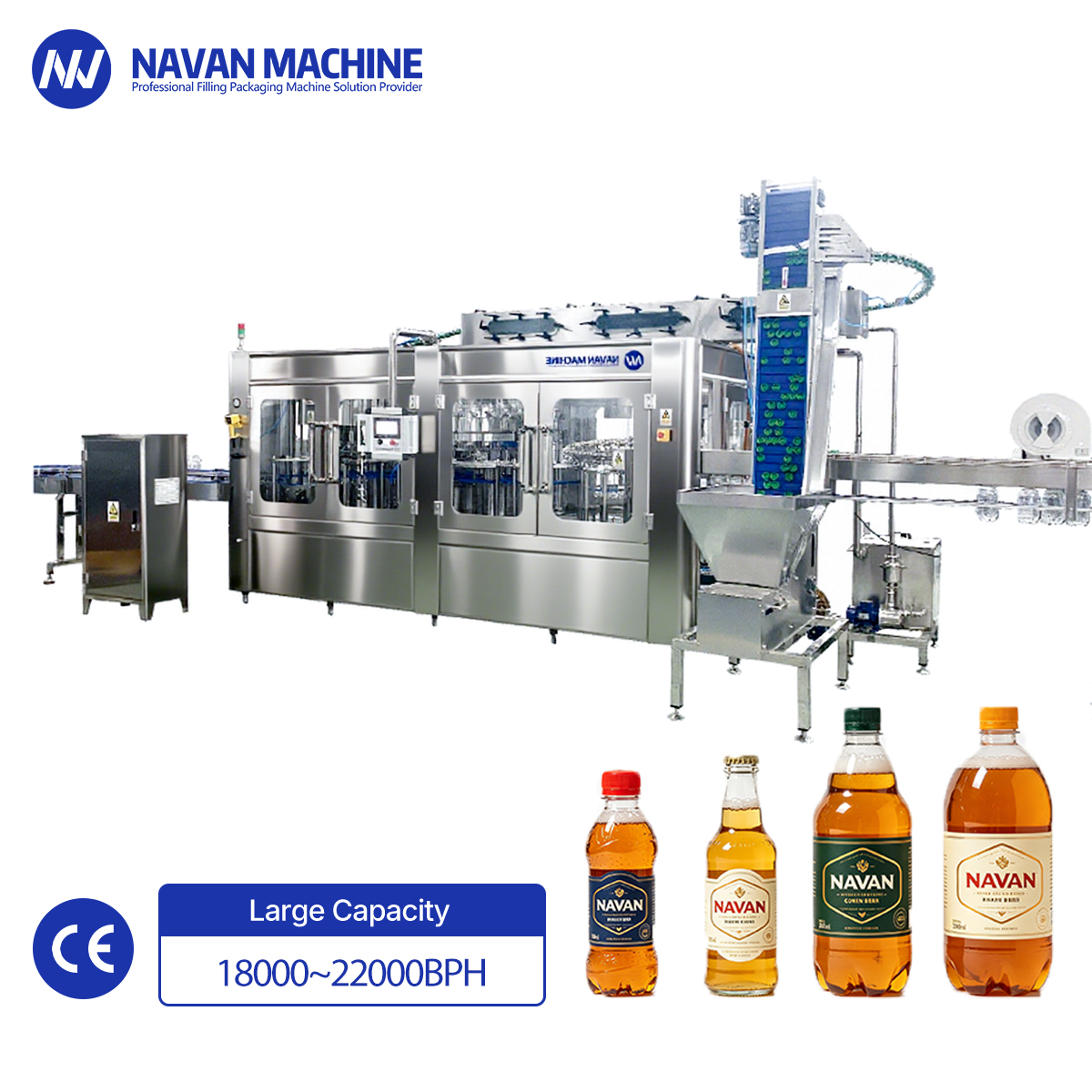
Fully Automatic PLC Controlled Mechanical PET Bottle Beer Bottling Line 200ml 18000-22000BPH Isobaric System CE Certified
View Details
NAVAN PET Automatic PLC Controlled 6-Cavity Servo Motor PP Plastic Bottle Stretch Blow Moulding Machine with Engine
View Details
Complete Glass PET Bottle Carbonated Drink Production Line XPXGF24-24-8 Automatic Soda Beverage Filling PLC Mechanical
View Details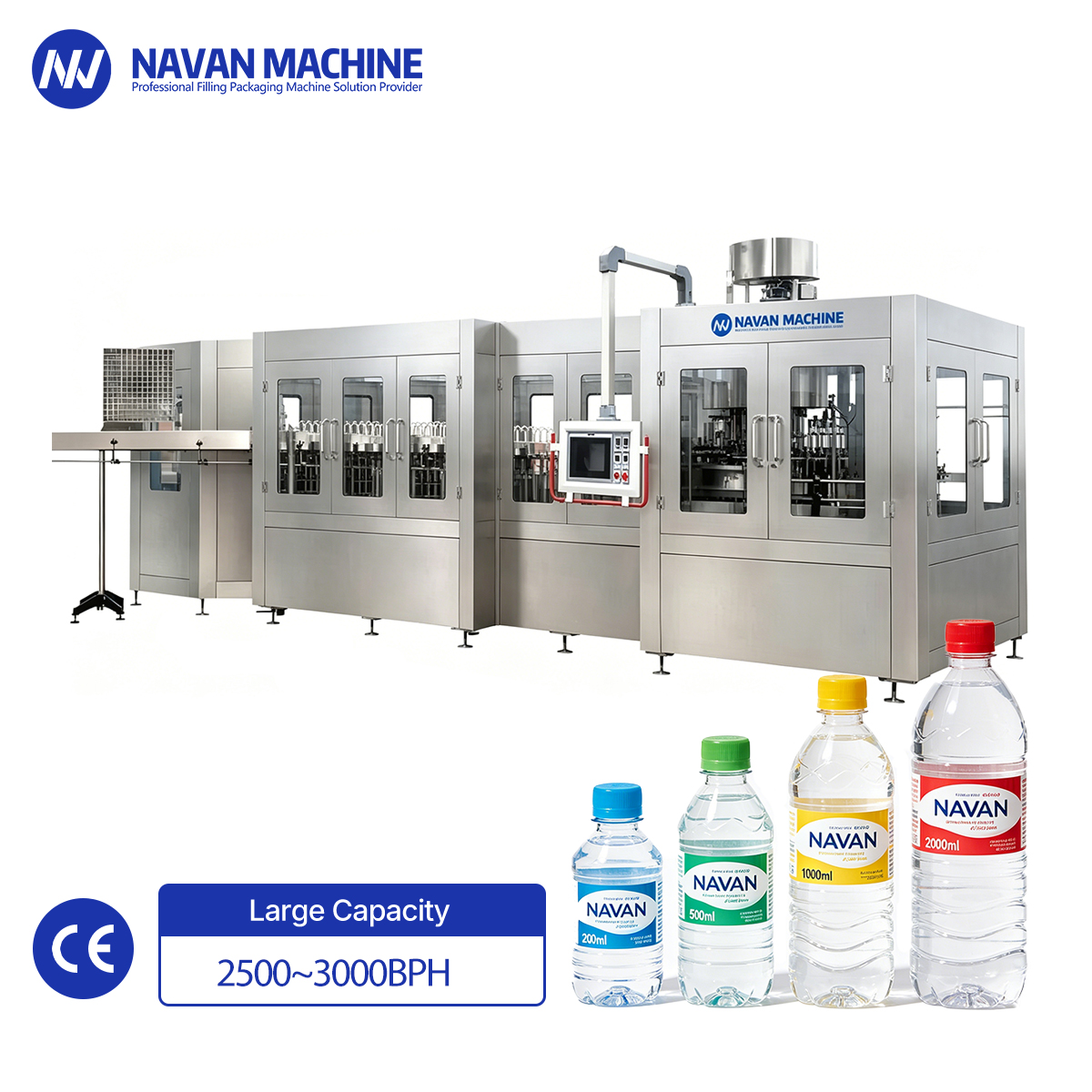
XGF8-8-4 Full Automatic Mechanical Water Filling Machine 2500-3000BPH PLC Controlled PET Bottle Bottling Turnkey Line
View Details
Navan XGFD24-24-8 Automatic Carbonated Beverage Filling Machine 200-2000ml Bottle Filling Production Line CE Certified
View Details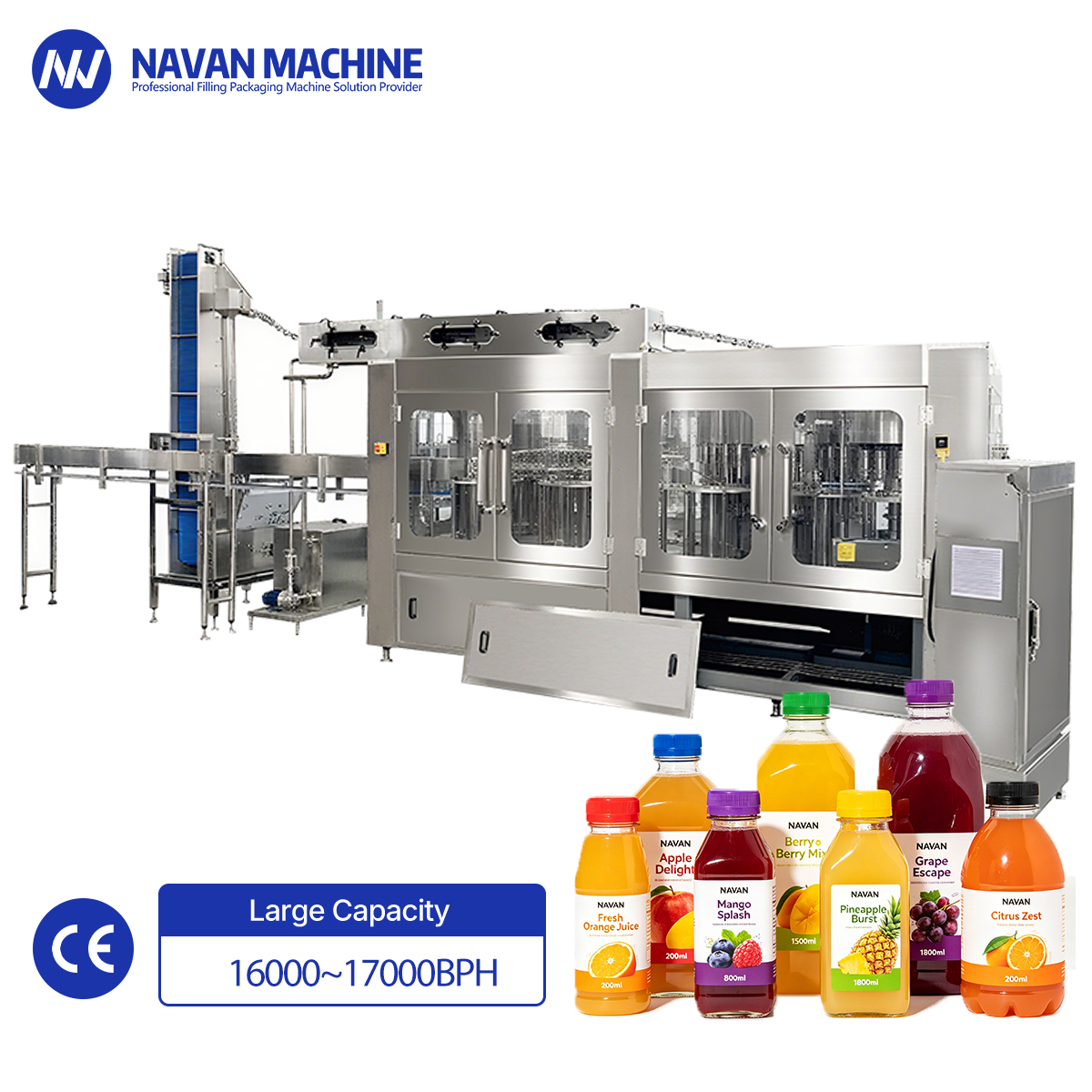
Complete Solution Plastic PET Bottle Drink Filling Bottling Machinery Small Big Volume Automatic Fruit Juice Production Plant
View Details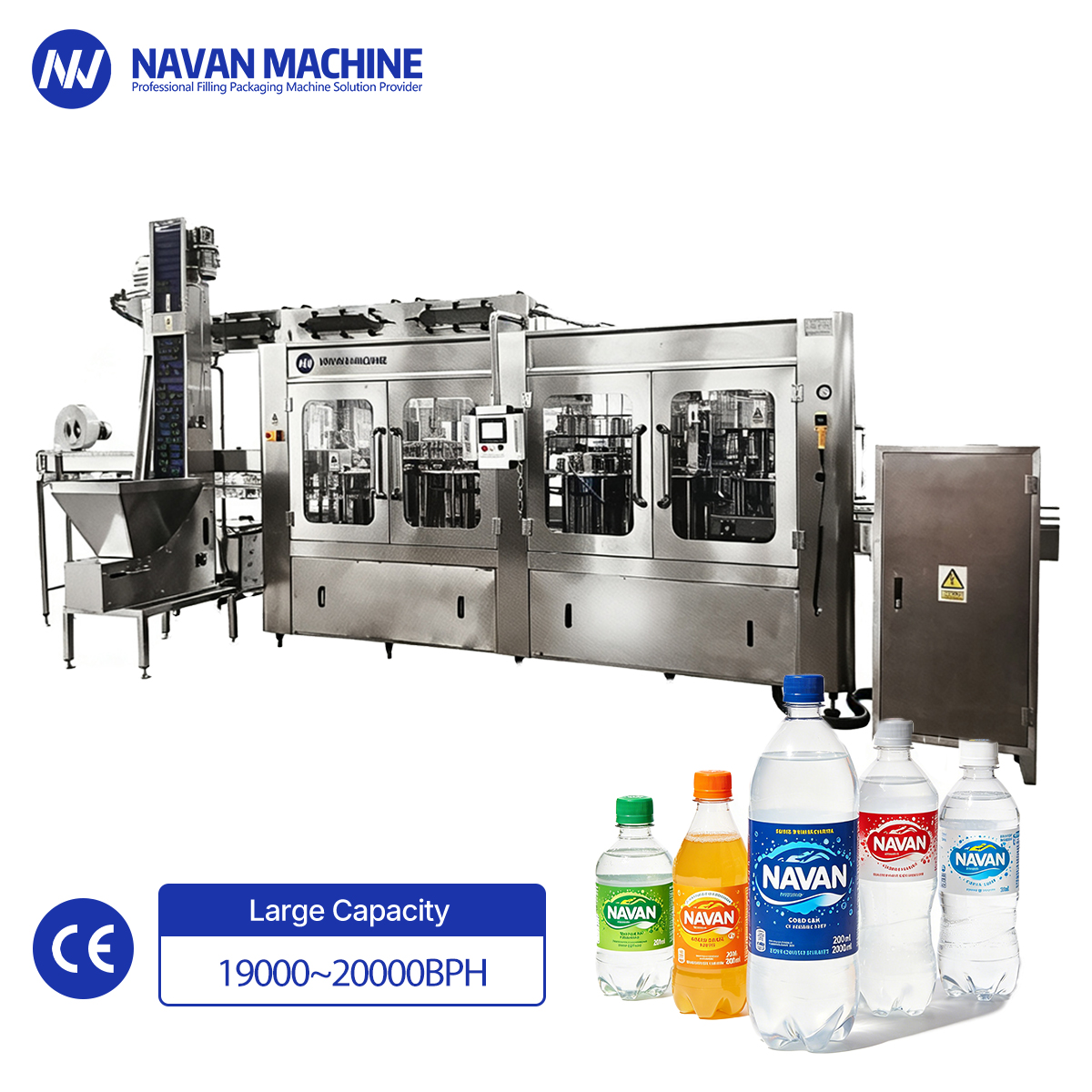
High Efficiency Navan XGFD50-50-12 Automatic Mechanical Plastic Carbonated Beverage Filling Machine 200-2000ml Soft Drink Bottle
View DetailsEngineering Next-Generation Custom OEM Energy Drink Filling Solutions
The global functional beverage market is experiencing an unprecedented shift toward complex, nutrient-dense, and highly carbonated energy drink formulations. For co-packers, brand owners, and industrial beverage manufacturers, procuring a machine from specialized custom OEM energy drink filling machine factories is no longer simply about volume output—it is about process integrity, dissolved oxygen (DO) control, ingredient stability, and ultimate line flexibility.
Energy drinks present unique rheological and chemical challenges during high-speed bottling and canning. Formulations frequently combine delicate B-complex vitamins, taurine, caffeine extracts, natural amino acids, and high levels of dissolved carbon dioxide (ranging from 3.0 to 4.5 volumes). Maintaining chemical stability while preventing excessive foaming, liquid degradation, and volatile aroma loss requires advanced isobaric counter-pressure technology combined with micro-hygienic filling environments.
As a leader among direct-manufacturing energy drink filling machine factories, Zhangjiagang Osnib Machine Co., Ltd. (and its NAVAN technology series) engineers fully integrated, turnkey production plants. Our systems bridge the gap between heavy-duty mechanical reliability and high-level PLC digital control, guaranteeing that every filling valve delivers precise dosage without compromising speed or sanitation.
System Architecture & Core Engineering Features
Modern energy drink lines must accommodate diverse container materials including sleek aluminum cans, glass bottles, and lightweight PET containers. Below is the technical breakdown of our custom OEM filling system modules:
Isobaric Counter-Pressure Precision
Utilizes multi-stage pneumatic lifting cylinders and mechanical valve opening mechanisms. Liquid flow is guided smoothly down the internal container wall via custom-swirl deflectors, reducing turbulence and retaining dissolved CO2 even at elevated filling temperatures.
Ultra-Clean CIP/SIP Sanitation
Equipped with automatic stainless steel false cups that seal the filling valves during CIP (Clean-In-Place) mode. The system executes complete forward and reverse loop flushing at 85°C with caustic and acid washes, satisfying strict ISO and EHEDG hygienic standards.
Liquid Nitrogen Dosing Integration
For non-carbonated or low-carbonation liquid energy shots in lightweight PET or thin aluminum, our integrated liquid nitrogen injection system pressurizes the container prior to capping, delivering structural rigidity and purging remaining oxygen.
Technical Comparison Matrix: Energy Drink Filling Technologies
Choosing the right filling technology directly influences yield, shelf life, and capital payback time. The data table below compares the four dominant filling valve mechanisms manufactured in our factory:
| Filling Technology | Suitable Container Types | CO2 / Dissolved Gas Range | Oxygen Pickup Control | Dosing Accuracy | Target Output Range |
|---|---|---|---|---|---|
| Mechanical Isobaric Valve | Glass Bottles, CSD PET | 2.5 to 4.5 Vol. CO2 | Medium (< 40 ppb) | ±2.0 mm liquid level | 3,000 – 22,000 BPH |
| Electro-Pneumatic Isobaric Valve | Sleek Cans, PET, Glass | 3.0 to 5.0 Vol. CO2 | Ultra-Low (< 15 ppb) | ±1.0 mm liquid level | 6,000 – 36,000 BPH/CPH |
| Mass Flowmeter Volumetric (Magnetic) | PET, Glass, Aluminium | Still & Low-Carbonated | Ultra-Low (< 10 ppb) | ±0.2% by volume | 5,000 – 28,000 BPH |
| Piston Servo Filler | Energy Concentrates & Syrups | Still Liquids / Pastes | Standard (< 50 ppb) | ±0.5% by volume | 1,500 – 8,000 BPH |
Future Procurement & Development Trends in Energy Drink Packaging
Sourcing decision-makers must look beyond current production goals and anticipate regulatory shifts, sustainability imperatives, and smart factory trends over the next decade. Industry research points toward four major procurement shifts:
Trend 1: Sleek Can Dominance & Hybrid Multi-Format Lines
Aluminum sleek and slim cans (250ml, 335ml, 355ml) are dominating global energy drink launches due to higher infinitely recyclable metal rates. Emerging factories are increasingly investing in Combi-Block hybrid lines that can switch between filling glass bottles and aluminum cans on a shared monoblock platform, reducing overall machinery footprint by up to 35%.
Trend 2: Ambient Aseptic & Clean-Cold Filling
To eliminate artificial preservatives while protecting heat-sensitive vitamins (like Vitamin B6, B12, and Vitamin C), energy drink brands are shifting from traditional hot filling (85°C) to aseptic cold filling or micro-filtration clean filling under Class 100 HEPA enclosures. This trend preserves functional efficacy and natural sensory profiles.
Trend 3: Smart IoT Diagnostics & Servo Energy Recovery
Modern production management demands real-time data transparency. Our next-generation energy drink filling lines integrate Siemens S7-1500 PLCs and telemetry modules, streaming live metrics on filling torque, seal pressure, air consumption, and reject tracking directly to plant managers' MES systems for predictive maintenance.
Trend 4: Extreme Lightweighting & High-Speed Neck Finish
Resin cost pressures are pushing PET energy drink bottle wall thicknesses down to record lows. High-speed lines now utilize ultra-short neck finishes (e.g., 26/22 specifications) paired with nitrogen dosing to maintain package integrity throughout logistics chains without cap slippage or bottle crushing.
Enterprise Superiority & Zhangjiagang Osnib Machine Factory Overview
Located in the heart of China’s liquid packaging machinery hub—Zhangjiagang City, Jiangsu Province—Zhangjiagang Osnib Machine Co., Ltd. stands as a certified, full-service manufacturer and technical partner for global beverage producers.
TÜV Rheinland & CE Certification
Our complete machinery portfolio, including blow molders, isobaric fillers, labelers, and palletizers, holds European Union CE marking. Our physical production facility has undergone rigorous onsite supplier assessments by TÜV Rheinland.
Overseas After-Sales Network
To eliminate operational downtime for overseas clients, Osnib Machine maintains dedicated regional service centers and engineers stationed in Goryachy Klyuch, Russia (serving CIS nations) and Kigali, Rwanda (serving East/Central Africa).
Turnkey OEM & ODM Customization
From initial 3D workshop layout engineering and custom preform/bottle design to localized voltage adaptation (e.g., 220V/380V/415V/460V), we provide end-to-end engineering tailored specifically to your plant's infrastructure.
Procurement FAQ: Custom Energy Drink Filling Lines
Below are authoritative answers to common technical and operational questions posed by plant engineers and procurement managers:
Q1: How do custom OEM energy drink filling machine factories prevent foaming during carbonated filling?
Prevention of foaming relies on three coordinated mechanisms: precise pressure matching in the isobaric bowl prior to liquid release, slow mechanical valve opening with internal wall guide tubes, and automated temperature control of the liquid product (ideally kept between 4°C and 6°C during filling). Additionally, custom swirl-nozzles gently channel the beverage down the container wall to minimize agitation.
Q2: What is the minimum order quantity (MOQ) and lead time for a complete turnkey filling line?
Our minimum order quantity is 1 set. Whether you require a single linear labeling machine or a full 18,000 BPH turnkey energy drink bottling line (incorporating water treatment, blowing, filling, labeling, and shrink wrapping), we accommodate custom orders. Standard manufacturing lead time ranges from 30 to 60 days depending on line automation levels.
Q3: Can your filling machinery handle both glass bottles and aluminum cans on the same machine?
Glass bottles and aluminum cans require fundamentally different handling mechanisms at the neck and base (neck-hanging for cans vs. base-supporting or neck-clamping for glass) as well as distinct seamers/cappers (R packaging crown/ROPP caps vs. double-seamers for can lids). While a single monoblock turret is dedicated to one container type, we build dual-line combi systems that share centralized product preparation, CIP systems, and end-of-line packaging to optimize capital expenditure.
Q4: What certifications do your factories provide for international trade compliance?
All core equipment produced in our Zhangjiagang manufacturing facility is CE-certified under relevant European Machinery Directives. Furthermore, our company undergoes annual onsite audits by TÜV Rheinland. Full technical documentation, CE declarations, electrical schematics, and material quality certificates (e.g., SS304/SS316 food-grade compliance) are supplied with every line.
Q5: How is after-sales installation and operator training handled in remote regions?
We provide dispatch services for senior commissioning engineers globally. Additionally, we leverage our permanent technical branches in Kigali (Rwanda) and Goryachy Klyuch (Russia) for localized, prompt on-site setup, troubleshooting, and staff training. Remote PLC online diagnostics are accessible 7×24 via secure VPN modules pre-installed in our control cabinets.
Q6: How do you guarantee the precise dosing of sensitive active ingredients like Taurine and Caffeine?
Active energy ingredients are uniformly blended in our high-precision sanitary mixing tanks prior to filling. For micro-dose additions, we implement inline magnetic flowmeters and servo-dosing pumps synchronized with the main filler PLC, ensuring less than ±0.2% variance across batch runs.
Ready to Build Your Custom Energy Drink Filling Line?
Consult with our lead engineering team today. We provide free 3D workshop layout drawings, capacity planning, and direct factory quotations within 24 hours.
Send an Inquiry