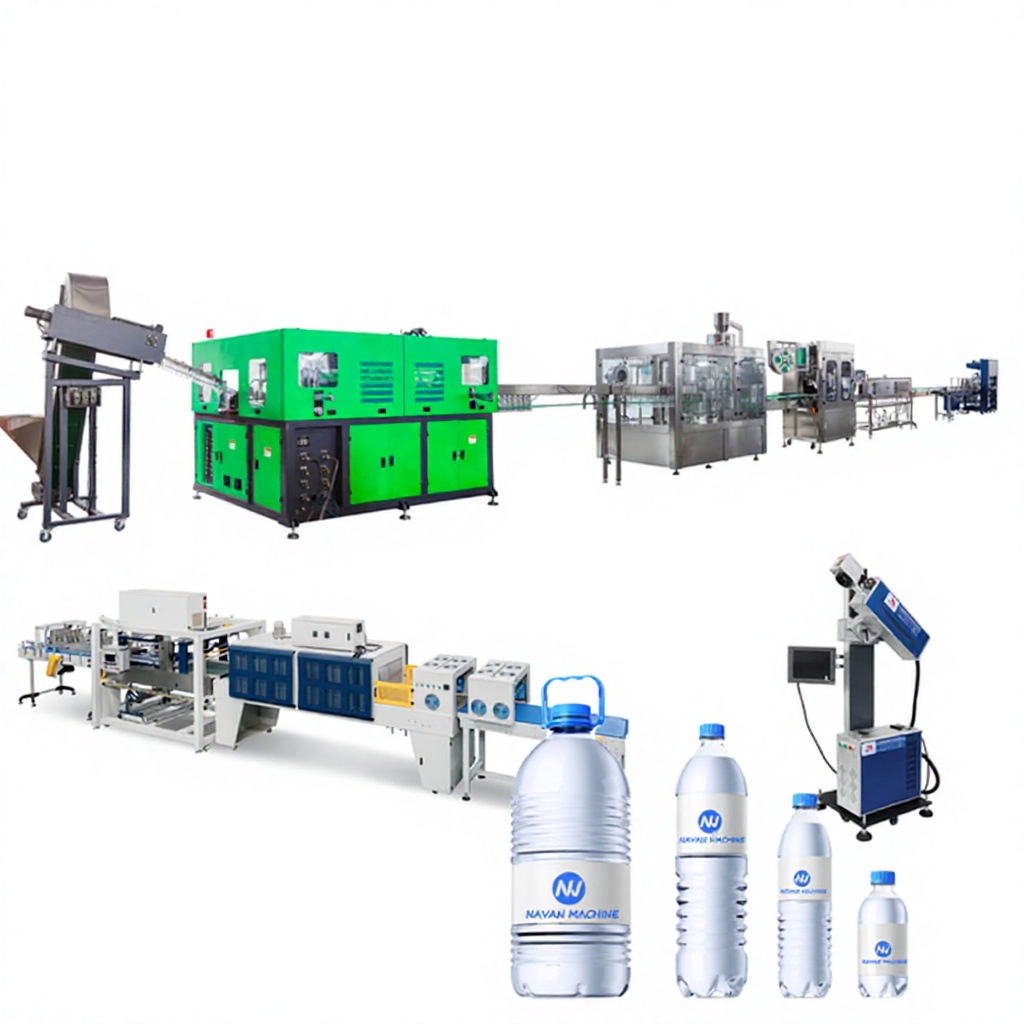
Industrial Solutions
Standard & Custom Bottling Equipment Series
Engineered for low dissolved oxygen pickup, live culture preservation, and precision carbonation across PET, glass, and aluminum formats.
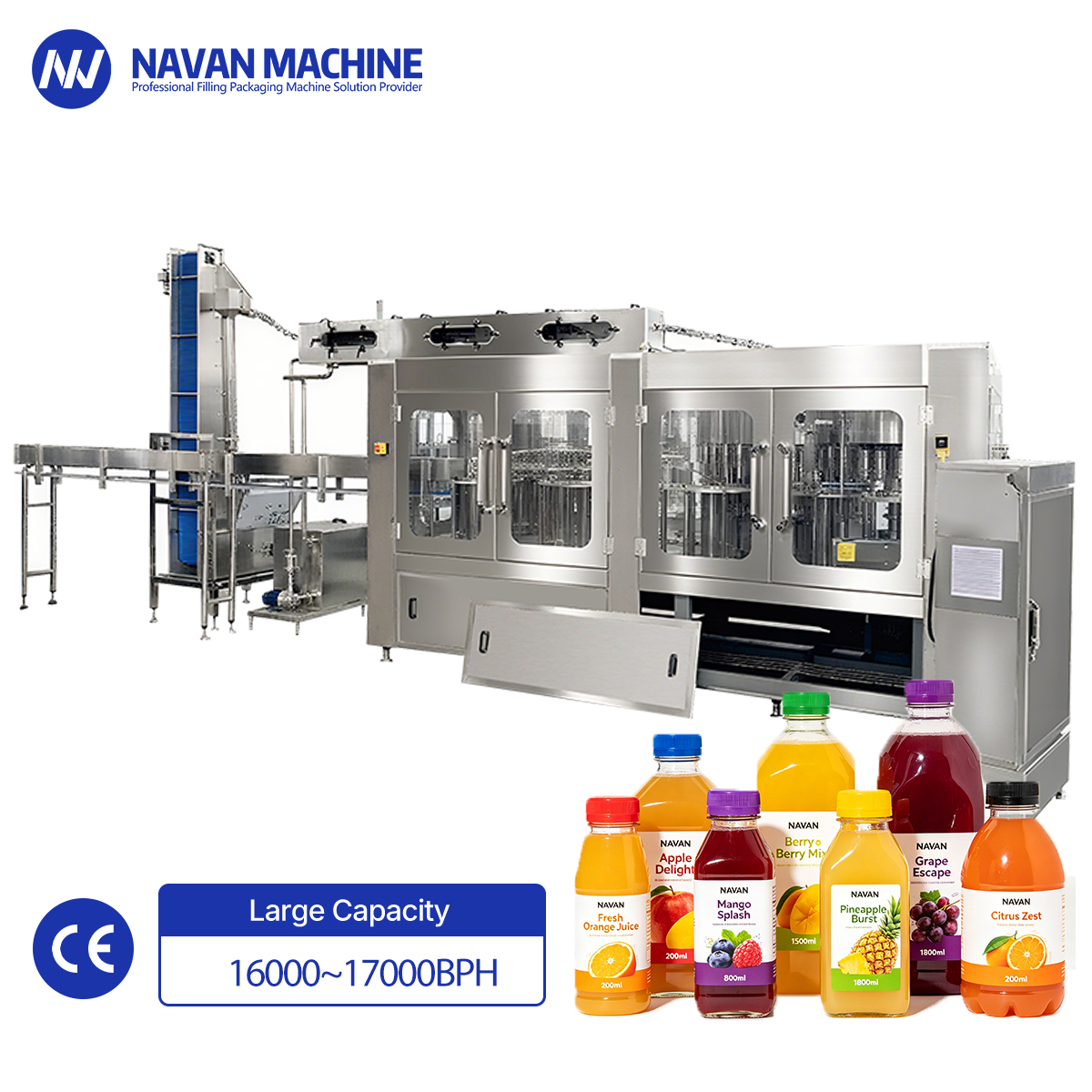
Complete Solution Plastic PET Bottle Drink Filling Bottling Machinery Small Big Volume Automatic Fruit Juice Production Plant

Automatic Juice PET Bottle Filling Machine 32 Nozzle 200-2000mL 16000-17000BPH Bottling Equipment

Industrial XGFD40-40-10 PLC Controlled Automatic Carbonated Drink Filling Machine 200-2000ml Plastic Bottle CSD Machinery
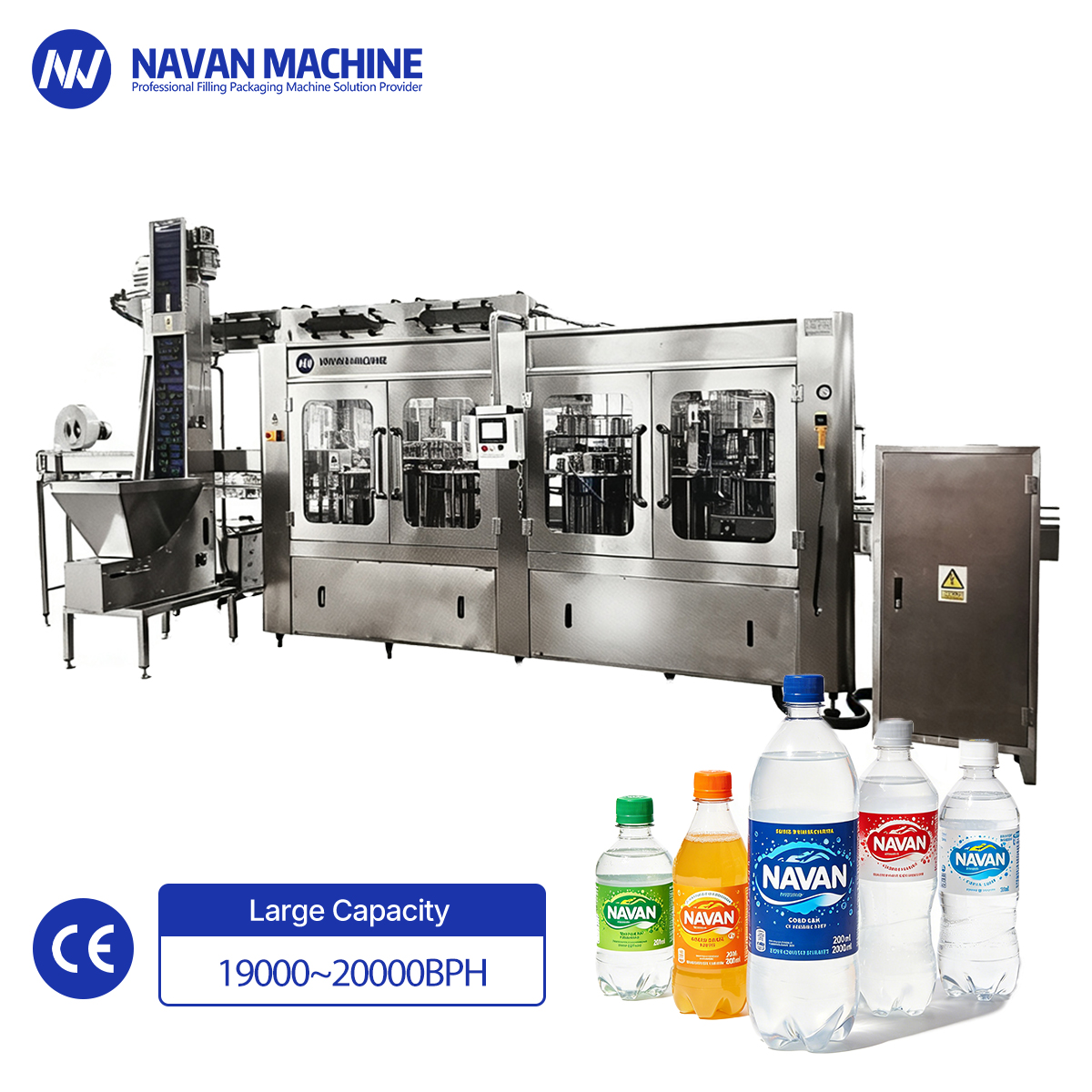
High Efficiency Navan XGFD50-50-12 Automatic Mechanical Plastic Carbonated Beverage Filling Machine 200-2000ml Soft Drink Bottle
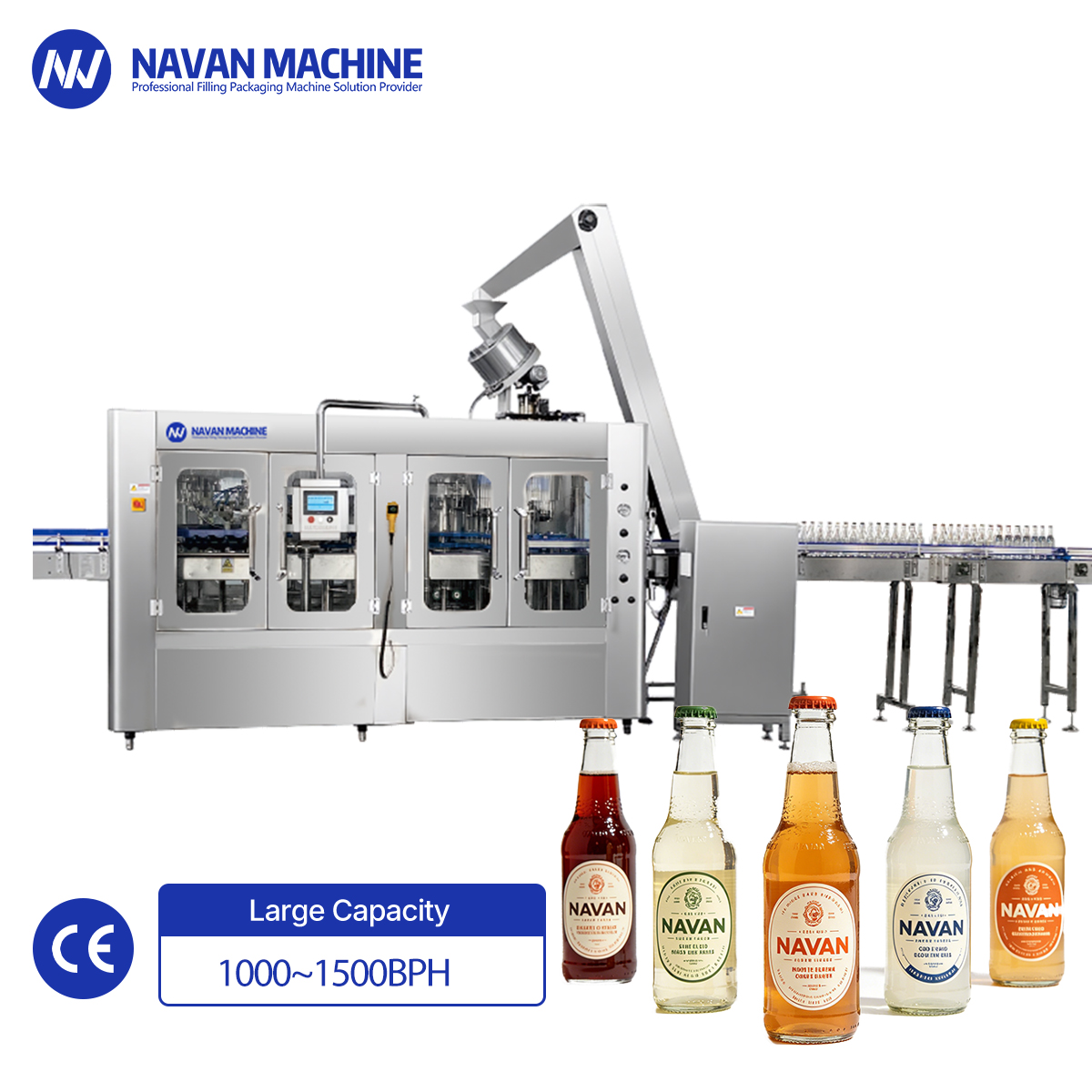
Full Automatic Glass Carbonated Beverage Bottling Line PLC Intelligent Operation High-Accuracy Filling Machine Remote Control

NAVAN PET Automatic PLC Controlled 6-Cavity Servo Motor PP Plastic Bottle Stretch Blow Moulding Machine with Engine

Complete Solution PLC Controlled Mechanical PET Bottle Drink Machinery 200ml-2000ml Automatic Fruit Juice Production Plant
1. The Engineering Complexity of Commercial Kombucha Bottling
Kombucha packaging presents unique biochemical and fluid dynamics challenges that set it apart from conventional soft drink or still beverage processing. As a living, biologically active liquid populated by Symbiotic Cultures of Bacteria and Yeast (SCOBY), Kombucha requires specialized OEM machine engineering to preserve active probiotics while managing secondary fermentation and carbonation integrity. Standard gravity water fillers or aggressive high-pressure carbonated soft drink (CSD) bottling units often degrade live cultures, introduce excess atmospheric oxygen, or trigger uncontrolled fobbing (foaming) during high-speed container filling.
When sourcing custom Kombucha packaging equipment from established China bottling machine factories, beverage plant managers must prioritize three fundamental engineering parameters: Dissolved Oxygen (DO) pick-up reduction, laminar flow isobaric counter-pressure filling, and sanitary automated Clean-in-Place (CIP) loops. Modern automated lines must balance high throughput (ranging from 2,000 BPH micro-brewery systems to 24,000 BPH commercial plants) with ultra-gentle fluid displacement to ensure shelf stability, sensory consistency, and explosive-prevention pressure regulation in glass or PET bottles.
Key Engineering Objective: Reducing Dissolved Oxygen (DO) pick-up to below 30 ppb (parts per billion) during bottling. Excessive DO induces unwanted yeast activity, alters flavor profiles, causes darkening of organic acid compounds, and risks bottle over-pressurization during ambient distribution.
2. Core Technical Architecture of Custom OEM Kombucha Packaging Lines
A high-performance OEM Kombucha bottling plant integrates specialized mechanical sub-systems designed to isolate the liquid from contaminants while maintaining precise carbonation volume (typically between 2.0 to 3.2 volumes of dissolved CO₂). Below are the essential engineering modules integrated by leading exporters like Zhangjiagang Osnib Machine Co., Ltd.
Double Pre-Evacuation Counter-Pressure Valves
Utilizes vacuum purging followed by pure CO₂ gas injection prior to liquid introduction. This double-stage evacuation flushes 99.2% of ambient oxygen out of empty bottles, keeping DO pick-up under strict commercial thresholds.
Sanitary 316L Stainless Steel Fluid Paths
All product-contact surfaces—including liquid bowls, filling nozzles, and manifold valves—are forged from electro-polished AISI 316L stainless steel with a surface roughness (Ra) < 0.4 µm to eliminate bacterial harbor sites and SCOBY film build-up.
Electronic Servo-Driven Capping Heads
High-precision magnetic clutch or servo-driven capper heads apply uniform torque for crown corking, aluminum ROPP caps, or plastic screw closures, ensuring a hermetic vacuum seal that withstands internal post-fermentation pressures.
Technical Data Visualization
Kombucha Bottling Line Capacity & Feature Comparison Matrix
Comparing equipment parameters across craft micro-breweries, mid-tier commercial operations, and industrial-scale bottling facilities.
| Equipment Capacity Scale | Filling Principle | Target DO Pickup (ppb) | CO₂ Retention (g/L) | CIP/SIP Sanitation | Typical Container Types | Automation Grade |
|---|---|---|---|---|---|---|
| Craft / Pilot (500 – 2,000 BPH) | Mechanical Isobaric Valve | < 45 ppb | 4.5 – 6.0 g/L | Manual / Semi-Auto Loop | Glass Amber / PET 330ml | Semi-Automatic |
| Commercial Mid-Scale (3,000 – 8,000 BPH) | Electropneumatic Isobaric | < 25 ppb | 5.5 – 7.5 g/L | Automated 3-Stage CIP | Glass, Sleek Cans, PET | Fully Automatic Monoblock |
| Industrial High-Speed (10,000 – 24,000 BPH) | Flow-Meter / Mass Electronic | < 15 ppb | up to 8.5 g/L | Fully Automated SIP Sterilization | PET, Glass, Can Lines | Industry 4.0 PLC Control |
3. Future Procurement Trends in Kombucha Packaging Machinery (2025–2030)
As global consumer demand for functional, low-sugar, probiotic drinks surges, international procurement directors and plant operational leads are shifting how they source bottling infrastructure from overseas OEMs. Key sourcing trends shaping modern enterprise procurement include:
Modular Multi-Beverage Line Versatility
Procurement teams are moving away from single-purpose machines. Today's custom contracts request cross-functional fillers capable of running Kombucha, hard kombucha, water kefir, cold-brew coffee, and carbonated juice on a single skid with minimal changeover time.
Turnkey Factory-Fat Acceptance Testing (FAT)
Overseas buyers increasingly demand complete pre-shipment video acceptance and live FAT runs at China factory hubs (such as Zhangjiagang) using customer-supplied liquid media and preforms before container loading.
Sustainability & CO₂ Recovery Integration
Energy-efficient servo-driven blow molders combined with CO₂ purging gas recapture systems reduce operational expenditure (OPEX) while aligning with corporate environmental, social, and governance (ESG) compliance targets.
4. Technological Innovations Shaping Next-Gen Fermented Liquid Packaging
Engineering innovation in Kombucha machinery is driven by real-time telemetry, advanced metallurgy, and microbiology protection. Machine manufacturers are integrating state-of-the-art technological features to solve historical bottling bottlenecks:
A. Cold-Sterilization & Aseptic Micro-Filling: Thermal flash pasteurization destroys active probiotics and beneficial digestive enzymes. Next-generation equipment utilizes sterile membrane filtration combined with UV-C tunnel de-contamination of empty bottles, allowing ambient stable cold-filling without sacrificing live microbial integrity.
B. Smart PLC Telemetry & Automatic Fobbing Management: Integrated Siemens or Mitsubishi PLC systems utilize optical sensors to detect foam height at the bottle neck during decompression. Dynamic depressurization profiles automatically adjust exhaust valve pulse timing, eliminating product loss from severe fobbing.
Why Choose Osnib Machine
Zhangjiagang Osnib Machine Co., Ltd. Enterprise Superiority
A trusted manufacturer and global exporter dedicated to engineering excellence, rigorous quality validation, and worldwide technical assistance.
15+
Years Engineering Experience
40+
Global Export Markets
TÜV
Rheinland Onsite Verified
7×24
Global Technical Support
Global Infrastructure & Localized Technical Service
Headquarters & R&D Hub
Zhangjiagang Osnib Machine Co., Ltd.
No.1009 Shuangfeng Road, Leyu Town, Zhangjiagang City, Jiangsu Province, China.
Direct factory export, customized line engineering, bottle mold design, and complete workshop layout drafting.
Russia & CIS Regional Office
Location: Goryachy Klyuch, Krasnodar Krai, Russia.
Localized engineering teams, rapid spare parts distribution, and on-site commissioning for Russian-speaking markets.
Africa Branch & Support Hub
Location: Kigali, Rwanda (Rwinzovu, Kamatamu, Kacyiru, Gasabo).
Dedicated regional field support engineers providing on-site assembly, line calibration, and preventative maintenance.
Ready to Scale Your Kombucha Bottling Operations?
Consult with our senior beverage packaging engineers today. We provide full technical line layouts, customized ROI analyses, and official factory quotation packages.
Inquire Now
Procurement Guidance
Frequently Asked Questions (FAQ) for Enterprise Buyers
Key technical and commercial queries addressed by our expert OEM engineering consultants.
What is the Minimum Order Quantity (MOQ) and customization scope for Kombucha lines?
Our MOQ is 1 complete set. We provide full OEM and ODM customization ranging from standalone machines (such as rotary sleeve labelers or blow molders) to complete turnkey bottling lines customized for specific bottle geometry, filling temperature, and carbonation levels.
How does Osnib Machine prevent excessive foam (fobbing) when bottling carbonated Kombucha?
Our isobaric counter-pressure filling valves maintain equal gas pressure between the liquid storage bowl and the bottle interior prior to filling. Combined with multi-stage slow-snifting (depressurization) channels controlled by electro-pneumatic valves, foam generation is stabilized even at high speeds.
Are your bottling machines compliant with CE and international sanitary standards?
Yes. All main liquid filling, blowing, labeling, and palletizing machines carry official CE certifications. Furthermore, our manufacturing facility has successfully passed onsite supplier assessments conducted by TÜV Rheinland.
What after-sales service and installation support do you offer overseas clients?
We dispatch certified mechanical and electrical engineers directly to your plant for installation, line integration, and operator training. Additionally, we run dedicated regional offices in Russia and Rwanda (Africa), alongside 7×24 online remote support.
Which payment structures and international commercial shipping terms (Incoterms) are accepted?
We accept FOB, CFR, CIF, EXW, CIP, FCA, DDP, and DDU delivery terms. Payments can be structured via T/T, L/C at sight, Western Union, Credit Card, or Cash in major global currencies including USD, EUR, GBP, and CNY.
How do you ensure the machinery matches my unique bottle design and label dimensions?
Before manufacturing begins, our engineering department reviews your CAD container drawings or physical bottle/preform samples. We offer in-house bottle structural design, customized preform mold fabrication, and label alignment testing to guarantee seamless operation on the line.
