Featured Machinery & Turnkey Bottling Equipment
Explore high-performance automatic liquid filling, blow molding, and end-of-line packaging lines built for commercial beverage and edible oil processing plants.




Executive White Paper: Edible Cooking Oil Bottling Line Ecosystems
An authoritative analysis on equipment procurement, viscosity dynamics, sanitary compliance, and manufacturing benchmark evaluation for global edible oil wholesalers.
The global edible oil industry—encompassing palm oil, soybean oil, sunflower seed oil, olive oil, canola oil, and corn oil—is undergoing a rapid technological migration toward full automation, digitalized precision dosing, and zero-contamination packaging lines. Bottling cooking oil presents distinct engineering hurdles compared to aqueous beverages due to fluid viscosity variations across thermal gradients, liquid surface tension, high propensity for drip contamination, and vulnerability to atmospheric oxidation.
This technical white paper establishes an exhaustive framework for evaluating the top 10 cooking oil bottling line factories and wholesalers. It delves into critical purchasing criteria, advanced fluid dynamics mechanisms, total cost of ownership (TCO) matrices, and strategic procurement trends shaping the edible oil processing industry through 2030.
1. Benchmark Evaluation Criteria for Top Cooking Oil Bottling Factories
When enterprise procurement teams and plant managers evaluate OEM/ODM equipment manufacturers for edible oil bottling, standard beverage line parameters are insufficient. The top-tier factories are distinguished by specialized engineering capability across six fundamental operational dimensions:
Viscosity-Adaptive Filling
Integration of dynamic temperature-compensated mass flowmeters or load-cell net weighing systems that auto-adjust dosing speed as oil density changes.
Drip-Free Nozzle Architecture
Patented pneumatic vacuum suction-back valves and oil catchment trays that eliminate micro-drips, preserving bottle thread cleanliness and label adhesion.
Oxidation Protection System
Integrated liquid nitrogen injection dosing modules prior to capping, displacing headspace oxygen to extend shelf life and prevent lipid rancidity.
2. Core Engineering Innovations in Modern Edible Oil Lines
Modern high-speed edible oil production lines operate on complex mechanical and electrical feedback loops designed to maintain structural integrity of PET/Glass containers, optimize cycle speeds, and ensure hygiene compliance compliant with FDA, CE, and ISO standards.
A. Filling Technologies: Piston vs. Net Weight vs. Mass Flowmeter
Selecting the optimal filling principle dictates line accuracy, CIP flexibility, and capital investment return:
| Filling Principle | Dosing Accuracy | Ideal Container Volume | Key Operational Advantage | Maintenance Profile |
|---|---|---|---|---|
| Volumetric Servo Piston | ±0.5% | 100ml – 5 Liters | High speed, economical for stable-viscosity refined oils | Requires periodic seal & O-ring inspection |
| Electronic Net Weight (Load Cell) | ±0.2% | 1 Liter – 20 Liter Jerricans | Immune to temperature/density fluctuation; precise filling by mass | Low mechanical contact wear; easy calibration |
| Coriolis Mass Flowmeter | ±0.1% | 250ml – 10 Liters | Non-contact dynamic measurement; instantaneous changeover | Zero moving parts in product path; lowest downtime |
B. Container Blowing & Handle-Insertion Integration
For large-format edible oil containers (2L, 3L, and 5L PET bottles), structural rigidity is vital. Advanced turnkey plants implement specialized PET blow molding machines with targeted infrared preform heating to reinforce bottle corners. Furthermore, inline automatic plastic handle press-fitting machines are synchronized downstream to prevent manual labor bottlenecks.
3. Industry Future Development Trends (2025–2035)
The manufacturing landscape for cooking oil bottling line suppliers is changing due to economic pressures, environmental mandates, and Industry 4.0 digitizations. Wholesale buyers and factory operators must align procurement with the following long-term industry vectors:
- Lightweighting & rPET Compatibility: Edible oil containers are shifting toward ultra-lightweight PET preforms and food-grade recycled PET (rPET). Bottling lines must feature soft-handling pneumatic neck-gripping conveyors to prevent thin-walled bottle deformation.
- AI-Powered Vision Inspection: Downstream stations are increasingly integrating multi-camera machine vision to verify fill level height, cap alignment, press-fit handle orientation, and barcode readability at speeds exceeding 12,000 BPH.
- Smart Maintenance & IoT Telemetry: Next-generation PLCs transmit real-time vibration, motor current, and thermal telemetry to cloud diagnostic servers, enabling predictive maintenance before component failure occurs.
- Monoblock Integration: The industry is rapidly abandoning decoupled modular stations in favor of integrated Combi-Monoblocks that merge Blow Molding, Filling, and Capping inside a cleanroom enclosure, eliminating air-conveyor contamination.
4. Strategic Sourcing & Procurement Trends for Importers
When sourcing a cooking oil bottling production line from leading manufacturing hubs like Zhangjiagang, China, international buyers are re-evaluating their Total Cost of Ownership (TCO) models. Sourcing strategies now prioritize long-term efficiency over initial capital outlay:
Turnkey Single-Source Responsibility
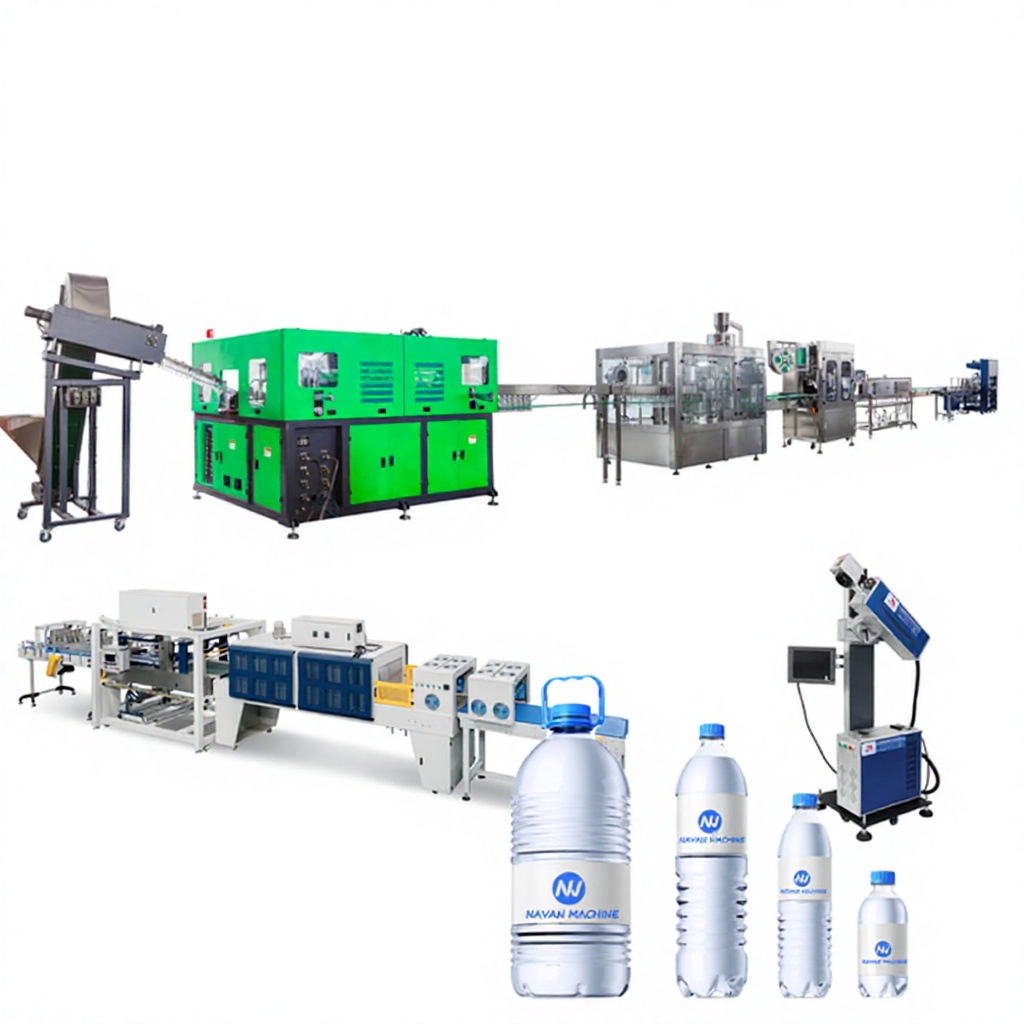
Procuring complete lines—from raw water treatment and PET preform blowing to rotary filling, hot-melt OPP labeling, shrink packaging, and robotic palletizing—from a single engineering manufacturer avoids line integration disputes and ensures uniform PLC control logic.
Localized After-Sales Infrastructure
Leading OEMs are establishing overseas regional technical centers. Direct factory engineers stationed in target zones (such as East Africa and Russia) drastically minimize downtime by facilitating rapid emergency spare parts delivery and on-site commissioning.
5. Enterprise Profile & Manufacturing Capability: Zhangjiagang Osnib Machine Co., Ltd.
As a global leader in liquid bottling and packaging engineering, Zhangjiagang Osnib Machine Co., Ltd. stands at the forefront of edible oil and beverage machinery innovation. Operating an expansive modern manufacturing facility verified on-site by TÜV Rheinland, Osnib Machine seamlessly integrates technical R&D, precision manufacturing, and international export trade.
With over 15 years of industry experience, Osnib Machine engineers custom bottling solutions tailored to specific fluid properties, container formats, and production scale. Core enterprise capabilities include:
- Factory & Trade Integration: Direct manufacturer control ensures that design drawings, metallurgy specifications, electrical PLC configurations, and customer requirements align without intermediary miscommunication.
- OEM / ODM Customization: Engineering lines tailored to regional electrical standards (220V/380V/415V/440V, 50/60Hz), unique bottle geometries, anti-corrosive contact materials (304/316L Stainless Steel), and spatial plant constraints.
- Full Turnkey Ecosystem: Providing end-to-end plant layouts, CAD floor plans, piping diagrams, installation commissioning, and operator technical training.
- Global Footprint & Local Hubs: Osnib equipment operates across 40+ countries in North America, South America, Africa, the Middle East, Russia, and Southeast Asia, reinforced by specialized service centers including a Russia Office in Goryachy Klyuch and an Africa Branch in Kigali, Rwanda.


6. Industrial Procurement FAQ for Cooking Oil Bottling Lines
Addressing the core technical, commercial, and operational questions frequently raised by B2B plant engineers and investment procurement directors:
How do cooking oil filling machines prevent liquid dripping onto bottle threads?
High-quality cooking oil fillers utilize double-action pneumatic nozzles featuring internal vacuum suction-back systems. Upon filling completion, the valve instantly draws back residual droplets while a motorized stainless drip tray collects micro-splashes, maintaining thread and bottle surface cleanliness.
What is the difference between net weighing filling and volumetric piston filling for edible oil?
Volumetric piston fillers measure oil by physical stroke volume, which can vary slightly if oil ambient temperature changes significantly during long shifts. Net weighing load-cell fillers weigh each container in real time, guaranteeing exact mass (e.g., 900g or 5kg) regardless of oil temperature, thermal expansion, or viscosity shifts.
What is the minimum order quantity (MOQ) and lead time for a complete turnkey oil bottling line?
The MOQ is 1 set. Single standalone machines (such as sleeve labelers or blow molders) typically require 20 to 30 days for manufacturing, while fully customized high-speed turnkey bottling lines take approximately 45 to 60 days including full shop-floor trial runs prior to export shipment.
How is capping integrity ensured for oily bottle necks?
Capping heads use dynamic magnetic torque control to ensure consistent sealing tightness without cracking plastic screw caps. In lines handling oily neck environments, cap anti-rotation grippers prevent slippage during high-speed capping sequences.
Can one single oil bottling line process multiple bottle sizes (e.g., 500ml, 1L, and 5L)?
Yes. By utilizing quick-changeover starwheels, height-adjustable filling monoblocks, and user-programmable PLC recipes, a single line can accommodate 500ml to 5L containers. For dramatic volume shifts, modular change parts allow complete line adjustment within 30 to 45 minutes.
What after-sales installation and operator training support is available overseas?
We dispatch certified mechanical and automation engineers directly to your plant for line assembly, calibration, and local operator training. Furthermore, dedicated regional offices in Russia and Rwanda provide local field engineering response, augmented by 24/7 remote video support.
Transform Your Edible Oil Bottling Operation Today
Partner with an industry-certified machinery manufacturer. Contact our engineering team for custom CAD workshop layouts, tailored equipment quotes, and comprehensive technical consultation.