Featured Glass & PET Bottle Filling Equipment
Engineered for precise fluid dynamics, zero-oxygen pickup, high energy efficiency, and long-term operating durability across global beverage manufacturing plants.

Complete Glass PET Bottle Carbonated Drink Production Line XPXGF24-24-8
Isobaric 3-in-1 mechanical monoblock designed for stable CO₂ retention in soda and carbonated soft drink lines.
View Technical Specs
Automatic PET Bottle Beer Filling Machine PLC Touch Screen Rinsing Filling Capping
High-precision counter-pressure bottling system configured for 1,500 to 22,000 BPH brewery throughput requirements.
View Technical Specs
Navan 200ml-2000ml Fully Automatic PET Bottle Beer Bottling Unit Mechanical PLC
Dual pre-evacuation bottling design minimizing dissolved oxygen pickup for craft beer packaging integrity.
View Technical Specs
40 Heads Rotary PLC-Controlled Liquid Filler 200ml-2000ml Automatic Juice Bottling
Rotary high-efficiency filling architecture tailored for hot-fill juices and non-carbonated liquid beverages.
View Technical Specs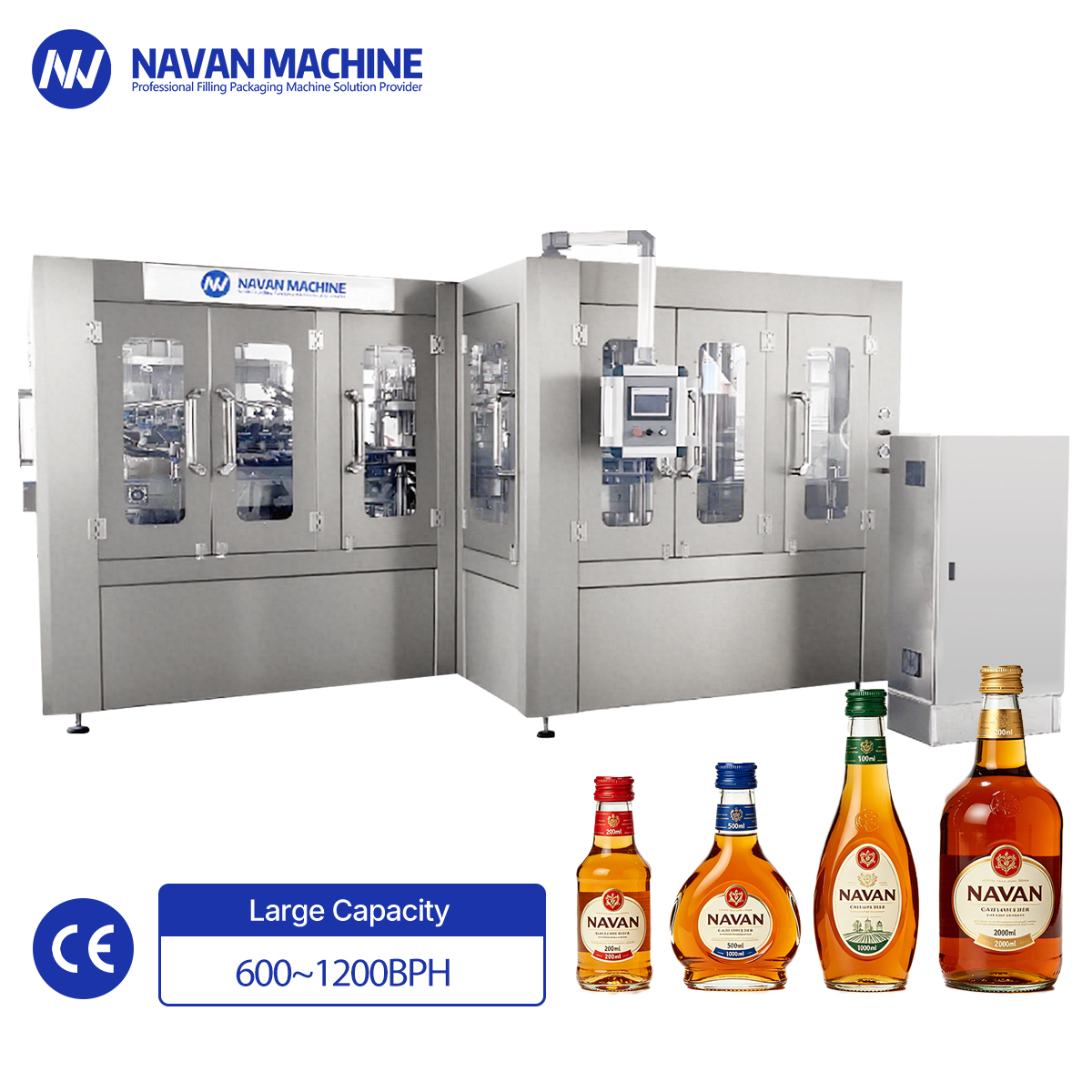
600-1200BPH Fully Automatic Glass Bottle Production Line CE Certified PLC Beer Bottling
Heavy-duty glass bottle rinsing-filling-capping system built specifically for premium glass packaging formats.
View Technical Specs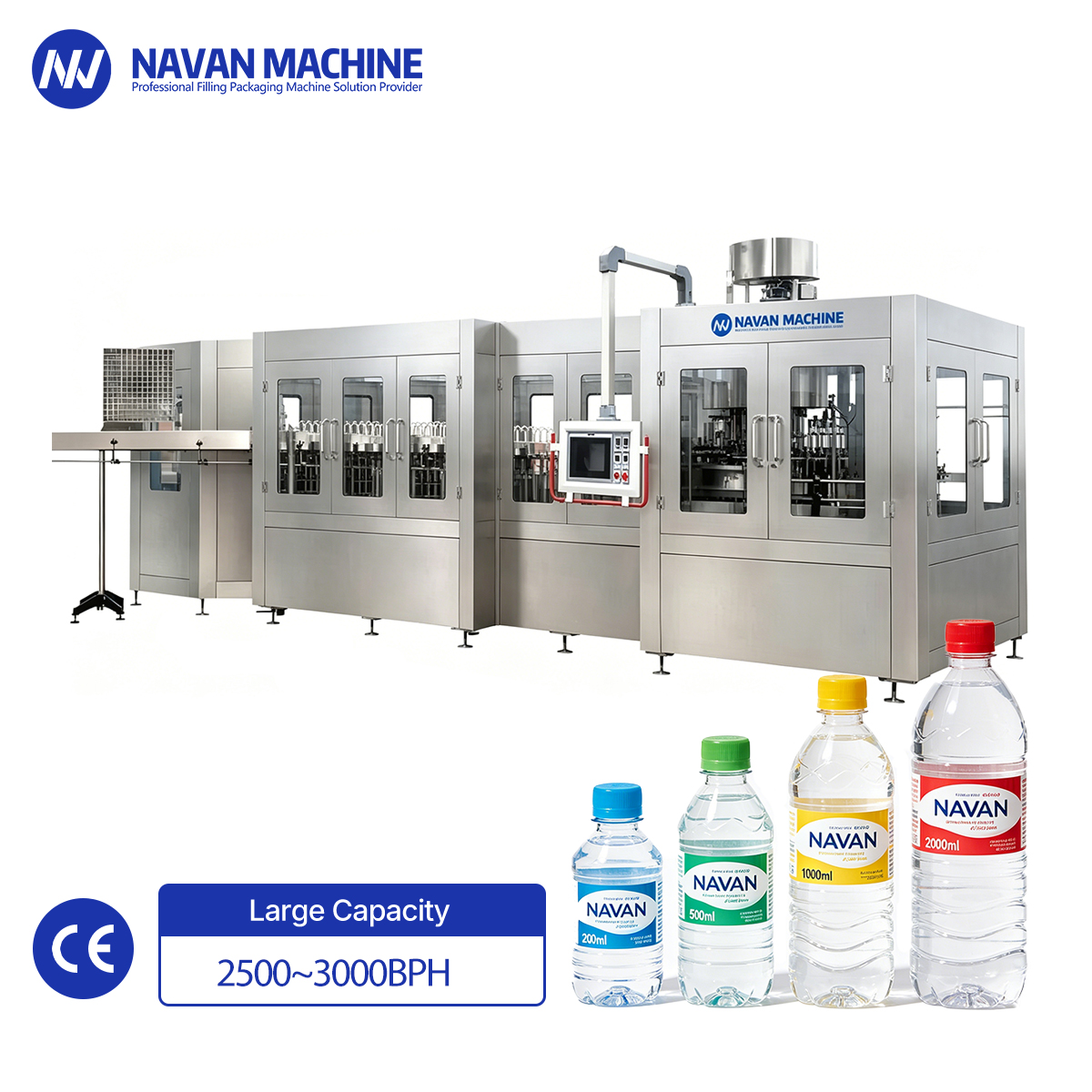
XGF8-8-4 Full Automatic Mechanical Water Filling Machine 2500-3000BPH Turnkey Line
Compact mechanical monoblock filling system engineered for entry-to-medium output spring water plants.
View Technical Specs
Navan XGF18-18-6 Automatic Mineral Water Bottling Machine Turnkey Solution
High-accuracy gravity filling valve line featuring integrated CIP sanitation for pure water processing.
View Technical Specs
Automatic Glass Bottle Wine Filling Machine 2500-3000BPH 12 Nozzle Mechanical Bottling
Low-vacuum anti-drip filling equipment suited for spirits, red wines, and distilled liquors in glass containers.
View Technical SpecsGlobal Sourcing Guide: Top 10 Glass Bottle Filler Manufacturers & Wholesalers
An engineering evaluation based on filling accuracy, mechanical durability, TCO (Total Cost of Ownership), dissolved oxygen management, and global field support.
The global glass bottle liquid packaging equipment market is undergoing a structural transition. Driven by consumer demands for sustainable packaging, premium beverage aesthetics, and strict carbon footprint mandates, glass bottling continues to dominate the alcoholic beverage, craft beer, carbonated soft drink (CSD), high-end mineral water, and specialty oil sectors. Selecting an industrial glass bottle filling equipment partner requires a rigorous technical comparison that extends far beyond initial capital expenditure (CapEx).
Unlike flexible PET containers, glass packaging introduces distinct mechanical engineering challenges: rigid tolerances, thermal shock vulnerabilities, breakage risks during high-speed transfer, variable neck dimensions, and heavy container handling. Consequently, top-tier equipment manufacturers differentiate themselves through advanced electro-pneumatic valve design, dual pre-evacuation vacuum systems, servo-driven handling starwheels, and hygienic automated CIP (Clean-in-Place) architectures.
In sensitive liquid applications like lager beer, wine, and vitamin-enriched juices, oxygen pickup during filling drastically shortens product shelf life and degrades flavor. Premium filler manufacturers utilize double pre-evacuation techniques combined with high-purity CO₂ or N₂ purging to achieve DO gain levels under 0.02 to 0.04 mg/L, preserving product integrity over extended distribution cycles.
Technical Benchmark Analysis of the World’s Top 10 Glass Bottling Manufacturers
1. Krones AG (Germany)
Core Specialization: High-speed ultra-performance bottling turnkey systems (up to 80,000 BPH).
Krones remains the benchmark for enterprise-scale beverage lines. Their Modulfill series glass fillers feature electro-pneumatic filling valves and dynamic fill-level correction systems. While offering unmatched line efficiency, their high initial capital investment and costly spare parts make them primarily suited for tier-1 multinational brands.
2. KHS Group (Germany)
Core Specialization: Heavy-duty isobaric beer and CSD glass bottling lines.
KHS excels in glass bottle filling technology via their Innofill Glass platform. Engineered with optical sensor controls and low-oxygen filling loops, KHS machinery delivers extreme longevity in high-volume production environments, though integration cycles require extensive lead times.
3. Zhangjiagang Osnib Machine Co., Ltd. (China)
Core Specialization: Turnkey high-ROI custom bottling lines, OEM/ODM glass & PET monoblocks.
Combining TÜV Rheinland-certified manufacturing processes with agile engineering customization, Osnib Machine has emerged as a premier manufacturer for mid-to-high capacity beverage lines (1,000 to 22,000 BPH). Osnib bridges the gap between European engineering precision and cost-effective total ownership. With dedicated field service hubs in Russia and East Africa (Rwanda), they supply complete turn-key solutions including water treatment, blow molding, filling, sleeve/OPP labeling, and end-of-line palletizing.
4. CFT Group / Coesia (Italy)
Core Specialization: High-viscosity sauces, liquid food, wine, and beer glass fillers.
CFT Group specializes in counter-pressure and vacuum filling technologies suited for food pastes, tomato products, and alcoholic drinks, leveraging Italian design finesse and robust stainless steel construction.
5. SACMI Beverage (Italy)
Core Specialization: Electronic flow-meter glass bottle fillers and high-speed modular cappers.
SACMI delivers digital filling valve control using magnetic inductive or mass flowmeters, providing exceptional fill level accuracy without product-contact probes.
6. GEA Procomac (Italy)
Core Specialization: Aseptic glass bottle filling and sensitive liquid processing.
GEA focuses on aseptic microbiological safety for dairy, fruit juice, and sensitive beverages, featuring chemical-free bottle sterilization modules integrated directly into the filler block.
7. Fimer S.r.l. (Italy)
Core Specialization: Monoblock wine, spirit, and oil fillers for boutique and medium production lines.
Fimer is renowned for gravity and electro-pneumatic vacuum systems tailored specifically to glass wine bottles and spirits requiring cork or ROPP metal caps.
8. Synerlink (France / USA)
Core Specialization: Rigid container packaging, ultra-clean dairy and dessert fillers.
Operating under Barry-Wehmiller, Synerlink builds linear and rotary filling systems engineered for demanding hygiene protocols in dairy and plant-based drink lines.
9. Tetra Pak / Inline Filling Systems (USA)
Core Specialization: Linear glass bottle liquid packaging for small-to-medium batch operations.
Inline Filling Systems delivers flexible, modular linear bottle fillers designed for quick changeovers across chemical, condiment, and specialty beverage applications.
10. Meheen Manufacturing (USA)
Core Specialization: Compact counter-pressure bottle fillers for microbreweries.
Meheen pneumatic glass bottling equipment is built specifically for craft breweries requiring compact footprints and reliable counter-pressure carbonation control.
Future Technology & Engineering Development Trends
How smart automation, electro-pneumatic valves, and sustainable design are transforming the glass bottling landscape over the next decade.
1. Shift to Electro-Pneumatic & Servo Flowmeter Valves
Traditional mechanical spring-loaded valves rely on mechanical contact between the bottle neck and valve seal. Modern high-speed fillers are rapidly transitioning to electro-pneumatically controlled filling valves equipped with electromagnetic or mass flowmeters.
This allows touchless filling level adjustment via HMI, reduces mechanical wear, speeds up sanitation cycles, and guarantees filling accuracy within ±0.5 to ±1.0 ml.
2. Lightweight Glass Handling & Torque Control
To reduce shipping costs and carbon emissions, glass container manufacturers are engineering thinner, lightweight glass bottles. However, lightweight glass exhibits lower resistance to vertical axial stress and side impact.
Future glass bottle fillers feature neck-handling guides, servo-driven handling starwheels, soft-start elevators, and dynamic torque control on crown/ROPP cappers to eliminate bottle fracturing during high-speed bottling.
3. Automated Closed-Loop CIP Sterilization
Hygiene standards in global beverage bottling require frequent washdowns between product runs. Modern glass fillers incorporate automatic false-cup insertion systems for full Clean-in-Place (CIP) recirculation.
These closed-loop CIP loops utilize automated temperature, caustic concentration, and flow-rate logging to verify complete micro-biological safety without manual intervention.
Technical Comparison: Mechanical vs. Electro-Pneumatic Glass Fillers
| Evaluation Parameter | Traditional Mechanical Spring Filler | Modern Electro-Pneumatic / Servo Filler |
|---|---|---|
| Filling Accuracy | ± 2.0 mm fill height (dependent on bottle volume consistency) | ± 0.5 mm fill height / ± 0.5% mass flowmeter precision |
| Dissolved Oxygen (DO) Gain | 0.08 - 0.15 mg/L (single vacuum / mechanical release) | 0.02 - 0.04 mg/L (double pre-evacuation + high-purity CO₂ purge) |
| Glass Breakage Rate | Higher risk under heavy mechanical spring tension | Near zero (< 0.001%) due to servo cushioning & soft handling |
| Bottle Changeover Time | 2.0 - 4.0 hours (manual mechanical valve adjustments) | 15 - 30 minutes (HMI recipe selection & quick-change starwheels) |
| Sanitation & CIP | Manual false cups insertion; open drip pans | Automated dummy cups; closed-loop CIP with heat trace |
| Total Cost of Ownership (TCO) | Low initial CapEx, high maintenance & product loss over 5 yrs | Higher initial CapEx, 30% lower OpEx & minimal product waste |
Strategic Purchasing & Procurement Trends (2025–2030)
How global procurement directors and plant owners are restructuring equipment sourcing criteria to balance capital costs, flexibility, and regional service response.
A. CapEx vs. OpEx Balancing & TCO Sourcing
Historically, procurement managers evaluated glass filling machines solely on FOB machine pricing. Today, leading beverage producers utilize 10-year Total Cost of Ownership (TCO) financial models.
Key financial variables in modern procurement algorithms include: electrical consumption (kW/h per 1,000 bottles), CO₂ purging gas efficiency, lubrication requirements, scheduled wear-part replacement cycles, and filling yield losses. Premium Chinese machinery manufacturers like Osnib Machine have gained significant market share by delivering European-standard stainless components (304/316L, Siemens PLC, Schneider electronics) at an operational cost point that maximizes ROI within 14 to 18 months.
B. Multi-Liquid & Flexible Packaging Capability
Market demand shifts rapidly. A plant that fills beer today may need to package sparkling water, RTD cocktails, or kombucha tomorrow. Sourcing dedicated single-purpose fillers creates asset rigidity.
Purchasing trends heavily favor Combimount and Monoblock systems that handle multiple liquid viscosities, temperature profiles (hot fill vs. cold ambient vs. isobaric counter-pressure), and container neck sizes on a single, compact chassis.
C. Regional Service Hubs & Remote Telemetry
Unplanned downtime on a bottling line costs up to $5,000–$20,000 per hour in lost throughput. Equipment buyers now demand remote diagnostic capabilities via secure IoT gateways, enabling factory engineers to troubleshoot PLC code remotely within minutes.
Furthermore, local spare part warehousing and overseas engineer dispatch centers—such as Osnib Machine’s regional service hubs in Russia (Goryachy Klyuch) and East Africa (Kigali, Rwanda)—are becoming non-negotiable contract requirements.
D. Full Turnkey Integration Accountability
Procuring individual machines from separate suppliers (water treatment from Supplier A, filler from Supplier B, labeler from Supplier C) leads to integration friction, communication gaps, and extended commissioning delays.
Modern plant buyers overwhelmingly opt for single-source turnkey accountability, where one engineering firm handles line layout, conveyor logic, electrical synchronization, on-site commissioning, and unified operator training.
Enterprise Strengths & Engineering Capabilities
Why global beverage manufacturers, water plants, breweries, and edible oil producers partner with Zhangjiagang Osnib Machine Co., Ltd.
Factory & Trade Integration
Direct manufacturing powerhouse based in Zhangjiagang City, China. Our internal engineering teams work under the same roof as our international trade divisions, eliminating communication barriers and guaranteeing exact compliance with client drawings and bottle specifications.
TÜV Rheinland & CE Certified
Our production facilities have undergone rigorous on-site supplier verification by TÜV Rheinland. All primary beverage filling, blow molding, labeling, and palletizing systems hold official CE safety certificates for global export compliance.
Global Field Service Network
In addition to our China headquarters, Osnib Machine operates active overseas service centers in Russia (Krasnodar Krai) and Africa (Kigali, Rwanda), providing localized technicians, fast site visits, on-site commissioning, and 7x24 online support.
Bespoke Bottle & Line Design
Our CAD and 3D modeling specialists design exclusive bottle shapes, perform preform/mold engineering, tailor label dimensions (OPP hot melt, shrink sleeve, or sticker), and provide full 2D/3D plant layout drawings custom-fitted to your facility floor.
End-to-End Turnkey Scope
From raw water treatment (RO purification, UV sterilization) and automatic blow molding to rinsing-filling-capping monoblocks, bottle inspection, wrapping, and automatic palletizers — we supply the complete line under a single point of accountability.
Frequently Asked Questions (FAQ)
Detailed technical and purchasing answers for plant managers, project engineers, and international importers.
What is the minimum order quantity (MOQ) and customization scope for your glass bottle fillers?
The Minimum Order Quantity (MOQ) is 1 set. You can order an individual glass bottle rinsing-filling-capping machine to upgrade an existing production line or purchase a complete multi-station turnkey line. Every unit is fully customized according to your bottle dimensions, liquid viscosity, carbonation pressure, electricity voltage/frequency (e.g., 380V 50Hz, 220V 60Hz, 415V 50Hz), and target output speed (BPH).
How do Osnib glass fillers achieve low dissolved oxygen (DO) pickup during beer and carbonated filling?
Our counter-pressure isobaric glass bottle filling machines utilize a double pre-evacuation system. Before liquid enters the bottle, a high-vacuum pump evacuates air from the glass container, followed by high-purity CO₂ flushing. This vacuum-and-purge cycle is executed twice, reducing atmospheric oxygen in the bottle to minimal levels. During filling, smooth fluid channel geometry prevents turbulence, guaranteeing dissolved oxygen (DO) gain stays consistently below 0.02 to 0.04 mg/L.
Can a single filling machine handle both glass bottles and PET bottles?
While PET and glass bottles require different container-handling mechanics (PET uses neck-handling clamps, whereas glass requires bottom-support pedestals due to weight), Osnib offers dual-purpose filling monoblocks equipped with quick-change handling components. By swapping out starwheels, guide plates, and capping heads (e.g., switching between crown caps for glass and plastic screw caps for PET), a single combi-line can handle both bottle types seamlessly.
What local after-sales services and warranty support do you provide overseas?
We provide comprehensive global support. In addition to our engineering headquarters in Zhangjiagang, China, we operate dedicated regional service offices in Goryachy Klyuch, Russia (for Russian-speaking markets) and Kigali, Rwanda (serving the African continent). We send certified mechanical and electrical engineers to your site for line layout verification, machinery installation, trial commissioning, and staff training. All equipment comes with a standard 12-to-24 month warranty and lifetime 7x24 remote diagnostic assistance.
Which trade terms and payment methods are accepted for international orders?
We offer flexible commercial terms tailored to global trade regulations. Accepted trade terms include FOB, CFR, CIF, EXW, CIP, FCA, DDP, and DDU. Accepted payment channels include Wire Transfer (T/T), Irrevocable Letter of Credit at sight (L/C), Credit Card, Western Union, and MoneyGram. Transactions can be conducted in USD, EUR, GBP, CNY, and other major currencies.
How do you prevent glass bottle breakage on high-speed filling lines?
Glass bottle breakage is eliminated through three key design innovations: 1) Servo-controlled bottle lifting pedestals that apply smooth, dampened vertical sealing pressure against filling valves; 2) Precision-machined, wear-resistant nylon starwheels that gently guide bottles through transfer points; and 3) Integrated safety detection sensors that immediately stop the line and trigger automatic high-pressure water spray flushes if a defective or cracked bottle is detected.
