High-Performance Bottling & Packaging Machinery

NPXZGF24-18-24-6PRO 200ml-2000ml High Productivity Automatic Mechanical PLC-controlled Beer Bottling Line
View Details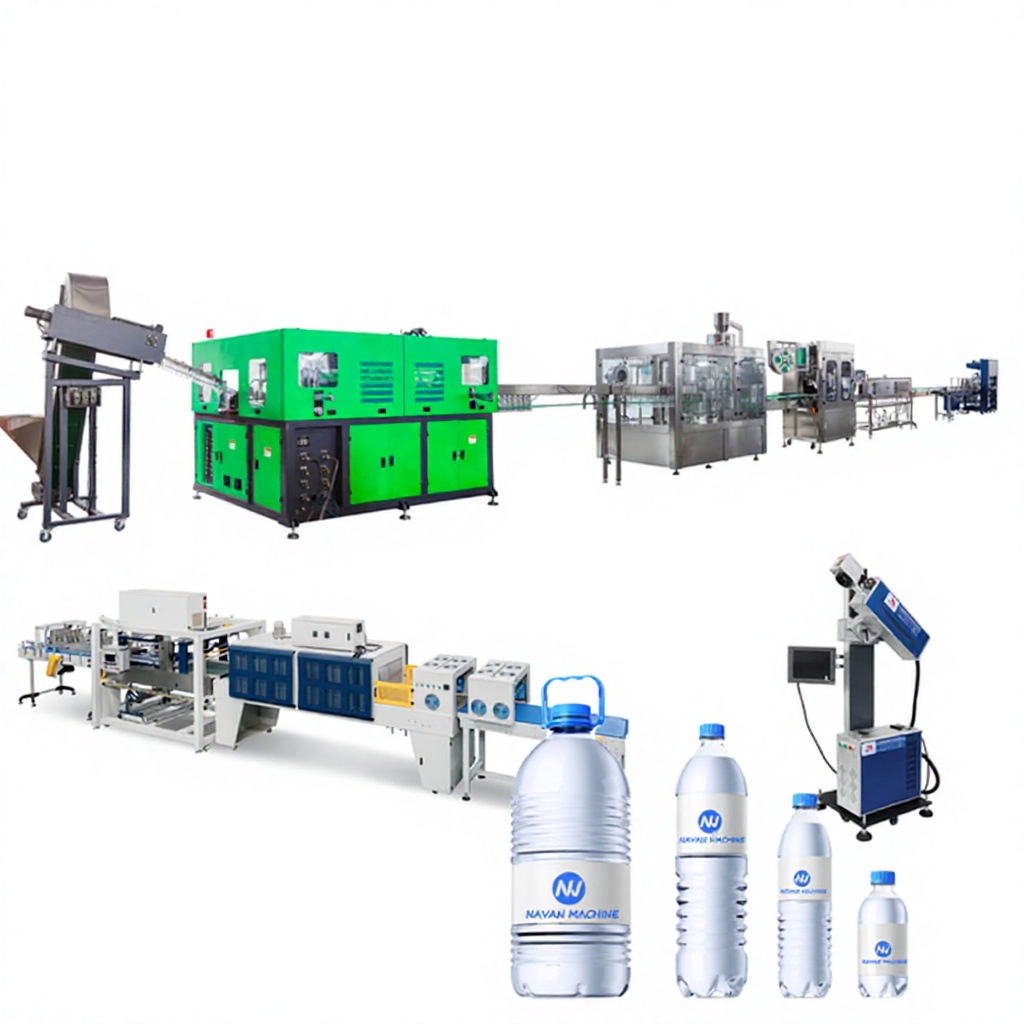
Automatic Bottled Water Production Line Blowing Rinsing Filling Capping Labeling Packaging 200-2000ml
View Details
Navan XGF18-18-6 Automatic Mineral Water Bottling Machine Turnkey Solution PLC Control PET Bottle
View Details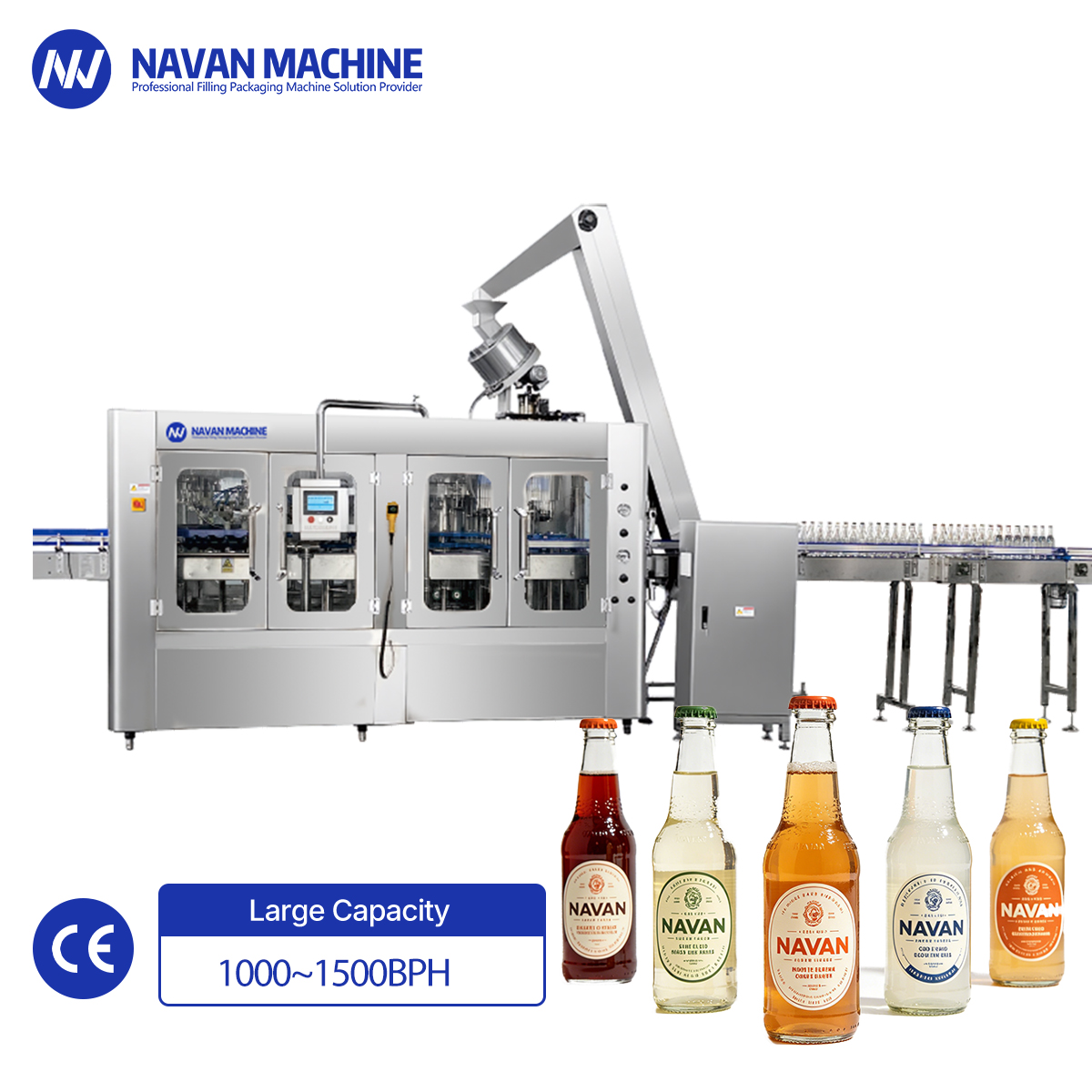
Full Automatic Glass Carbonated Beverage Bottling Line PLC Intelligent Operation High-Accuracy Filling
View Details
Complete Solution PLC Controlled Mechanical PET Bottle Drink Machinery Automatic Fruit Juice Plant
View Details
Automatic 10-20L Barrel Water Filling Machine 400-450BPH Washing Capping Line Mechanical PLC
View Details
Complete Glass PET Bottle Carbonated Drink Production Line XPXGF24-24-8 Automatic Soda Filling
View Details
NAVAN PET Automatic PLC Controlled 6-Cavity Servo Motor Plastic Bottle Stretch Blow Moulding Machine
View Details1. Technical Engineering Overview: High-Viscosity Jam & Preserves Packaging
Industrial fruit jam, marmalade, jelly, and thick sauce packaging represents one of the most complex challenges in non-Newtonian fluid mechanics within food processing engineering. Unlike thin liquids (such as mineral water or carbonated soft drinks), fruit jams exhibit high viscosity, yield stress, thermal sensitivity, and non-homogeneous physical structures containing suspended fruit solids or pulp.
Sourcing an automated jam filling line from leading Chinese manufacturers requires a thorough understanding of rheological parameters. A premium-grade jam filling system must execute seamless volumetric dosing while guaranteeing four core operational metrics:
- Particulate Integrity Preservation: Ensuring large fruit chunks (strawberry halves, whole blueberries, orange peel strips up to 20–25mm) are transferred without mechanical crushing or shear damage.
- Thermal Management & Pasteurization Stability: Maintaining precise hot-filling temperatures between 85°C and 92°C to achieve biological sterility and vacuum formation upon cooling.
- Viscosity-Adaptable Dosing Accuracy: Overcoming variable fluid resistance caused by sugar concentration levels ranging from 55° Brix to 68° Brix without sacrificing standard deviation accuracy (±0.5%).
- Sanitary & CIP (Clean-in-Place) Compliance: Eliminating dead zones in liquid paths, utilizing FDA-compliant seal materials, and featuring 3A/EHEDG sanitary design standards.
Engineering Modules of Modern Jam Bottling Machinery
Servo-Driven Piston & Rotor Dosing
Utilizes ultra-precise servo motors coupled with heavy-duty stainless steel pistons or hygienic rotary lobe pumps. Delivers micro-adjusted stroke control to eliminate volumetric drift across high-brix jams.
Steam-Jacketed Thermal Hopper
Double-layer SUS316L hoppers integrated with internal slow-speed anchor agitators. Circulates low-pressure steam or hot water to keep jam at optimal viscosity without scorching product boundaries.
Pneumatic Anti-Drip Nozzles
Specially engineered dive-in filling heads featuring positive shut-off valves and pneumatic blow-back or vacuum suck-back units. Completely prevents stringing, dripping, and neck contamination on jars.
2. Technical Selection Matrix: Dosing Technologies for Viscous Foods
When selecting a jam filling machine from Chinese OEM/ODM suppliers, plant managers must match the dosing mechanism to product characteristics. Below is an engineering comparison matrix detailing the main dosing systems used in food plants worldwide:
| Filling Technology | Viscosity Range (cP) | Particulate Capacity | Dosing Precision | CIP Cleanability | Best Suited Applications |
|---|---|---|---|---|---|
| Servo Piston Filler | 1,000 – 100,000 cP | Up to 25mm | ±0.2% – ±0.5% | Excellent (Automatic CIP) | Strawberry jam with chunks, peanut butter, honey, marmalade |
| Rotary Lobe Pump Filler | 500 – 50,000 cP | Up to 15mm | ±0.5% – ±1.0% | Superior (Smooth Flow) | Homogenized fruit pastes, ketchup, fruit syrup, smooth jam |
| Mass Flowmeter Filler | 100 – 10,000 cP | Liquid / Fine Pulp Only | ±0.1% – ±0.2% | Maximum (No moving parts) | Filtered fruit juices, jelly syrup, clear honey, liquid sauces |
| Gravity Hot Filler | 1 – 500 cP | No solids | ±0.5% | Standard CIP | RTD Tea, clear fruit juice, mineral water, beverages |
3. Global Market Trends & Future Procurement Dynamics (2025–2030)
The global market for automated food packaging machinery is undergoing a structural shift. Overseas buyers—spanning North America, Europe, the Middle East, Africa, and Southeast Asia—are increasingly turning to top-tier Chinese machinery hubs like Zhangjiagang for high-efficiency, cost-effective, and fully automated jam filling lines.
Trend 1: Smart Automation & Real-Time Viscosity Compensation
Next-generation Chinese jam filling equipment integrates smart PLC systems (Siemens, Mitsubishi, or Schneider) coupled with inline viscosity feedback sensors. As batch temperatures fluctuate slightly during production, the machine automatically calculates fluid drag variations and dynamically adjusts piston velocity and torque profiles to ensure consistent fill weights.
Trend 2: Ultra-Clean Hot-Filling & Steam-Flush Vacuum Capping Integration
To eliminate artificial preservatives while achieving a 12-to-24-month shelf life, food processors require integrated monoblock systems that perform hot-filling (85–90°C), steam-jet vacuum cap sealing (Twist-Off caps or Lug caps), and inverted bottle sterilizing tunnels. China's top manufacturers now supply complete turnkey lines with HEPA laminar flow hoods, creating a Class 100 ultra-clean filling environment.
Trend 3: Hybrid Multi-Format Lines for Agile Manufacturing
Modern wholesalers and brand owners are demanding extreme machine flexibility. A single packaging line must switch seamlessly between glass jars, PET containers, and squeeze pouches within 30 minutes. Tool-less changeover parts, modular conveyor tracks, and recipe-driven touchscreen presets are now baseline requirements for export-ready machinery.
Trend 4: Sustainable Resource Recovery & Low-Energy CIP Systems
Water and energy consumption during Clean-in-Place cycles represent significant operational expenditures. Advanced machinery incorporates closed-loop CIP recycling, recovery wash tanks, and intelligent spray ball nozzle patterns that reduce water consumption by 35% and chemical detergent usage by 25% per cleaning cycle.
4. Enterprise Advantages: Zhangjiagang Osnib Machine Co., Ltd.
Located in the heart of China's liquid packaging machinery manufacturing hub, Zhangjiagang Osnib Machine Co., Ltd. stands as a premier manufacturer and exporter of complete bottling, filling, labeling, and packaging production lines.
TÜV Rheinland & CE Certified
Our facility has passed rigorous onsite supplier evaluations by TÜV Rheinland. Main filling lines, blow molders, and sleeve labelers carry full European CE certification for international compliance.
Global Engineering & Direct Branches
Unlike simple trading agents, Osnib Machine runs dedicated regional service hubs—including a Russia Office (Goryachy Klyuch) and an Africa Branch (Kigali, Rwanda)—providing rapid on-site commissioning and spare parts support.
Turnkey Engineering & Customization
From water treatment (RO) and PET stretch blow molding to high-viscosity jam filling, capping, sleeve labeling, film shrink wrapping, and robotic palletizing—we design line layouts specifically tailored to your factory floor.
Frequently Asked Procurement Questions (FAQ)
Direct technical answers to key operational concerns raised by overseas plant managers and engineering directors.
How does a jam filling machine handle fruit particulates without breaking them?
Our jam filling equipment utilizes custom-designed rotary lobe pumps or wide-orifice servo piston valves. Liquid pathways feature rounded internal contours and non-shearing rotary vanes that allow fruit particles up to 25mm in diameter (such as whole cherries or diced strawberries) to pass through intact without mechanical compression or cell wall destruction.
What is the ideal temperature for hot-filling jam, and how does the machine maintain it?
Jam is typically hot-filled between 85°C and 92°C to achieve commercial sterility inside the container. Osnib's filling machines feature double-jacketed steam-heated hoppers, insulated piping loops, and automatic recirculation valves. If the inline temperature drops below 85°C during a line pause, the product automatically recirculates back to the holding tank instead of filling containers cold.
Can one filling line process both high-viscosity jams and thin liquid juices?
Yes. By specifying a dual-mode filling platform or modular piston/flowmeter interchangeable dosing heads, a single line can handle thin beverages (1–100 cP) and high-viscosity food preserves (up to 50,000 cP). Quick-release sanitary couplings allow rapid switching between filling heads.
What container types can be processed on Osnib jam packaging lines?
Our lines are engineered for glass jars with metal Twist-Off/Lug caps, plastic PET bottles with screw caps, aluminum cans, squeeze pouches, and 5kg to 25kg commercial food buckets. Each system is equipped with container-specific rinsing, sealing, and capping units.
What is the Minimum Order Quantity (MOQ) and customization lead time?
The MOQ is 1 set. Standard standalone fillers require approximately 20 to 30 days for manufacturing, while full turnkey bottling lines (including blow molding, CIP, capping, labeling, and palletizing) take 45 to 60 days depending on custom bottle molds and factory layout approval.
How is Clean-in-Place (CIP) executed on viscous jam filling machines?
The filling line is integrated with automated CIP connections. During cleaning mode, the pistons or lobe pumps operate in reverse/flushing stroke patterns, driving hot caustic soda wash (1.5–2% concentration at 75°C) and fresh water rinse through 360-degree rotary spray nozzles inside the hopper, completely purging all residual sugar paste without manual disassembling.
What international after-sales technical support options are provided?
Osnib Machine offers complete engineering support: 3D plant layout design, pre-shipment FAT (Factory Acceptance Testing) with live video inspection, on-site engineer deployment for installation and operator training, plus localized field service from our Russia and Africa regional offices.
Which commercial trade and payment terms are available for international orders?
We support standard Incoterms including FOB, CFR, CIF, EXW, CIP, FCA, DDP, and DDU. Payments are accepted via T/T, L/C at sight, Western Union, or Credit Card in multiple currencies (USD, EUR, GBP, CNY, etc.).
Plan Your Next Jam & Sauce Packaging Project
Connect with Osnib Machine's senior engineering team to receive custom line layout drawings, technical specifications, and factory-direct wholesale pricing within 24 hours.
