Industrial Bottling Lines & Machinery Range
Explore top-performing industrial liquid filling monoblocks, water processing units, blow molders, and packaging systems trusted by enterprise buyers worldwide.




Engineering Excellence & Turnkey Capability
Zhangjiagang Osnib Machine Co., Ltd. operates as a premiere manufacturer and OEM/ODM engineering leader for complete liquid and semi-viscous food filling production lines.
Factory & Engineering Integration
We eliminate trading intermediaries. Our in-house technical design team coordinates directly with manufacturing technicians to ensure 100% compliance with custom container specifications and flow characteristics.
TÜV Rheinland & CE Credentials
Our manufacturing facility has undergone stringent on-site supplier verification by TÜV Rheinland. Main machinery lines hold comprehensive CE certification to fulfill strict European and North American sanitary requirements.
Localized Global After-Sales
Beyond our China headquarters, Osnib operates dedicated direct branch networks in Russia (Goryachy Klyuch, Krasnodar Krai) and Africa (Kigali, Rwanda), providing localized technicians and spare parts deployment.
High-Viscosity Sauce Filling Architecture & Fluid Dynamics
A technical guide for production engineers, procurement executives, and plant managers evaluating sauce dosing systems.
Packaging condiments, food pastes, hot sauces, dressings, mayonnaise, ketchup, honey, and particle-laden salsa presents unique mechanical and thermodynamic challenges. Unlike thin, free-flowing liquids such as purified water, viscous sauces exhibit non-Newtonian flow behavior, shear-sensitivity, temperature-dependent viscosity shifts, and potential stringing or dripping at high fill velocities.
Selecting the right sauce filling machine supplier requires a thorough technical evaluation of pump mechanics, nozzle geometry, sanitary cleanability, thermal jacket performance, and mechanical metering control.
1. Volumetric Piston Metering vs. Rotary Lobe & Net Weight Filling
Determining the optimal liquid dosing mechanism depends heavily on product rheology and container types:
- Servo-Driven Volumetric Piston Fillers: Recommended for medium-to-high viscosity pastes (e.g., tomato paste, peanut butter, chili garlic sauce). Piston strokes driven by precision servo motors deliver micro-dosing precision within ±0.5%. They effectively pull thick pastes from hoppers without shear degradation.
- Rotary Lobe Pump Fillers: Ideal for continuous production lines handling sauces containing large solid particulates (e.g., salsa with diced tomatoes, mushroom sauces, fruit jams). Lobe pumps maintain particle integrity without crushing solids.
- Net-Weight Fillers (Load Cell Based): Used for large-volume bulk sauce containers (such as 5L to 20L pails or jugs) where fill accuracy is governed by real-time weight measuring rather than volumetric displacement.
Engineering Breakthrough: Anti-Drip & Particulate Nozzle Design
One of the largest causes of downtime in condiment bottling lines is nozzle dripping and stringing, which leads to container contamination, sealing failures, and expensive cleanups. Industrial-grade sauce fillers utilize pneumatic positive shut-off cut nozzles combined with bottom-up filling (diving nozzle assembly). The filling nozzle descends into the bottom of the jar or bottle and slowly ascends in sync with the fluid rise level. This mitigates air entrapment, eliminates splashing, and cuts off thick liquid threads cleanly using vacuum pullback mechanisms.
2. Thermal Management: Heated Jacketed Hoppers & Agitators
Many commercial sauces (such as chocolate syrup, melted fats, hot chili sauces, and cheese spreads) must be filled hot (typically between 65°C and 85°C) to maintain fluidity, prevent oil separation, and achieve hot-pack pasteurization. Enterprise sauce filling equipment integrates double-walled stainless steel jacketed hoppers equipped with recirculating thermal oil or hot water systems. Integrated horizontal or vertical mixing paddles ensure homogenous heat distribution and prevent solids from settling at the bottom of the supply tank.
3. Sanitary Hygiene Standards (CIP/SIP & 316L Stainless Steel)
Food safety compliance (FDA, EHEDG, 3-A Standards) requires sauce machinery to feature full Clean-In-Place (CIP) integration. Contact parts must be constructed from food-grade AISI 316L stainless steel, featuring electro-polished surfaces (Ra < 0.4 µm) and sanitary quick-release tri-clamp fittings. Automated CIP cycles wash the internal pistons, manifold blocks, and nozzles without requiring manual teardown, cutting line changeover and sanitization times by over 70%.
Key Industry Development Trends in Sauce Packaging
How automation, smart sensors, and modular designs are reshaping sauce manufacturing efficiency.
Full Servo Motor Control Systems
Traditional pneumatic-driven pistons are being rapidly replaced by multi-axis servo systems. Servo control enables digital recipe management, automatic fill volume adjustments via HMI touchscreens, and dynamic stroke speed profiling tailored to liquid viscosity changes.
Aseptic & Hygienic Hot-Fill Monoblocks
To reduce chemical preservatives, condiment brands are moving toward cleanroom-class aseptic filling monoblocks equipped with HEPA laminar flow hoods, UV cap sterilization, and automated ozone/peracetic acid rinsing modules.
Multi-Format Universal Line Adaptability
Modern wholesalers demand filling lines capable of handling diverse container materials (PET, glass jars, squeeze bottles, aluminium cans) and cap styles (screw caps, lug caps, flip-tops, pump dispensers) with quick toolless changeovers in under 20 minutes.
Sauce Filling Machine Selection Guide
Match your condiment viscosity, container type, and hourly output targets with the right equipment setup.
| Sauce / Condiment Type | Viscosity Range (cP) | Recommended Filling Tech | Nozzle Configuration | Typical Container | Available Output Range |
|---|---|---|---|---|---|
| Soy Sauce, Vinegar, Thin Broths | 1 – 100 cP | Normal Pressure / Micro-Gravity | Straight-Flow Rubber Sealed Nozzles | Glass / PET Bottles | 2,000 – 18,000 BPH |
| Ketchup, Chili Sauce, BBQ Sauce | 1,000 – 10,000 cP | Servo Volumetric Piston Filler | Pneumatic Cut-off Diving Nozzles | Glass Jars / Squeeze PET | 1,500 – 8,000 BPH |
| Mayonnaise, Peanut Butter, Paste | 10,000 – 50,000+ cP | Heavy-Duty Piston with Pressure Hopper | Positive Shut-off Bottom-Up Nozzles | Wide-mouth Jars / Tubs | 1,000 – 5,000 BPH |
| Salsa, Fruit Jams with Chunks | 5,000 – 30,000 cP | Rotary Lobe Pump / Metering Valve | Large-Bore Non-Crushing Particulate Nozzles | Glass Jars / Plastic Containers | 1,200 – 6,000 BPH |
| Hot Honey, Chocolate Syrup (Hot-Fill) | 500 – 8,000 cP (Hot) | Heated Jacketed Piston / Flow Meter | Heat-Traced Anti-Drip Cut Nozzles | PET / Glass Bottles | 2,000 – 10,000 BPH |
Future Procurement Trends & Total Cost of Ownership (TCO)
What global procurement officers and OEM buyers must consider when evaluating long-term machinery contracts.
1. Transition from Standalone Fillers to Fully Integrated Turnkey Lines
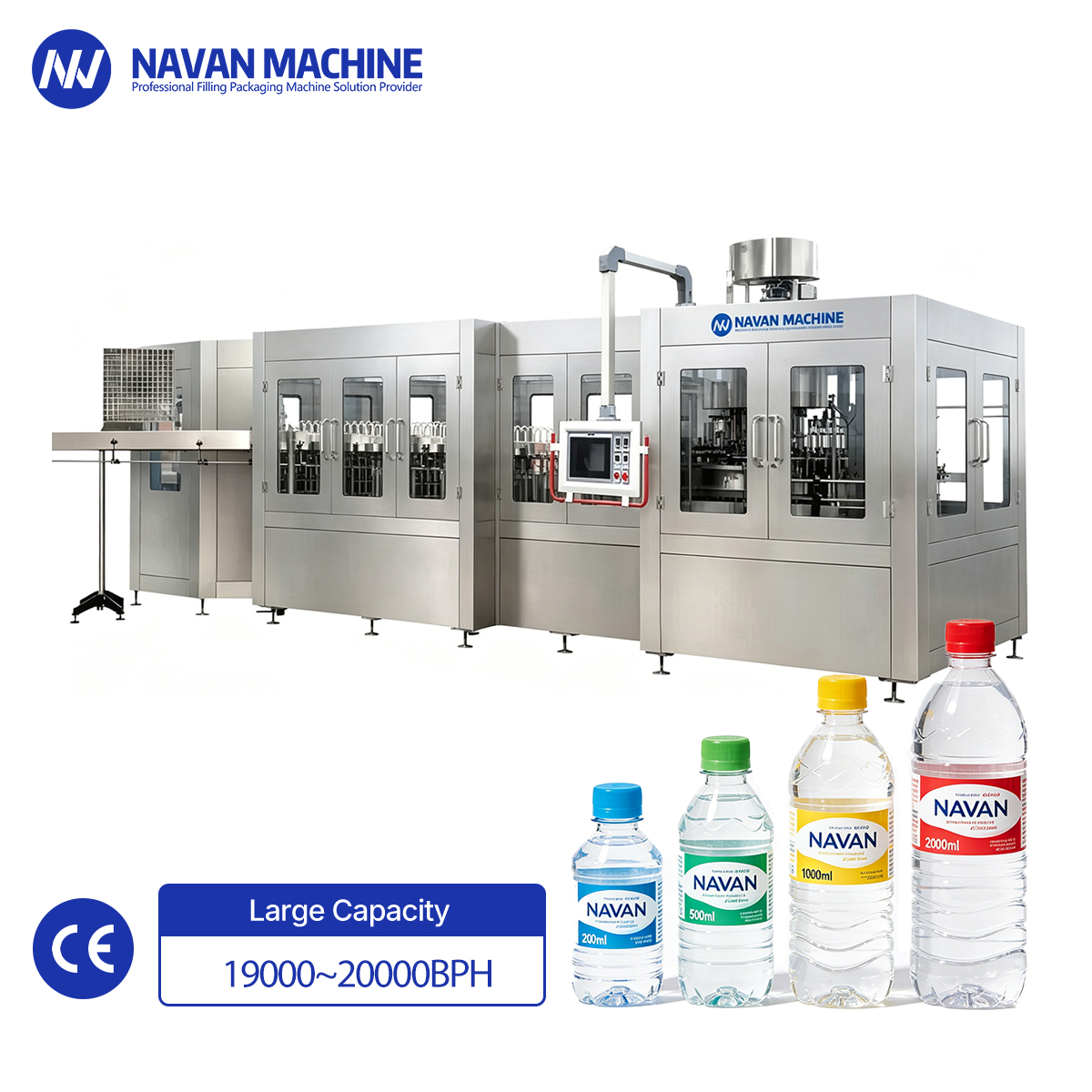
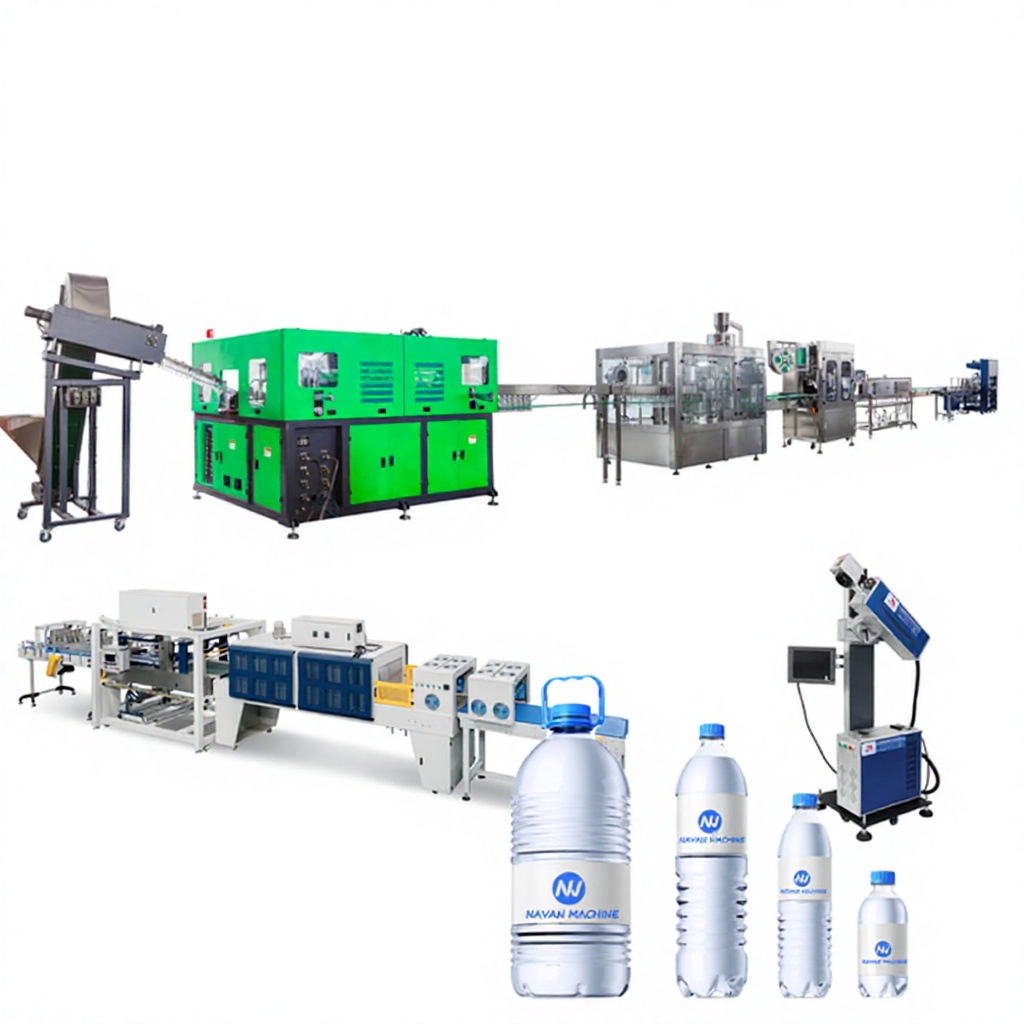
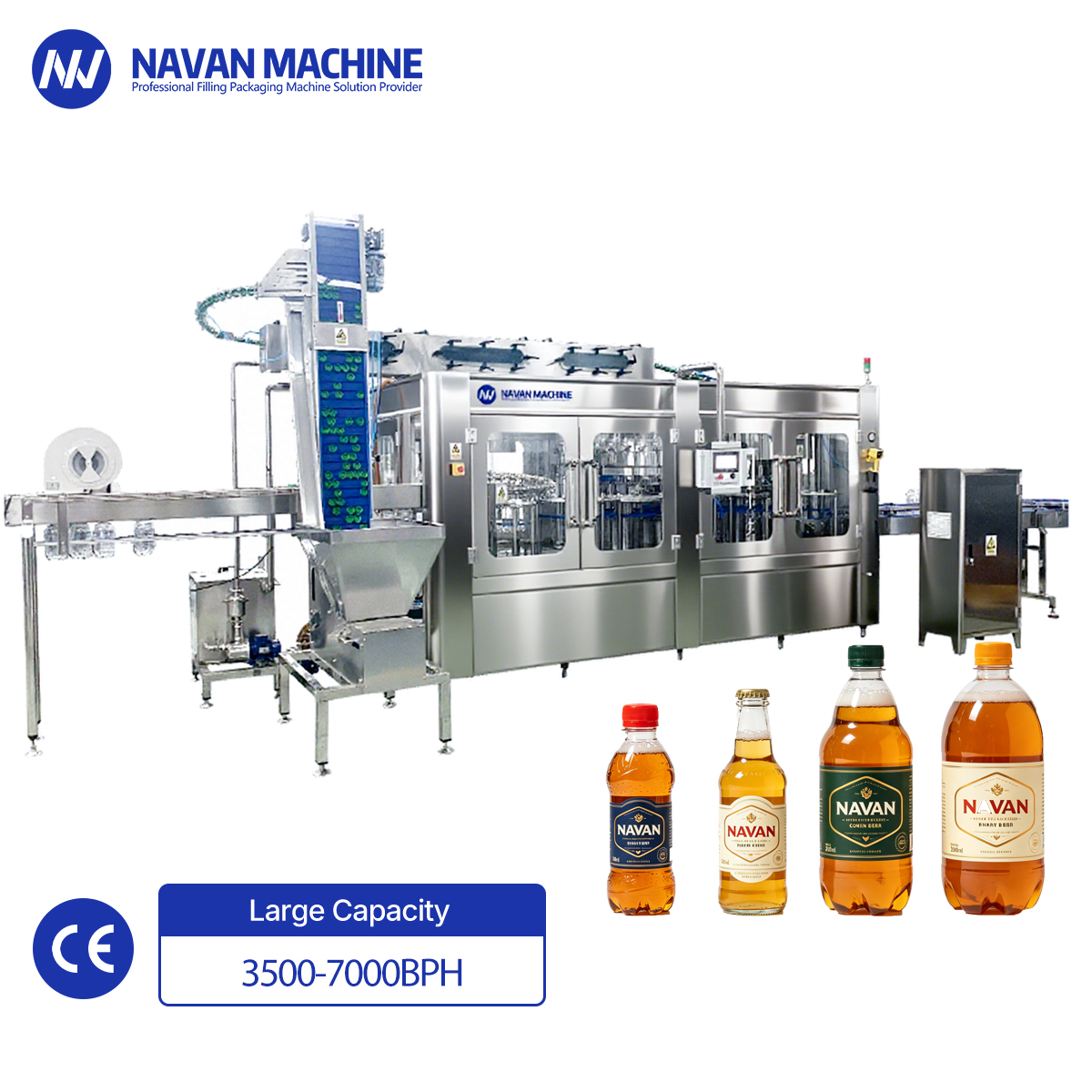
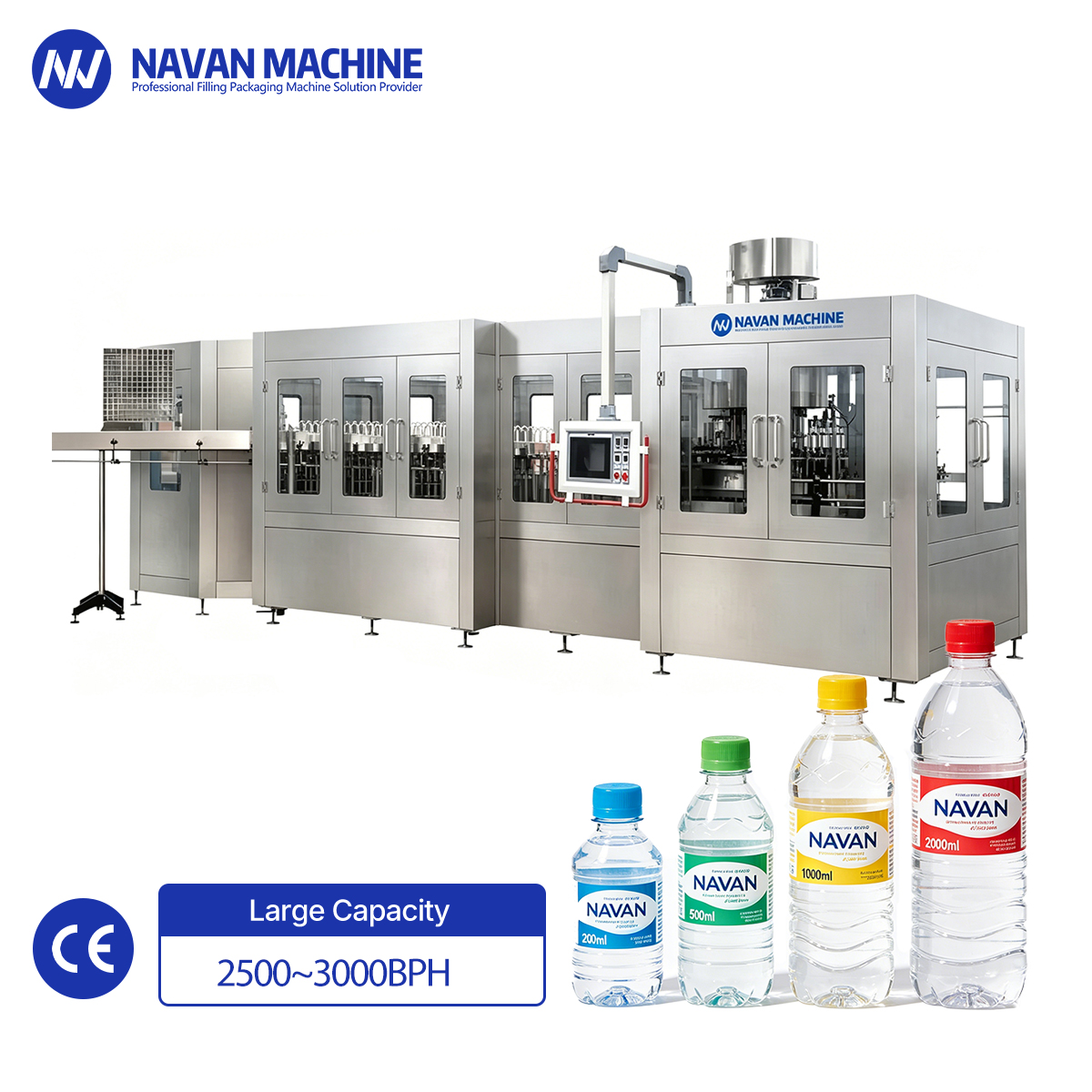
Wholesalers are moving away from piecemeal equipment sourcing. Sourcing complete turnkey lines—spanning RO water treatment, bottle blow molding, rinsing-filling-capping monoblocks, labeling (OPP/Sleeve), PE film shrink wrapping, carton packing, and palletizing—from a single engineering manufacturer eliminates protocol incompatibility and simplifies warranties.
2. Focus on OEE (Overall Equipment Effectiveness) & Maintenance TCO
Initial purchase cost represents only 20% of a machine's lifetime operational expense. Procurement managers prioritize machines built with internationally standardized pneumatic and electrical components (e.g., Siemens PLC, Schneider electrics, Festo pneumatics) to guarantee 24/7 spare parts availability and lower maintenance expenditure.
3. Remote Diagnostics & IoT Cloud Connectivity
Modern packaging lines come integrated with secure industrial routers enabling remote engineering diagnostic access. In-house technical specialists can troubleshoot PLC program logic, update recipes, and diagnose sensor faults remotely from anywhere in the world, mitigating factory downtime.
4. Energy Conservation & Sustainable Packaging Compatibility
With global shifts toward eco-friendly packaging, machinery must be capable of processing ultra-lightweight PET bottles, 100% rPET preforms, glass containers, and biodegradable shrink wrapping films without causing container deformation or jam-ups during high-speed runs.
Frequently Asked Questions (FAQ)
Clear, direct answers to common procurement, technical, and logistics questions for sauce packaging projects.
What is the Minimum Order Quantity (MOQ) for sauce filling lines?
The MOQ is 1 set. We supply individual stand-alone machines (such as a standalone piston sauce filler, labeling unit, or blow molder) as well as full high-capacity turnkey bottling and packaging lines tailored to your production workshop layout.
Can your sauce filling machines handle products with solid particulates like salsa or chili paste?
Yes. For sauces containing seeds, diced vegetables, or fruit chunks, we configure specialized rotary lobe pumps or wide-bore piston manifolds paired with non-crushing pneumatic cut-off nozzles. This guarantees smooth flow and precise volumetric metering without crushing or clogging solid particles.
How do you ensure hygienic cleaning and prevent batch cross-contamination?
Our sauce filling machinery features automated Clean-In-Place (CIP) cleaning channels, 316L stainless steel product-contact parts, electro-polished fluid pipelines, and sanitary quick-release tri-clamps. The system can connect directly to your centralized CIP station for automated hot water/caustic wash cycles.
What turnkey engineering support services do you provide before purchasing?
We provide full project engineering support including bottle/jar shape 3D CAD design, custom label artwork sizing, fluid sample testing, and complete 2D/3D workshop layout engineering drawings tailored to your factory building dimensions and power utility drop points.
What after-sales service and installation support do you offer overseas buyers?
We provide both on-site engineering installation and comprehensive 7×24 online remote support. In addition to our Chinese factory headquarters, we maintain active regional service offices in Krasnodar Krai, Russia and Kigali, Rwanda, offering localized technical personnel, field commissioning, and fast spare parts delivery.
Which trade delivery and international payment terms are accepted?
We accept delivery terms including FOB, CFR, CIF, EXW, CIP, FCA, DDP, and DDU. Accepted payment methods include T/T, L/C, Western Union, Credit Card, and MoneyGram in major global currencies (USD, EUR, GBP, CNY, RUB, CAD, AUD, etc.).
Are Osnib machines CE certified and verified by independent auditors?
Yes. Our main filling, blow molding, labeling, and palletizing lines carry official CE compliance certification. Furthermore, Zhangjiagang Osnib Machine Co., Ltd. has completed on-site supplier verification and facility assessment by TÜV Rheinland.
Request a Custom Sauce Filling Line Proposal
Send us your container samples, sauce product viscosity details, and target hourly output. Our engineering team will prepare a full turnkey project layout and quotation within 24 hours.
