
High Speed Self-Adhesive Labeling Machine: Next-Gen Rotary Servo Engineering & Global Buyer Intent Analysis
Mastering high-throughput pressure-sensitive labeling: How multi-axis synchronization, optical bottle-orientation systems, and ultra-precise web tensioning unlock up to 24,000 BPH labeling accuracy (±0.5mm) across PET, glass, and metal containers.
High Speed Self-Adhesive Labeling Machine: Decoding the Mechanics of High-Throughput Precision
Moving beyond basic marketing specs to analyze tension dynamics, rotary carousel stabilization, and optical tracking algorithms that define elite B2B labeling performance.
In modern high-speed beverage, pharmaceutical, and chemical packaging operations, the High Speed Self-Adhesive Labeling Machine stands as a critical checkpoint controlling final product aesthetic and line efficiency. Unlike traditional cold-glue or hot-melt OPP systems, self-adhesive (pressure-sensitive) labeling demands complex mechanical control to handle thin release liners, high web acceleration, and varied container surface geometries simultaneously.
Global procurement directors and packaging engineers frequently encounter performance bottlenecks when scaling linear labeling platforms beyond 12,000 bottles per hour (BPH). At elevated web speeds exceeding 60 meters per minute, linear labelers experience web drift, liner breakage, and label skew caused by vibration and inconsistent bottle spacing. The transition to high-speed rotary servo-driven self-adhesive labeling platforms engineered by Zhangjiagang Osnib Machine Co., Ltd. resolves these systemic hurdles through continuous-motion bottle orientation, synchronized servo carousel turrets, and real-time electronic webbing tension control.
Servo-Synchronized Web Dynamics
Employs dual servo motors driving the peel-blade dispenser and rewind spindle in lockstep. Eliminates web slack, preventing label tears even when operating with ultra-thin PET liner materials under high acceleration ramps.
Rotary Carousel Alignment
Bottle platforms feature dedicated servo motors per station, rotating containers up to 360° precisely relative to optical sensors. Ensures exact alignment with container ridges, embossing, or dual-side positioning notches.
Dynamic Pressing & Bubble Elimination
Multi-stage pneumatic and soft-gel roller assemblies adapt to concave or convex glass/PET profiles. Drives out micro air pockets to produce crystal-clear "no-label look" visuals on transparent liquids.
Engineered High Speed Self-Adhesive Labeling Machine Solutions
Tailored mechanical architectures engineered to match your production line speed, bottle geometry, and automation requirements.
1. High-Speed Rotary Servo Sticker Labeling Machine (12–24 Station)
Target Throughput: 12,000 – 24,000 BPH
Best Suited For: Premium mineral water, spirits, beverage, and personal care lines requiring multi-label application (front, back, neck wrap) in a single pass.
Key Innovation: Equipped with dual dispensing heads featuring automatic web switching. When reel A reaches its end, reel B automatically engages without dropping line velocity or missing a container.
Send an Inquiry
2. Double-Sided High Speed Linear Self-Adhesive Labeler
Target Throughput: 6,000 – 10,000 BPH
Best Suited For: Flat, oval, and rectangular containers common in edible oil, household chemical, and pharmaceutical sectors.
Key Innovation: Top-hold synchronous overhead belt stabilization combined with side-chain alignment guiderails ensures zero container wobbling prior to label dispensing.
Send an Inquiry
3. High-Speed Wrap-Around Self-Adhesive Labeling Machine for Glass & PET
Target Throughput: 8,000 – 18,000 BPH
Best Suited For: Cylindrical bottles requiring full-wrap or partial-wrap self-adhesive labels with ultra-high vertical alignment accuracy.
Key Innovation: Continuous rotary pressing belt system wraps labels cleanly around varied bottle tolerances, eliminating label seam overlap errors.
Send an Inquiry
4. Ultra-Precision Vial & Small Bottle High Speed Labeler
Target Throughput: 15,000 – 30,000 CPH
Best Suited For: Pharmaceutical ampoules, vials, and small syrup bottles.
Key Innovation: Integrated starwheel indexer, vision inspection camera for batch/EXP code verification, and fail-safe air-jet ejection for un-labeled items.
Send an Inquiry
Future Development & Global Procurement Trends (2025–2030)
How Smart Manufacturing, Sustainability Demands, and Total Cost of Ownership (TCO) are reshaping global buyer queries and machine designs.
Technology Development Trends in High Speed Labeling
1. Industry 4.0 & Predictive Servo Diagnostics: Modern high-speed labelers are evolving into intelligent edge nodes. Integrated accelerometers and motor thermistors analyze mechanical vibration on peel plates and carousel gears, alerting maintenance managers to bearing wear long before web jams occur.
2. Machine Vision & AI Quality Control: High-speed cameras running real-time AI algorithms are now directly mounted at the ejection wheel. They inspect label position (±0.3mm tolerance check), detect micro-bubbles under clear film, and verify laser-coded barcodes at speeds exceeding 400 bottles per minute.
3. Tool-Less Quick Changeover (SMED Protocol): To accommodate shorter product runs, modern machine frames utilize color-coded change parts, digital position indicators, and motorized height adjustments stored as recipe presets in the HMI screen.
Future Global Procurement Trends
1. Total Cost of Ownership (TCO) Evaluation: Overseas buyers are prioritizing energy efficiency, release liner waste reduction, and uptime statistics over initial purchase price. Advanced servo labelers cut power consumption by up to 30% compared to legacy pneumatic-clutch systems.
2. Linerless and Ultra-Thin Web Compatibility: Environmental regulations are pushing liquid packagers toward 12-micron glassine release backing or completely linerless self-adhesive labels. Labeler feed systems must deliver zero-jerk acceleration to prevent web snapping.
3. Multi-Format Hybrid Line Integration: Beverage plants increasingly demand modular labelers capable of accepting interchangeable modules—allowing self-adhesive sticker heads, cold glue modules, or hot-melt OPP heads on the same central carousel frame.
Why Global Importers Partner with Zhangjiagang Osnib Machine Co., Ltd.
Rooted in Zhangjiagang's world-class beverage machinery manufacturing hub, delivering TÜV-verified quality, engineering precision, and global service.
At Zhangjiagang Osnib Machine Co., Ltd., we understand that purchasing a High Speed Self-Adhesive Labeling Machine involves much more than receiving a standalone unit. It requires robust mechanical design, precision electrical assembly, thorough pre-shipment FAT (Factory Acceptance Testing), and reliable field service backup.
Our dedicated engineering team operates out of our modern facility in Leyu Town, Zhangjiagang City. Every machine undergoes rigorous structural FEA stress testing, high-speed dry runs, and live product trials using client-supplied bottles and label rolls prior to shipment. With localized service branches in Africa (Kigali, Rwanda) and Russia (Goryachy Klyuch), as well as 7x24 remote engineering support, Osnib Machine guarantees rapid response times and operational peace of mind.


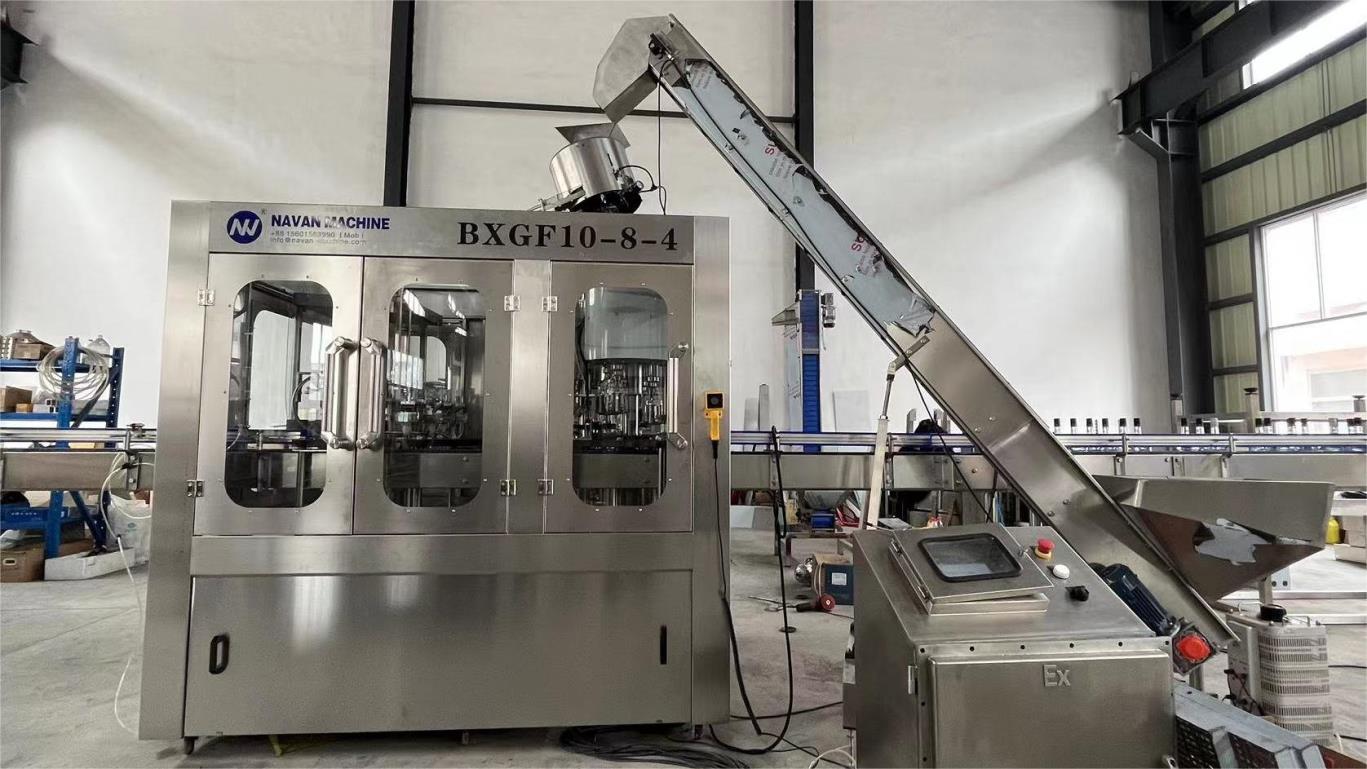

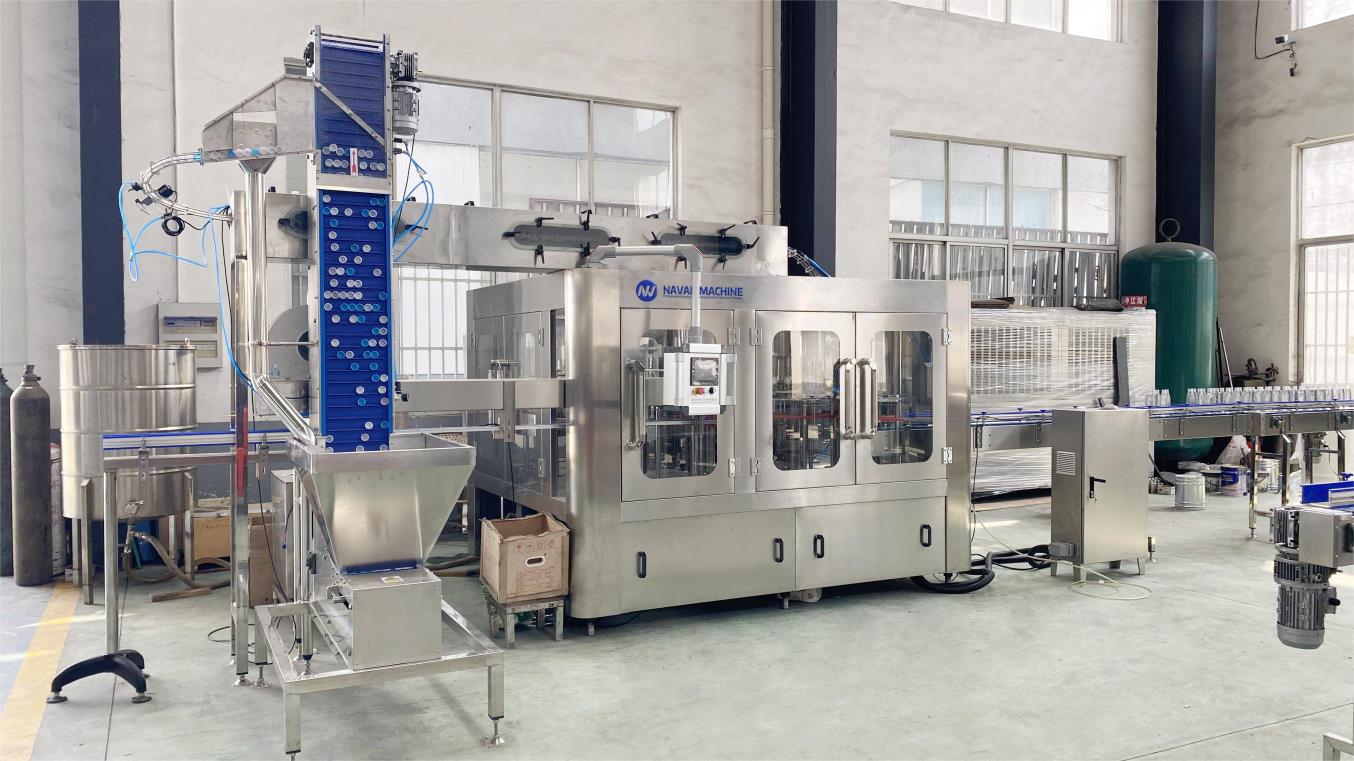


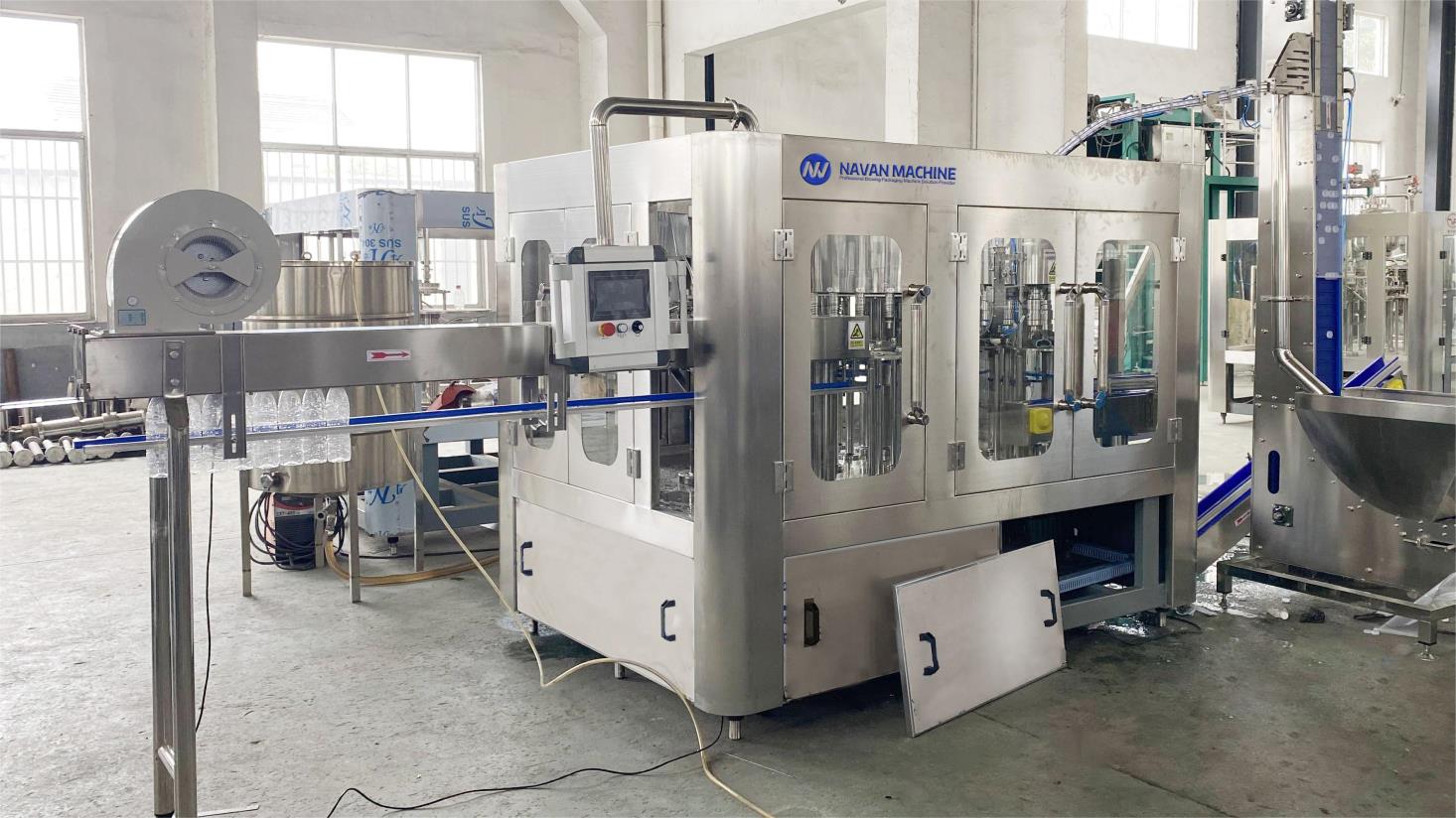


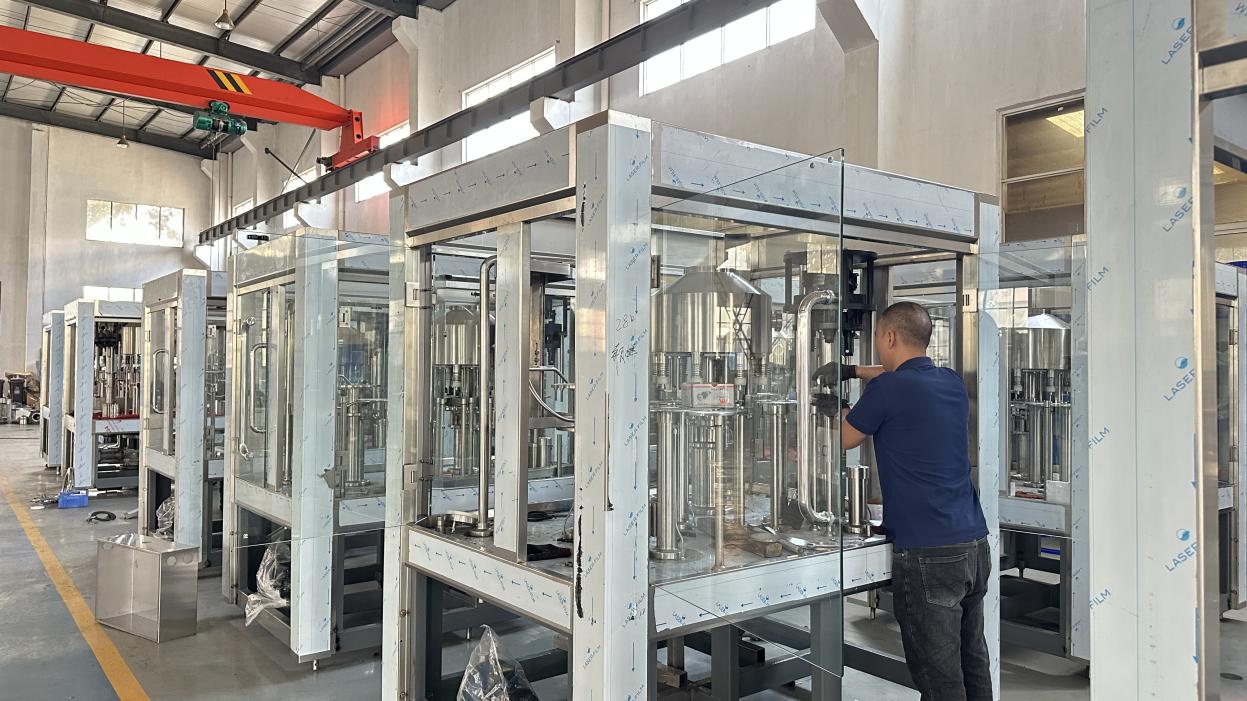
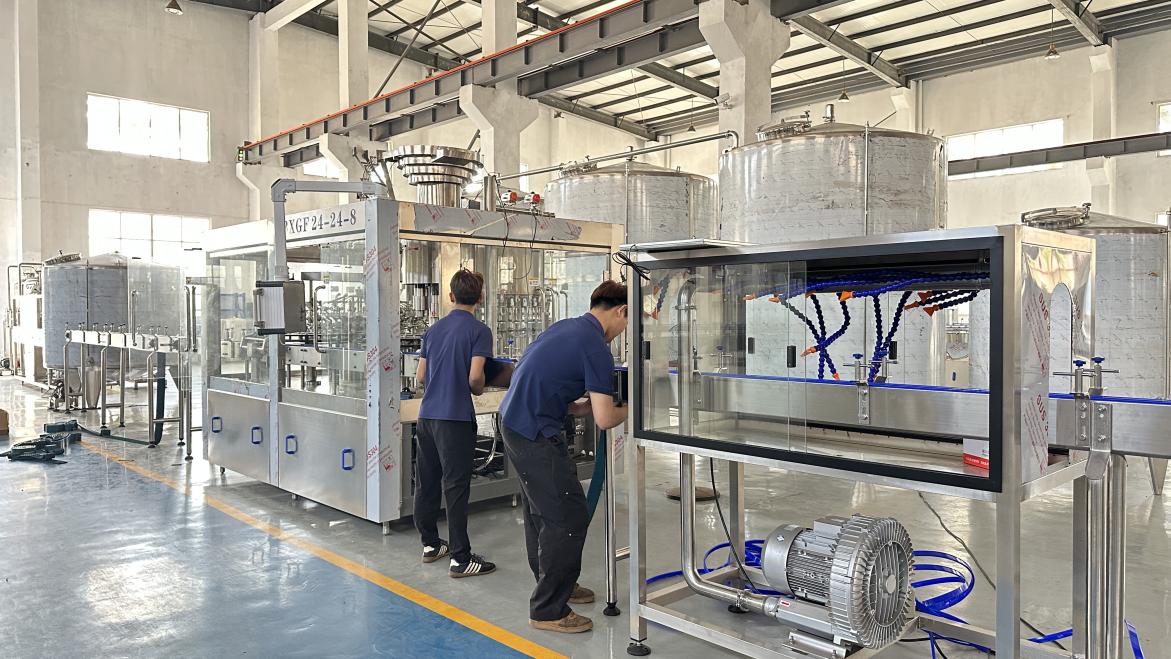

TÜV Verified Manufacturing
Onsite assessed production processes ensuring material traceability, high-grade SS304/SS316 contact parts, and robust mechanical tolerances.
Custom OEM & ODM Engineering
Full customization of carousel station counts, dispensing head configurations, and HMI multi-language software interface to match local operator standards.
Dedicated Global After-Sales
In-region engineer dispatch from our African and Russian service hubs, complemented by standardized spare parts availability for rapid delivery.
High Speed Self-Adhesive Labeler vs. Alternative Labeling Technologies
Compare operational characteristics to select the exact technology suited for your package design and budget.
| Criteria / Feature | High Speed Self-Adhesive Labeler | OPP Hot Melt Glue Labeler | Shrink Sleeve Labeler | Cold Glue Glass Labeler |
|---|---|---|---|---|
| Maximum Speed Range | Up to 24,000 BPH (Rotary) | Up to 36,000 BPH | Up to 36,000 BPH | Up to 15,000 BPH |
| Label Material Cost | Moderate to High (Pre-die-cut) | Lowest (Roll-fed film) | Moderate to High (Tubular film) | Low (Paper label) |
| Aesthetic Quality | Superior ("No-Label Look", Embossed, Foil) | Standard Wrap-around | Full 360° Body Coverage | Traditional Paper Look |
| Changeover Time | 10–15 Mins (Tool-less recipes) | 30–45 Mins (Cutter & glue drum) | 20–30 Mins (Mandrel swap) | 45–60 Mins (Glue pallets) |
| Maintenance & Cleanliness | Extremely High (No glue cleanup) | Moderate (Glue tank residue) | High (Steam/Heat maintenance) | Moderate to Low (Daily glue cleanup) |
| Positional Accuracy | ±0.5 mm (Servo Optical Tracking) | ±1.0 mm | ±1.5 mm (Thermal shrinkage shift) | ±1.5 mm |
Frequently Asked Questions: High Speed Self-Adhesive Labeling Machines
Detailed engineering answers to real-world procurement queries asked by international plant managers and packaging engineers.
1. How does a rotary self-adhesive labeling machine compare to a linear model at speeds above 12,000 BPH?
Linear self-adhesive labeling machines rely on continuous inline conveyor transport where containers are spaced by a timing screw and clamped by an upper hold-down belt. Beyond 10,000 to 12,000 BPH, linear systems encounter container instability, micro-vibrations, and reduced positioning accuracy because the bottle is labeled while traveling at high linear velocities.
In contrast, a rotary High Speed Self-Adhesive Labeling Machine transfers containers onto individual rotating plates controlled by servo motors or cam tracks. The bottle remains securely locked between the bottom plate and top centering head throughout the rotary turret's rotation. This allows ultra-precise bottle turning, optical orientation against glass seams or bottle handles, and extended wiping time—delivering consistent ±0.5mm placement accuracy even at 24,000 BPH.
Send your bottle specs to info@osnibmachine.com for a custom speed and carousel sizing analysis.
2. What causes label web breakage during high-speed operation, and how does Osnib prevent it?
Label web snapping occurs primarily due to abrupt acceleration spikes from the dispensing motor, excessive friction along the guide rollers, or inconsistent tension between the unwinder and the matrix rewind spindle. When operating at web speeds exceeding 50 m/min, even minor tension fluctuations can snap thin 15-micron PET backing liners.
Zhangjiagang Osnib Machine Co., Ltd. solves web breakage through three mechanical safeguards: (1) Dual servo-driven feed drives that continuously calculate roll diameter decay and adjust torque output dynamically; (2) Ultra-lightweight carbon-fiber dancer arms with pneumatic tension dampening; and (3) Precision ceramic-coated low-friction peel plates that reduce web drag by over 40%.
3. Can one high-speed self-adhesive labeler apply multiple labels (front, back, neck) on non-cylindrical containers?
Yes. Our rotary self-adhesive labeling systems can be fitted with up to four independent servo dispensing stations arranged around the central carousel. Each bottle holding platform is powered by an independent servo drive capable of rotating the container through programmable angular steps.
For oval, square, or custom contoured containers, the platform turns the bottle to face Station 1 for front label application, rotates 180° (or any custom angle) to present the rear face to Station 2, and performs controlled micro-rotation at Station 3 for neck or shoulder label placement—all within a single rotary pass.
4. What are the key ROI considerations when switching from cold glue or hot-melt to self-adhesive labeling?
While self-adhesive label roll materials generally carry a higher per-unit price than raw OPP film or paper labels, the overall operational return on investment (ROI) is achieved through:
- Zero Daily Glue Cleanup: Eliminates 45 to 60 minutes of daily glue pump heating, nozzle unblocking, and glue tray scrubbing.
- Reduced Machine Downtime: Tool-less changeovers drop from 1 hour down to under 15 minutes, adding substantial production capacity over multi-shift schedules.
- Lower Scrap Rates: Precise web control drastically cuts discarded labels during startup ramps compared to glue temperature stabilization delays.
- Premium Brand Positioning: Supports "no-label look" clear films, foil stamping, and tactile varnishes that command higher retail price points.
5. How does Osnib ensure machine reliability and spare parts support for overseas factories?
All high-speed labelers built by Zhangjiagang Osnib Machine Co., Ltd. utilize globally recognized tier-one components: Schneider or Siemens PLC platforms, Yaskawa or Mitsubishi servo motors, SICK or Banner optical sensors, and Festo pneumatic actuators. This ensures that electrical and pneumatic wear items can be sourced locally in over 100 countries if urgent replacement is needed.
Additionally, we maintain overseas technical hubs in Rwanda and Russia, stock standard consumable kits (peel blades, rubber wiping rollers, timing belts), and provide 7x24 remote diagnostic assistance via encrypted PLC gateways.
6. How do I request a formal engineering quotation and workshop layout design?
To receive an engineer-verified proposal, simply provide us with your target production capacity (BPH), bottle technical drawings or physical samples, label dimensions, and factory floor plan. Our engineering office will generate a detailed 2D/3D CAD layout drawing, utility consumption table, and formal quotation within 24 to 48 hours.
Click below or email our team directly at info@osnibmachine.com to launch your project discussion.
Ready to Upgrade Your Bottling Line Efficiency?
Consult directly with the senior engineering team at Zhangjiagang Osnib Machine Co., Ltd. Get a custom High Speed Self-Adhesive Labeling Machine proposal, bottle orientation simulation, and line layout drawing today.
Official Contact Email: info@osnibmachine.com | Direct Engineering Response Within 24 Hours