High-Efficiency Bottling & Blow Molding Equipment
Engineered for seamless integration across water, carbonated soft drinks, juice, and liquid food packaging lines.
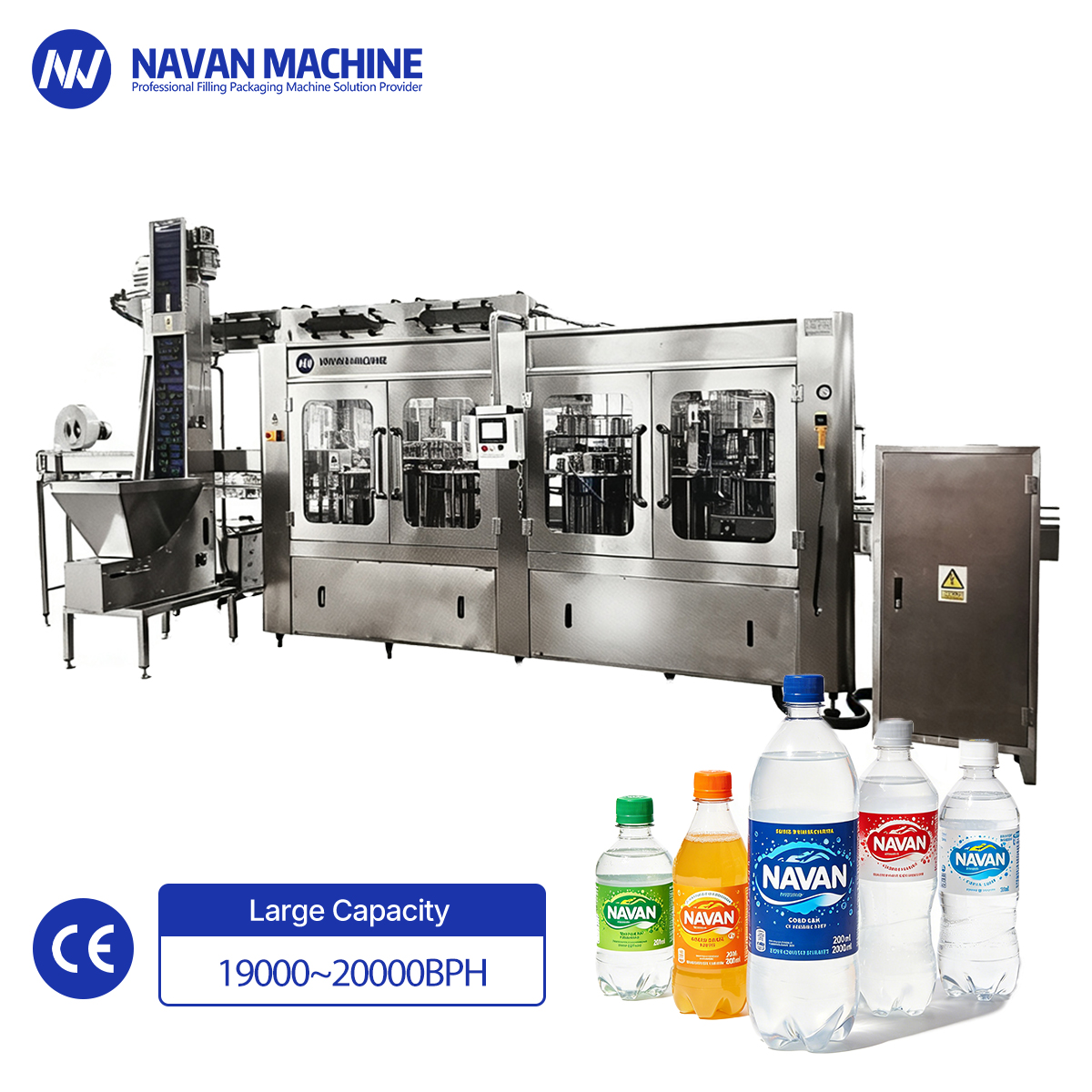
High Efficiency Navan XGFD50-50-12 Automatic Mechanical Plastic Carbonated Beverage Filling Machine 200-2000ml Soft Drink Bottle

40 Heads Rotary PLC-Controlled Liquid Filler 200ml-2000ml PET Bottle Automatic High-Efficiency Juice Bottling Line

Complete Solution PLC Controlled Mechanical PET Bottle Drink Machinery 200ml-2000ml Automatic Fruit Juice Production Plant

Industrial XGFD40-40-10 PLC Controlled Automatic Carbonated Drink Filling Machine 200-2000ml Plastic Bottle CSD Machinery

34000~36000BPH Pure Water Bottling Plant XGF60-60-15 Fully Automatic PLC Controlled PET Bottle Filling Machine Food Grade
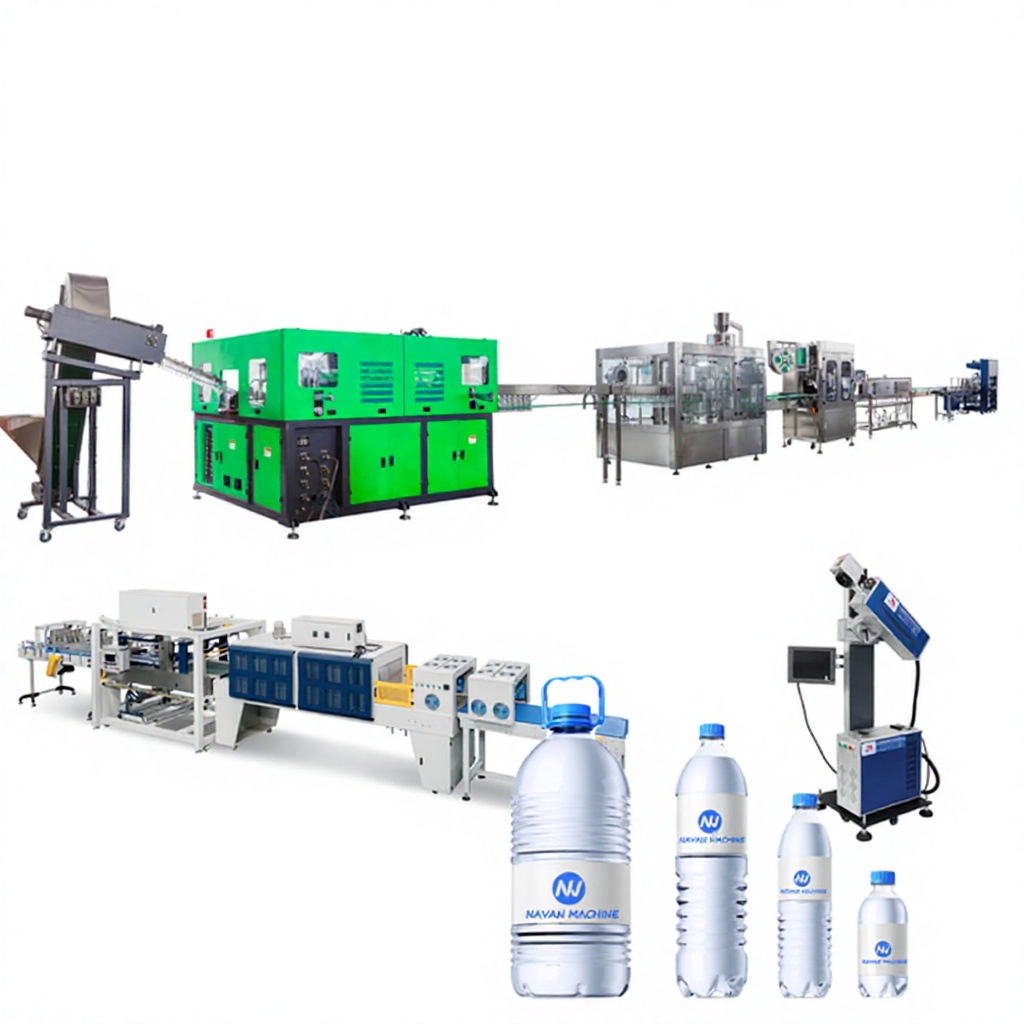
Automatic Bottled Water Production Line Blowing Rinsing Filling Capping Labeling Packaging 200-2000ml 1000-36000BPH

Complete Glass PET Bottle Carbonated Drink Production Line XPXGF24-24-8 Automatic Soda Beverage Filling PLC Mechanical
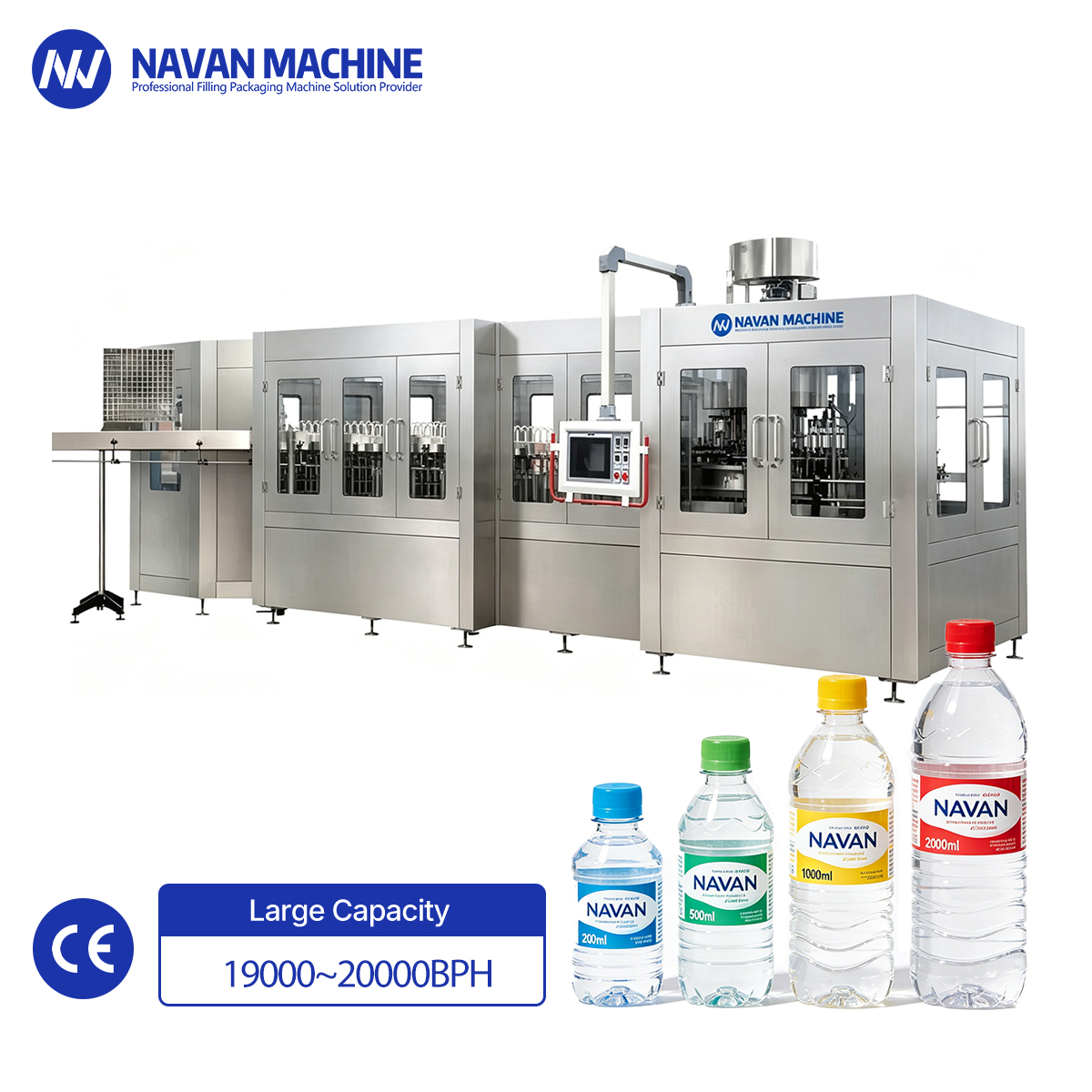
High Capacity PET Beverage Bottling Production Line XGF40-40-12 Electric Auto Combined Water Filling Machinery Navan Brand King
Technical Whitepaper: Advanced Mechanics of High-Speed Automatic PET Blow Molding
An authoritative engineering breakdown on achieving thermal stability, ultra-thin wall distribution, and 100% rPET compatibility in industrial packaging applications.
NIR Infrared Preform Heating & Thermal Balance
Modern PET bottle blowing requires tight control over temperature gradients across the preform wall. Our systems utilize Near-Infrared (NIR) quartz heating modules featuring independent zone regulation. This prevents thermal degradation, guarantees uniform material stretching, and supports complex bottle geometry without localized wall thinning.
Full Servo Kinematics & Precise Stretching
Replacing pneumatic cylinders with full servo-driven stretch rod systems enables sub-millimeter positioning accuracy (±0.15 mm). Servo synchronisation guarantees that longitudinal orientation and transverse expansion occur at precise thermal thresholds, ensuring superior axial strength and high top-load crush resistance.
High-Pressure Air Recovery Systems (HP-AR)
Blowing PET bottles demands up to 35 bar of dry compressed air. Integrated dual-stage high-pressure air recovery captures up to 45% of used high-pressure exhaust air, recycling it back into the low-pressure pneumatic control network and pre-blowing circuits, drastically lowering factory kilowatt consumption.
| Parameter / Feature | Linear Automatic Series | High-Speed Rotary Series | Combiblock Blow-Fill-Cap Integration |
|---|---|---|---|
| Production Capacity (BPH) | 2,000 – 8,000 BPH | 12,000 – 36,000 BPH | 16,000 – 36,000 BPH |
| Container Volume Range | 200ml – 2,500ml | 200ml – 2,000ml | 200ml – 2,000ml |
| Stretching System | Pneumatic / Servo Hybrid | Full Servo Synchronous | Full Servo Synchronous Motion Control |
| Blowing Pressure Range | 28 – 35 bar | 30 – 38 bar | 30 – 38 bar (Oil-Free Air Filtered) |
| rPET Flake Compatibility | Up to 50% Recycled PET | Up to 100% Food-Grade rPET | Up to 100% Food-Grade rPET |
| Energy Savings Efficiency | 30% Air Recycling | 45% Dual-Stage Air Recovery | 45% Integrated Thermal & Pneumatic Recovery |
Localized Application Scenarios in Osaka's Manufacturing Landscape
Adapting high-performance blow molding machinery to the specific spatial, energy, and sanitary requirements of the Kansai industrial corridor.
High-Density Factory Footprint & Space Optimization
Industrial real estate in key Osaka manufacturing zones such as Higashiosaka, Sakai, and Ibaraki requires high output per square meter. Our compact rotary and linear PET blow molders feature overhead preform elevation systems and modular footprints, minimizing overall plant floor usage by up to 28% compared to traditional linear layouts.
Craft Beverage, RTD Tea & Functional Drink Bottling
Osaka’s thriving beverage culture demands extreme flexibility. Facilities producing unsweetened green tea, functional amino waters, and craft sodas benefit from rapid mold changeover mechanisms (<20 minutes). This allows bottling plants to quickly shift production between 350ml short-neck bottles and 2.0L family formats seamlessly.
Soy Sauce, Dashi & Liquid Condiment PET Packaging
The Kansai culinary manufacturing ecosystem relies heavily on automated packaging for soy sauces, specialized dashi stocks, and sesame dressings. Our machines support ergonomic bottle handles, customized grip designs, and oxygen-barrier PET formulations engineered to prevent flavor oxidation.
Strict Energy Efficiency & 60Hz Power Optimization
Operating under Western Japan's 200V / 60Hz electrical standard, energy management is a key cost driver. Our blowing equipment incorporates energy-efficient SCR power regulators and regenerative motor drives, complying with stringent Kansai Electric Power Company (KEPCO) power consumption guidelines.
Key Industry Trends Driving Packaging Machinery in Osaka
Strategic shift toward environmental sustainability, extreme bottle lightweighting, and full line digital transformation in Japanese manufacturing hubs.
100% rPET Circular Economy Directives
Under Japan’s Plastic Resource Circulation Act, major beverage brands in Osaka are targetting 100% recycled PET usage by 2030. Processing 100% rPET flakes requires precise thermal control due to variations in resin intrinsic viscosity (IV). Our machine heating zones automatically adjust thermal power output via closed-loop pyrometer sensing.
Ultra-Lightweighting Container Engineering
To reduce raw material costs and carbon taxes, Japanese bottlers continue to push the boundaries of lightweighting—producing 500ml mineral water bottles weighing under 9.5 grams. Achieving structural rigidity without material accumulation requires sub-micron mold ventilation and precise pre-blowing pressure dynamics.
IoT Automation & Smart Factory Integration
Modern Osaka plants demand integration with factory-wide SCADA systems. Our machinery is equipped with standard Modbus TCP and Ethernet/IP protocols, enabling real-time telemetry tracking of blowing pressure curves, heating tube degradation, and automated preventative maintenance alerts.
Frequently Asked Questions by Osaka Importers & Engineers
Direct technical answers addressing electrical compliance, sanitation standards, logistics, and after-sales service in Western Japan.
Yes, absolutely. All electrical panels, servo drives, motors, and heating regulators configured for delivery to Osaka and the Kansai region are custom-built to support 200V / 3-Phase / 60Hz power specifications. We utilize premium global components such as Schneider, Omron, Siemens, and Mitsubishi PLC controllers to ensure compliance with local electrical codes.
All product-contact parts, air supply pathways, and preform handling modules are manufactured using high-grade stainless steel (SUS304 / SUS316L) and food-grade non-toxic polymers (such as PTFE and food-safe silicone). Air filtration units integrated into the blowing line feature multi-stage oil-free sterile air filters (0.01 micron) to prevent any micro-contamination of blown bottles.
Manufacturing and factory FAT (Factory Acceptance Testing) typically take 30 to 45 business days depending on model complexity. Ocean freight shipping from our manufacturing base to Osaka Port (Nanko Container Terminal) takes approximately 4 to 7 transit days. We handle comprehensive export packing, anti-rust protective vacuum wrapping, and all required customs documentation (Certificate of Origin, CE certificates, packing list).
Our quick-change mold systems feature standardized positioning pins, fast-locking water connection couplings, and quick-release stretch rod clamps. A complete mold changeover on a 4-cavity or 6-cavity linear machine can be accomplished by trained operators in under 20 minutes, significantly reducing downtime for plants running multiple container SKUs.
We provide 24/7 remote diagnostic support via encrypted industrial routers integrated into our PLC systems. If on-site technician deployment is required, our engineering teams can be dispatched promptly. Standard wearable spare parts (sealing rings, blowing nozzles, heating lamps, pneumatic valves) are shipped via express air freight (DHL/FedEx) arriving in Osaka within 48 hours.
Yes. We engineer heat-set PET bottle blowing machinery specifically for hot-fill applications (up to 85°C–92°C fill temperature). These machines feature specialized mold oil heating systems (up to 130°C mold wall temperature) that relieve internal stress during blowing and induce high crystallinity in the PET wall, preventing bottle distortion during hot liquid filling.
Enterprise Manufacturing Strength & Engineering Excellence
Zhangjiagang Osnib Machine Co., Ltd. delivers turnkey liquid packaging lines engineered for absolute reliability, precision, and global regulatory compliance.
TÜV Rheinland Verified Manufacturing Base
Our physical manufacturing plant, production workshops, engineering capabilities, and financial standing have undergone rigorous onsite inspection and certification by TÜV Rheinland, providing complete transparent quality assurance for international buyers.
Full CE Directive Compliance
Our entire machinery catalog—including automatic PET blow molders, rotary liquid fillers, sleeve labelers, and film shrink wrappers—carries official European Union CE certification, complying with Machinery Directive 2006/42/EC and Low Voltage Directive 2014/35/EU.
Turnkey Engineering & Custom Line Design
From industrial water treatment plants to bottle blow molding, synchronized filling monoblocks, labeling, case packing, and automatic robotic palletizing—our dedicated mechanical engineering team delivers single-source accountability for complete factory lines.
Ready to Optimize Your Osaka Bottling Operation?
Connect directly with our senior packaging automation engineers. Receive custom CAD plant layouts, detailed energy consumption calculations, and customized quotation proposals for your PET blowing & filling lines.
