

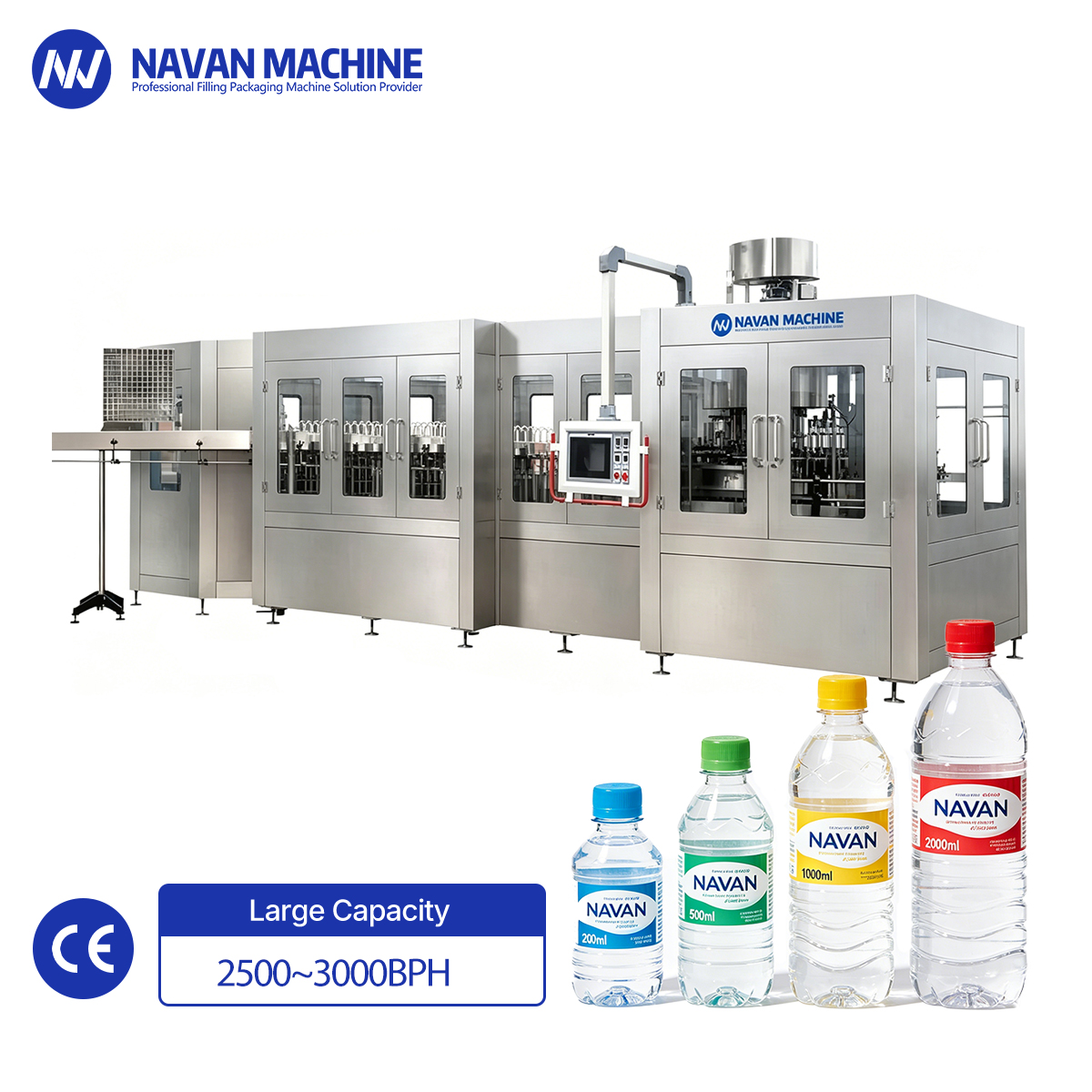
Technical Whitepaper: Precision Isobaric Counter-Pressure Filling Engineering for Carbonated Soft Drinks in Tropical Climates
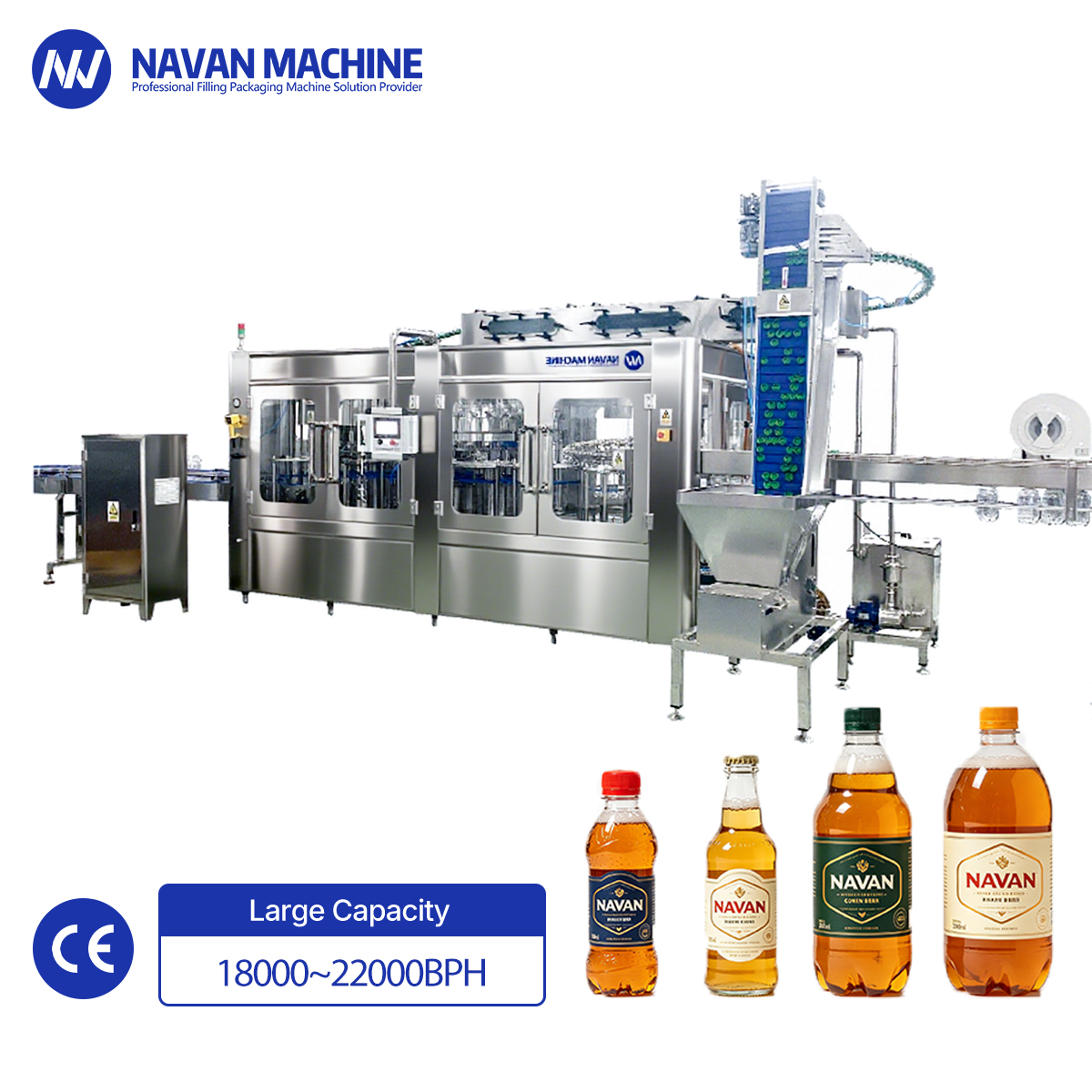
Manufacturing carbonated beverages—ranging from traditional sparkling soda waters and sparkling fruit juice drinks to localized herbal carbonated tonics—requires stringent thermodynamic control and mechanical stability. Unlike still water or non-aerated hot-fill juices, carbonated soft drinks (CSD) retain dissolved carbon dioxide ($\text{CO}_2$) under active pressure conditions. For beverage bottling plants situated in high-ambient-temperature regions like Hat Yai and Songkhla Province in Southern Thailand, managing gas solubility, thermal expansion, foam reduction, and neck-space pressure is vital for operational efficiency and profitability.
Core Technical Insight: According to Henry's Law of gas solubility, the concentration of dissolved carbon dioxide in a liquid is directly proportional to the partial pressure of $\text{CO}_2$ above the liquid and inversely proportional to liquid temperature. In tropical operational environments like Hat Yai where ambient temperatures routinely exceed 33°C to 38°C, maintaining product temperature strictly between 4°C and 8°C at the filling valve manifold is essential to prevent rapid gas escape, excessive foaming (gushing), and fill-level variance.
1. Mechanics of the Isobaric Counter-Pressure Filling Cycle
Zhangjiagang Osnib Machine Co., Ltd. integrates mechanical isobaric (counter-pressure) filling valves engineered specifically for PET and glass containers. The isobaric filling phase occurs across four synchronized mechanical stages designed to operate seamlessly at speeds ranging from 2,000 BPH to over 36,000 BPH:
Stage A: Evacuation & Gas Pressurization (Equalization)
Once the bottle neck is centered and mechanically sealed against the hygienic silicone gasket of the filling valve via pneumatic cylinder lift pedestals, the valve opens a $\text{CO}_2$ channel. Carbon dioxide gas fills the empty container until the internal bottle pressure perfectly equals the operating pressure inside the central annular product tank (typically maintained between 0.25 MPa and 0.45 MPa, depending on the volume of gas carbonation required, usually 3.0 to 4.2 volumes of $\text{CO}_2$).
Stage B: Gravity Liquid Flow with Gas Displacement
Upon absolute pressure equalization between the bottle and the filling bowl, the spring-loaded liquid valve orifice opens. Liquid carbonated beverage flows down the inner container wall under gravity, assisted by a stainless steel umbrella spreader cone that minimizes liquid turbulence. Simultaneously, displaced $\text{CO}_2$ inside the bottle vents back into the top chamber of the liquid tank through a high-precision vent tube. This smooth wall-laminar flow prevents liquid agitation and foam formation.
Stage C: Liquid Level Termination & Valve Closure
The liquid level ascends until it reaches the tip of the return gas tube. Once the liquid submerges the gas tube orifice, the return pathway is sealed, instantly stopping the flow of liquid. This mechanical cut-off guarantees an exact, repeatable fill volume across all bottles within a tolerance of $\pm 2\text{mm}$ of fill height.
Stage D: Controlled Snift Phase (Pressure Relief & Decompressing)
Prior to bottle unsealing, the high-pressure gas headspace must be gradually bled off to atmospheric pressure. The Osnib isobaric valve features a multi-stage exhaust valve ("snift valve") that releases trapped headspace pressure slowly. This prevents violent liquid surging (foaming out of the neck) upon container release, preserving dissolved gas volume and ensuring a clean bottle finish prior to capping.
2. Isobaric Counter-Pressure vs. Gravity / Atmospheric Filling Engineering Matrix
| Engineering Parameter | Osnib Isobaric Mechanical Valve (CSD/Beer) | Standard Gravity Valve (Water/Still Drinks) | Piston / Flowmeter Valve (Viscous / Sauce) |
|---|---|---|---|
| Target Beverage Media | Carbonated Soft Drinks, Sparkling Water, Beer, Cider | Purified Water, Mineral Water, Still Tea | Edible Oil, Honey, Syrups, Sauces |
| Operating Tank Pressure | Pressurized (0.20 – 0.45 MPa $\text{CO}_2$) | Atmospheric / Normal Pressure (0 MPa) | Atmospheric or Positive Displacement |
| $\text{CO}_2$ Dissolution Retention | High Retention (> 98.5%) via closed-loop backpressure | Zero ($\text{CO}_2$ gas escapes rapidly) | N/A |
| Filling Valve Contact Material | AISI 316L Stainless Steel & EPDM/PTFE Seals | AISI 304 / 316 Stainless Steel | AISI 316L Stainless Steel |
| Foam Suppression Tech | 2-Stage Exhaust Snifting Valve + Swirl Spreader | Basic Baffle Cone | Bottom-Up Anti-Drip Submerged Nozzle |
| CIP Clean-In-Place Compatibility | Fully Automated Closed-Loop Stainless Dummy Cups | Open Spray Ball Rinsing | Automated CIP Manifold |
