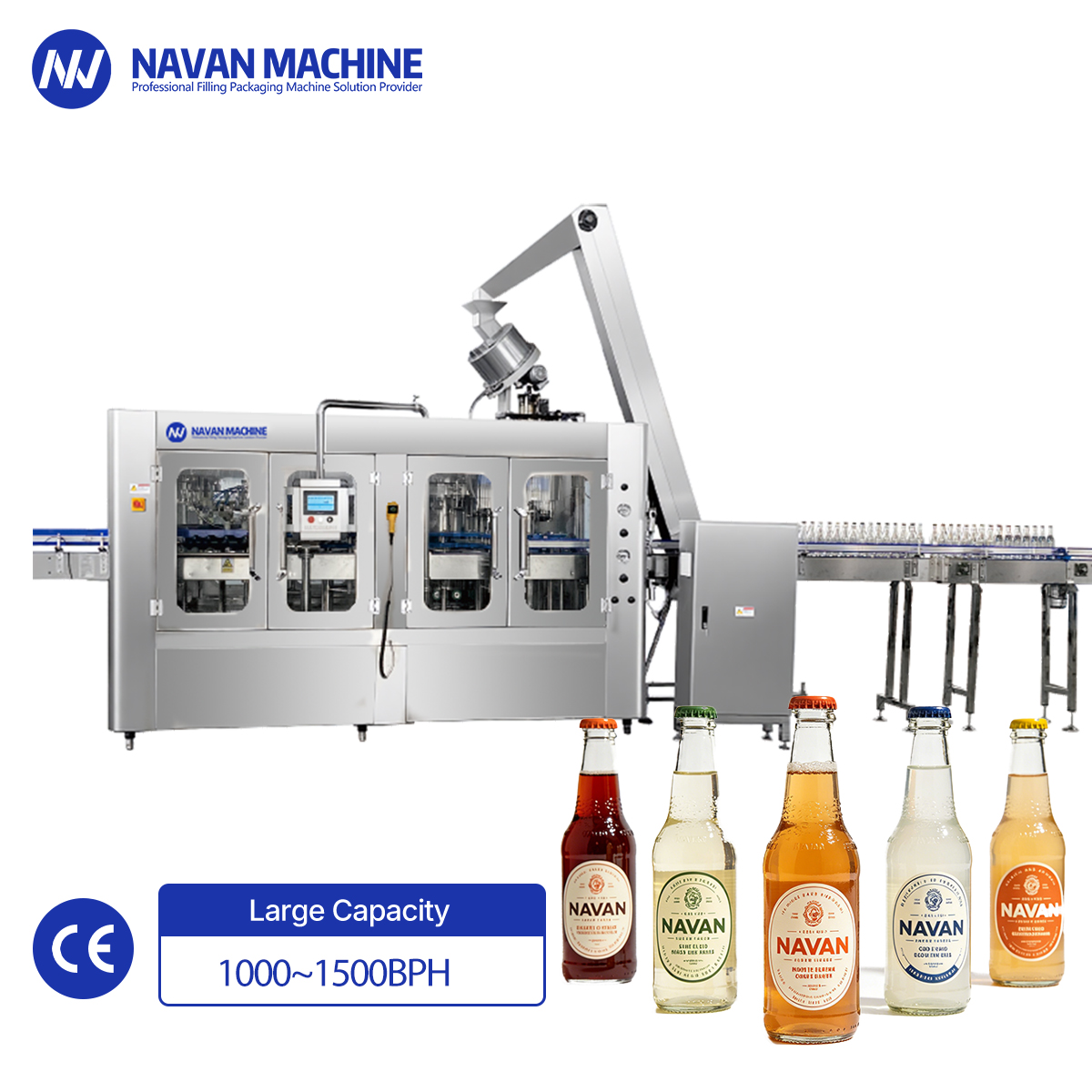


Industry Whitepaper: Technical Engineering & Market Adaptability of Counter Pressure Fillers in Nigeria
The beverage manufacturing ecosystem in West Africa—specifically across Nigerian commercial hubs such as Lagos, Ogun State, Kano, Port Harcourt, and Onitsha—is undergoing a rapid industrial transformation. Driven by expanding urban demographics, rising demand for packaged carbonated soft drinks (CSD), malt beverages, sparkling water, local herbal biters, and craft beer, plant operators require packaging machinery that guarantees zero dissolved oxygen contamination, minimal CO₂ loss, and ultra-high filling accuracy.
However, operating liquid bottling plant machinery in Nigeria presents specific environmental and operational challenges: elevated ambient workplace temperatures (often exceeding 35°C to 40°C), high relative humidity, frequent main power grid voltage drops requiring heavy reliance on diesel generators (380V–415V 50Hz), and fluctuating raw water Total Dissolved Solids (TDS). As a premier Chinese direct factory and machinery supplier—Zhangjiagang Osnib Machine Co., Ltd.—we engineer industrial counter pressure (isobaric) filler systems customized to overcome these local infrastructure realities.
Core Technical Value Insight: Standard gravity or atmospheric fillers fail when handling carbonated liquids at temperatures above 4°C to 6°C, resulting in severe liquid foaming, volume inconsistencies, and high bottle burst rates. Osnib’s heavy-duty counter pressure fillers utilize a closed pre-evacuation system and mechanical isobaric filling valves to maintain precise carbonation saturation (up to 4.5–5.0 vol/vol CO₂) even when filling PET or glass containers under warm West African plant conditions.
Deep-Dive: The Mechanical & Isobaric Process of Counter Pressure Filling
Counter pressure filling, also known as isobaric filling, is an advanced packaging methodology engineered specifically for liquids infused with dissolved carbon dioxide ($CO_2$) gas under pressure. In contrast to atmospheric fillers used for still spring water, isobaric fillers equalize the internal pressure between the liquid storage bowl and the target bottle prior to opening the liquid discharge valve.
Phase 1: Pre-Evacuation Vacuum
Single or double pre-evacuation vacuum pumps pull ambient air out of the glass bottle or PET container, removing up to 98% of residual oxygen to prevent oxidation of beer and sensitive flavored malt drinks.
Phase 2: CO₂ Pressurization
Sterile $CO_2$ gas is injected into the bottle until internal pressure matches the filling bowl pressure (typically 0.25 to 0.45 MPa), establishing complete mechanical equilibrium.
Phase 3: Smooth Liquid Delivery
The spring-loaded fluid valve opens. Product flows smoothly down the internal container wall via a helical distributor, allowing gas to return to the tank without turbulence or carbonation breakout.
Phase 4: Controlled Snifting
Precise multi-stage snifting valves relieve top head-space gas pressure gradually before container release, stopping violent boiling/foaming during hot-climate operations.
Localized Engineering Solutions for Nigerian Beverage Manufacturers
Purchasing bottling equipment from overseas can present risks if local site conditions are overlooked. At Osnib Machine, our engineers integrate custom heavy-duty components designed specifically to withstand the operating conditions encountered across West African factories:
1. Adaptability to Voltage & Power Generator Fluctuations
Manufacturing plants in industrial centers like Ikeja, Agbara, or Challawa in Kano frequently rely on heavy diesel generators. Sudden current surges or micro-brownouts can damage delicate electronics. Osnib counter pressure filling lines feature wide-voltage industrial PLCs (Siemens S7-1200 or Mitsubishi FX series), heavy-duty Schneider electrical relays, integrated surge suppressors, and dual-circuit 415V/50Hz power transformers. This ensures uninterrupted mechanical sequencing and prevents PLC memory loss during unexpected power switches.
2. Ambient Temperature FOAM-STOP Chilling Integration
Carbonated liquids rapidly lose stability when product temperatures rise above 8°C. In high-ambient environments without cold-chain storage, standard fillers suffer from excessive foaming, causing machine shut-downs and under-filled bottles. Our turnkey solution integrates high-efficiency jacketed insulation tanks, inline plate heat exchangers, and automatic pressure balancing valves to ensure product stability up to 12°C, drastically lowering plant refrigeration energy costs.
3. Multi-Format Versatility (PET, Glass & Can Compatibility)
Due to consumer market dynamics in Nigeria, beverage companies frequently switch container formats—from 350ml short-neck PET bottles for popular soft drinks to 600ml returnable glass bottles for stout and lagers, or 330ml aluminum cans. Our 3-in-1 Monoblock machinery (Rinsing-Filling-Capping) offers quick-change star wheels, neck-hanging gripper channels for PET, and pneumatic bottle-jacking platforms for glass, keeping format changeover times under 30 minutes.
Technical Specification Matrix: Osnib Counter Pressure Filling Series
Compare our high-productivity isobaric monoblocks engineered for different production scales across Nigerian bottling plants:
| Machine Model | Nozzle Config (R-F-C) | Rated Capacity (500ml PET) | Target Liquid / Product | Recommended Generator Power |
|---|---|---|---|---|
| XGFD 14-12-5 | 14 Rinser / 12 Filler / 5 Capper | 2,000 – 2,500 BPH | CSD, Sparkling Water, Soda | 15 kW / 20 kVA |
| XGFD 18-18-6 | 18 Rinser / 18 Filler / 6 Capper | 4,000 – 5,000 BPH | Beer, Carbonated Drinks, Malt | 22 kW / 30 kVA |
| XGFD 24-24-8 | 24 Rinser / 24 Filler / 8 Capper | 6,000 – 8,000 BPH | High-Speed CSD, Glass/PET Beer | 37 kW / 50 kVA |
| NPXZGF 32-32-10 PRO | 32 Rinser / 32 Filler / 10 Capper | 10,000 – 12,000 BPH | Large-Scale Commercial Brewery | 55 kW / 75 kVA |
| Can Filler-Seamer 4000 | 12 Filler / 4 Seamer Monoblock | 3,000 – 4,000 CPH | Canned Carbonated Drinks & Beer | 18 kW / 25 kVA |
Why Partner with Zhangjiagang Osnib Machine Co., Ltd.?
Selecting a machine supplier requires verifying manufacturer credentials, direct engineering capabilities, and after-sales service reliability. Osnib Machine stands out as an established partner for beverage ventures across Africa:
TÜV Rheinland Onsite Verified Direct Factory
Eliminate middleman markups. Our manufacturing plant in Zhangjiagang City, Jiangsu Province, is verified on-site by TÜV Rheinland for production transparency, engineering standards, and structural integrity.
Africa Regional Branch & Service Support
Unlike suppliers who disappear after shipment, Osnib operates an active Africa Regional Branch in Kigali, Rwanda, alongside our overseas technical teams, ensuring rapid deployment of engineers across Africa for setup, testing, and spare-parts delivery.
Custom Container & Preform Mold Design
Stand out in crowded retail markets. Our design department creates customized, lightweight, ergonomic PET bottle shapes, structural glass bottles, and matching blow mold tooling tailored to your brand identity.
Complete Turnkey Engineering Blueprint
We supply the entire factory production chain: industrial Reverse Osmosis (RO) water treatment, automatic PET bottle blow molders, CIP cleaning stations, OPP hot-melt or sleeve labelers, automatic PE film shrink wrappers, and end-of-line palletizers.
Logistics & Import Support for Nigeria: We provide full export documentation required by the Central Bank of Nigeria (CBN), Form M, SONCAP certification support, and robust sea-worthy wooden box packing for safe ocean transport to Apapa Port, Tincan Island, or Onne Port.
Frequently Asked Questions (FAQ) for Nigerian Bottling Machinery Buyers
Why is counter pressure (isobaric) filling required for carbonated drinks instead of gravity filling?
Carbonated soft drinks, beer, and sparkling water contain dissolved carbon dioxide gas under high pressure. Standard gravity fillers open the container to atmospheric pressure, causing the dissolved gas to rapidly expand and escape. This leads to heavy surface foaming, under-filled bottles, and flat beverages. Counter pressure fillers pressurize the bottle with $CO_2$ gas prior to liquid release, preserving precise carbonation levels (vol/vol) and maintaining high filling level accuracy.
Can Osnib counter pressure filling machines run reliably on diesel generators?
Yes. Recognizing that electrical power grids across industrial zones in Nigeria experience frequent fluctuations, our equipment features wide-voltage range PLCs, heavy-duty surge protection, and high-torque inverter motors. Our systems operate smoothly under standard 380V–415V / 50Hz 3-phase industrial power delivered by industrial generators.
What is the Minimum Order Quantity (MOQ) and lead time for a complete bottling plant?
The Minimum Order Quantity (MOQ) is 1 set (whether a single filling monoblock or a full turnkey packaging line). Standard manufacturing lead time ranges from 30 to 45 days depending on automation requirements and bottle mold customization. Pre-shipment video inspection and live trial runs are conducted for every customer before dispatch.
How does Osnib handle on-site installation, commissioning, and staff training in Nigeria?
We provide two flexible installation options: First, we dispatch experienced mechanical and electrical field service engineers directly to your plant location anywhere in Nigeria to handle foundation positioning, piping connections, electrical wiring, testing, and hands-on staff training. Second, supported by our regional Africa branch network, we offer 7×24 online video engineering support and comprehensive wiring diagrams.
Are your machines CE and ISO certified? What spare parts are included?
All Osnib filling, capping, blow molding, and packaging machinery carry European CE compliance certificates, and our factory is audited on-site by TÜV Rheinland. Each machine order includes a comprehensive spare parts package—including high-temperature seal rings, filling nozzles, snifting valves, pneumatic air tubes, and proximity sensors—to ensure smooth long-term operation without downtime.
Can a single machine fill both PET plastic bottles and Glass bottles?
While PET bottles use neck-handling grippers and glass bottles require bottom-supporting pneumatic lifting cylinders, Osnib offers specialized combination monoblocks equipped with interchangeable star wheels, dual-capping heads (crown cork for glass and screw caps for PET), and dual-height adjustment mechanisms for factories processing both container types.
Build Your High-Profit Bottling Line with Osnib Engineering
Contact our senior engineering consultants today. We provide free factory layout drawings, customized bottle design artwork, machine technical proposals, and complete cost estimates tailored for the Nigerian market.
Inquire Now