Industrial Crown Capping & Filling Machinery Lineup
Engineered for glass and PET containers, our CE-certified bottling lines deliver precision crown capping, isobaric filling, and long-term operating reliability across African markets.

Complete Solution PLC Controlled Mechanical PET Bottle Drink Machinery 200ml-2000ml Automatic Fruit Juice Production Plant
Explore Specifications →
34000~36000BPH Pure Water Bottling Plant XGF60-60-15 Fully Automatic PLC Controlled PET Bottle Filling Machine Food Grade
Explore Specifications →
Navan XGFD24-24-8 Automatic Carbonated Beverage Filling Machine 200-2000ml Bottle Filling Production Line CE Certified
Explore Specifications →
Complete Glass PET Bottle Carbonated Drink Production Line XPXGF24-24-8 Automatic Soda Beverage Filling PLC Mechanical
Explore Specifications →
Automatic 10-20L Barrel Water Filling Machine 400-450BPH 3 Nozzle Washing Capping Line Mechanical PLC 415V
Explore Specifications →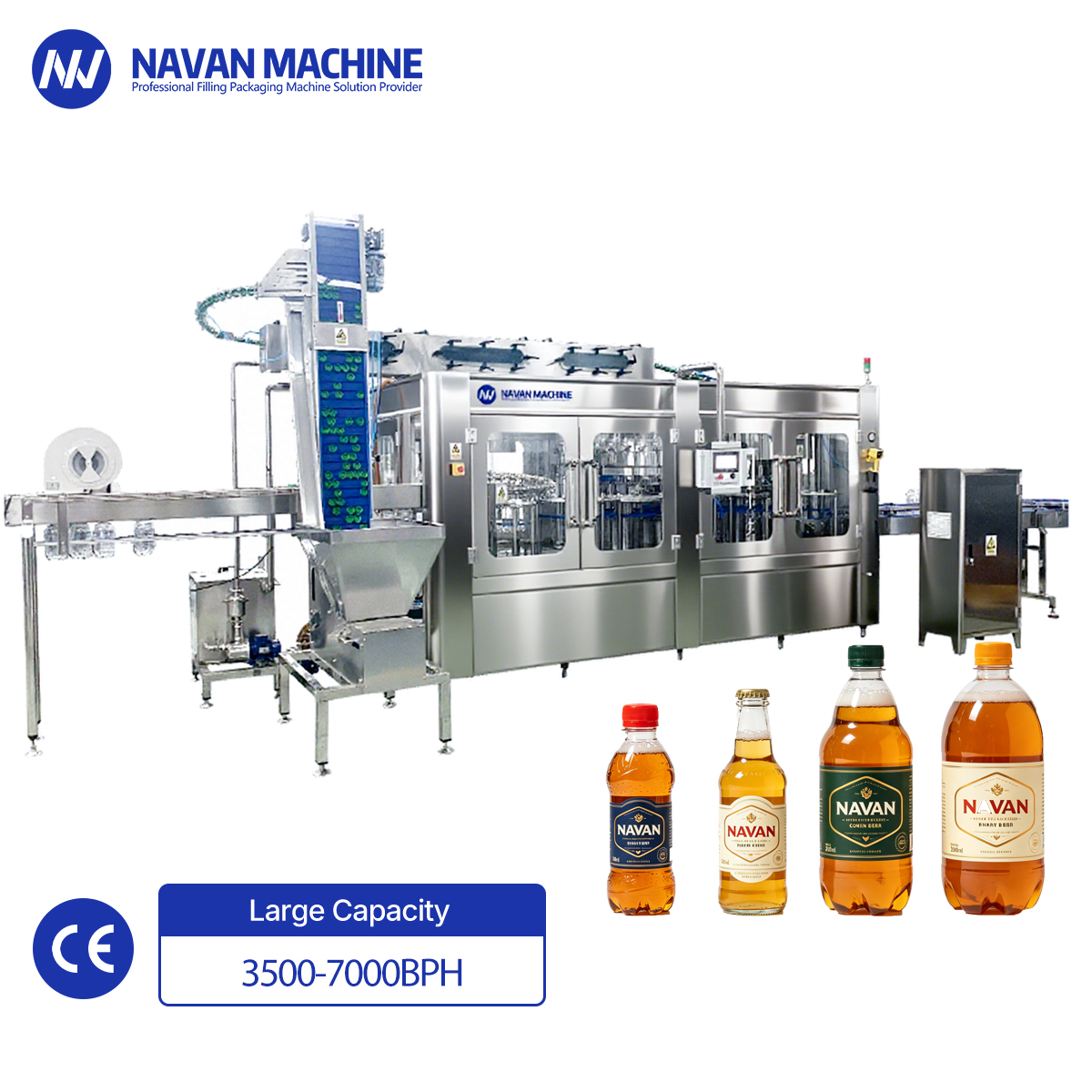
NPXZGF24-18-24-6PRO 200ml-2000ml High Productivity Automatic Mechanical PLC-controlled Plastic Beer Bottling Line 1 Year
Explore Specifications →
Automatic Juice PET Bottle Filling Machine 32 Nozzle 200-2000mL 16000-17000BPH Bottling Equipment
Explore Specifications →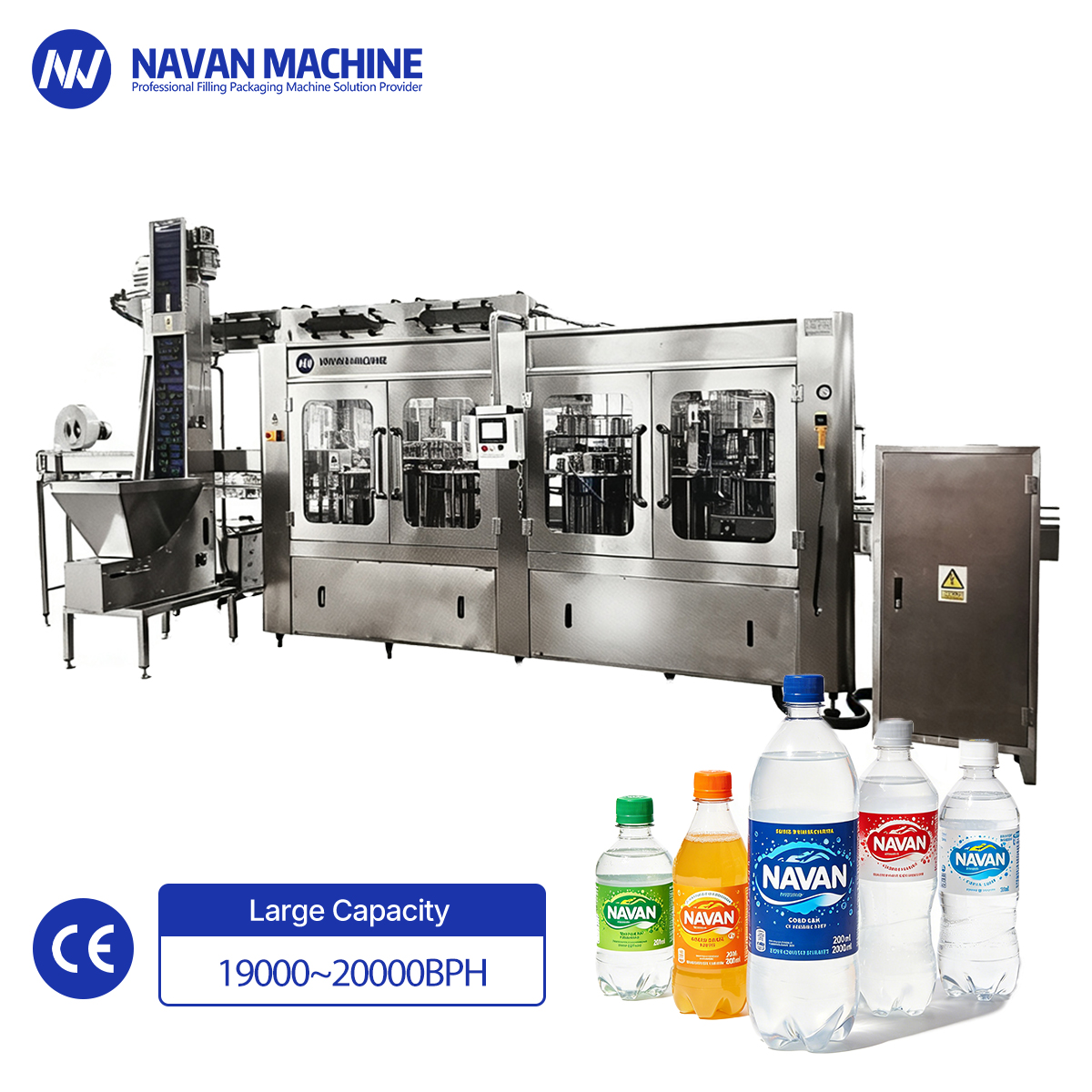
High Efficiency Navan XGFD50-50-12 Automatic Mechanical Plastic Carbonated Beverage Filling Machine 200-2000ml Soft Drink Bottle
Explore Specifications →Crown Capping Engineering: Mechanics, Physics, & Sealing Integrity
In modern beverage manufacturing, the crown capping machine (also termed a crown capper or pry-off/twist-off capping turret) serves as the critical safeguard for liquid stability, carbonation retention, and shelf-life extension. For glass bottle bottling operations—particularly in high-demand sectors such as lager beers, malt beverages, carbonated soft drinks (CSD), and premium glass-packaged mineral waters—the crown closure remains the gold standard for hermetic sealing.
Understanding the mechanical physics behind crown capping requires analyzing the interaction between the metal crown cap (typically 26mm standard tinplate or TFS with an internal PVC, PE, or oxygen-scavenging liner) and the locking ring of the bottle neck finish (DIN 6094 or MCA standards). A professional-grade crown capping machine must execute four synchronized micro-actions in a fraction of a second:
1. Magnetic Cap Orientation
Utilizing centrifugal or magnetic hopper elevators to sort crowns, transferring them down a sanitized stainless steel chute with photo-electric monitoring to eliminate upside-down caps.
2. Headspace Deaeration
In beer and sensitive beverage lines, high-pressure hot water jetting (fobbing) or CO2 flushing occurs immediately before cap placement to purge air and reduce dissolved oxygen (DO) levels.
3. Vertical Compression Force
The capping head descends, applying a controlled downward force (typically 2,500 N to 4,200 N) to compress the internal synthetic liner tightly against the top sealing surface of the bottle neck.
4. Crimping Collet Deformation
As the hardened steel crimping throat (collet) presses downward over the crown skirts, it uniformly bends the 21 flutes of the crown under the bottle neck ring, creating a permanent gas-tight lock.
Failure in any of these parameters leads to catastrophic micro-leakage, rapid CO2 dissipation, oxygen ingress causing product oxidation, or bottle neck breakage. Top-tier machinery manufacturers like Zhangjiagang Osnib Machine Co., Ltd. integrate hardened alloy crimping heads with micro-adjustable spring compensators or hydraulic dampening systems. This guarantees consistent crimp diameters (28.60mm ± 0.15mm) even when glass bottle neck wall thicknesses vary slightly during mass production.
Rotary Crown Capper Technical Specifications
Comparing Monoblock Capping Turrets across Output Classes for Breweries and Beverage Plants.
| Machine Model | Capping Heads | Rated Speed (BPH) | Bottle Height Range | Crown Cap Spec | Main Drive Power |
|---|---|---|---|---|---|
| Osnib-CR04 | 4 Heads | 3,000 – 5,000 BPH | 160mm – 320mm | 26mm Pry-Off / Twist-Off | 2.2 kW (PLC Control) |
| Osnib-CR08 | 8 Heads | 8,000 – 12,000 BPH | 160mm – 340mm | 26mm / 29mm (Option) | 4.0 kW (Servo Sync) |
| Osnib-CR12 | 12 Heads | 15,000 – 20,000 BPH | 180mm – 360mm | 26mm Standard Crown | 5.5 kW (VFD Speed) |
| Osnib-CR15-PRO | 15 Heads | 24,000 – 36,000 BPH | 180mm – 360mm | 26mm High-Speed Crown | 7.5 kW (Servo Drive) |
Crown Capping Applications in the Dire Dawa Market
As Ethiopia's second-largest chartered city and a strategic commercial hub in the Horn of Africa, Dire Dawa occupies a pivotal position in regional manufacturing and beverage distribution. Located along the Ethio-Djibouti economic corridor and backed by the federal Dire Dawa Free Trade Zone (FTZ), the region is experiencing rapid industrial growth. Beverage bottling plants in Dire Dawa, Harar, and the surrounding Somali and Oromia regional zones face unique operational conditions that dictate specific machinery engineering requirements:
High Ambient Temperature & Thermal Expansion
Dire Dawa's semi-arid climate experiences summer ambient temperatures reaching 35°C to 40°C. Beverage lines handling carbonated drinks or mineral water must contend with liquid thermal expansion inside capped bottles. Osnib crown cappers maintain exact headspace pressures and crimp resistance, preventing cap blow-offs or gas seepage during transit across hot lowland trade routes.
Dust Protection & Airborne Particulate Sealing
Windborne dust and silica sand are prevalent in eastern Ethiopia. Machinery installed in Dire Dawa requires fully enclosed stainless steel (SUS304/SUS316) sanitization housing, IP65-rated electrical enclosures, and positive-pressure HEPA filtered cap elevator chutes to prevent dust contamination prior to crown crimping.
Grid Power Fluctuation Resilience
Industrial operations in Eastern Africa frequently experience voltage spikes and phase imbalances. Osnib crown capping machinery configured for Dire Dawa incorporates heavy-duty Schneider/Siemens VFDs, built-in surge suppressors, and robust mechanical starwheel synchronization that prevents mechanical jamming during momentary power dips.
- Traditional Malt Beverages & Craft Beers: Glass bottling lines for regional breweries requiring strict oxygen-scavenging crown placement and pre-capping FOB systems to ensure extended shelf-life without pasteurization flavor degradation.
- Carbonated Soft Drinks (CSD): High-pressure isobaric filling monoblocks combined with 8-head to 12-head crown cappers running returnable glass bottles (RGB) and heavy PET bottles.
- Sparkling & Still Mineral Water: Processing spring water from regional aquifers, sealing high-end glass bottles with custom embossed 26mm crown caps.
- Juice & Botanical Extracts: Hot-fill operations where crown closures provide absolute barrier seal integrity against microbial contamination.
Bottling Automation Trends in Eastern Ethiopia
Key drivers transforming beverage manufacturing across Dire Dawa and the Horn of Africa.
1. Transition from Manual/Semi-Auto to Integrated Monoblock Automation: Factory owners in Dire Dawa are rapidly replacing legacy standalone fillers and manual manual lever cappers with synchronized 3-in-1 (Rinsing-Filling-Capping) monoblock machinery. Monoblock integration reduces footprint by 40%, eliminates bottle contamination during transfer, and reduces labor overhead.
2. Returnable Glass Bottle (RGB) Ecosystem Optimization: Due to environmental policies and plastic raw material import tariffs, glass packaging retains dominant market share in Ethiopia's beverage sector. Crown cappers built with flexible bottle height elevation screws allow plants to run multiple glass formats (250ml, 330ml, 500ml) on a single production line with under 15 minutes of changeover time.
3. Energy Efficient Servo Motors & Mechanical Simplicity: High electric tariffs mean factories prioritize equipment with low power consumption per 1,000 bottles filled. Osnib’s mechanical cam-driven capping turrets consume minimal electrical power compared to full-pneumatic alternatives, relying on durable mechanical leverage for crimping force.
Zhangjiagang Osnib Machine Co., Ltd. Enterprise Strength
As a direct manufacturer based in Zhangjiagang, China—the world’s primary hub for beverage machinery fabrication—Zhangjiagang Osnib Machine Co., Ltd. bridges advanced European mechanical design with cost-effective, heavy-duty manufacturing. Overseas buyers work directly with our engineering and export team without middleman markups.
TÜV Rheinland & CE Certified
Our factory facilities have passed rigorous on-site supplier verification by TÜV Rheinland. All capping turrets, liquid fillers, blow molding systems, and labeling machines comply with strict European CE safety standards.
Turnkey Plant Capability
We deliver end-to-end solutions: raw water treatment (RO), PET bottle blowing, carbonated beverage mixing/cooling, isobaric filling & crown capping, OPP/shrink labeling, film wrapping, and robotic palletizing.
Africa Regional Branch & Support
With an active regional office in Kigali (Rwanda) and specialized engineering consultants for East Africa, we provide prompt on-site installation, commissioning, staff training, and fast spare parts dispatch to Dire Dawa.
Frequently Asked Questions for Dire Dawa Machinery Buyers
Standard equipment is customized to Ethiopia’s industrial power grid standard: 380V, 3-Phase, 50Hz (with control circuits operating on 24V DC for operator safety). We can also adapt systems for 415V or 220V single-phase based on specific factory site transformers in Dire Dawa.
Yes. The internal crimping collet geometry is calibrated to seal standard 21-flute 26mm crowns regardless of whether the bottle neck has a smooth bead (pry-off) or a threaded neck (twist-off). Minor adjustment to vertical compression pressure is done via the top handwheel or touch-screen motor control.
We provide flexible trade terms including FOB (Shanghai/Ningbo), CFR, and CIF Djibouti Port. Freight is dispatched via ocean container to Djibouti, then transported via the Djibouti-Addis Ababa railway or truck corridor directly to the Dire Dawa Dry Port or Free Trade Zone. Full documentation (Commercial Invoice, Packing List, Certificate of Origin, CE Certs) is provided for smooth Ethiopian Customs clearance.
Yes. Experienced service engineers from our headquarters or East Africa regional branch are dispatched to your factory. Services include physical machine positioning, conveyor integration, piping connection, trial running with your local bottle/cap samples, and comprehensive hands-on training for local machine operators.
We supply testing procedures using a Secure Seal Tester (SST) which pressurizes capped bottles under water up to 12-15 bar to check for bubble emissions. Additionally, go/no-go crimp gauges are supplied with the machine to allow operators to verify outer crimp diameter (28.60mm standard) every 2 hours of production.
Manufacturing lead time for a standalone crown capper or monoblock filler is typically 30 to 45 working days following layout drawing sign-off and bottle sample receipt. Shipping from China to Djibouti Port takes approximately 20 to 30 days.
Ready to Upgrade Your Bottling Facility in Dire Dawa?
Request a customized line proposal, 3D workshop layout drawing, and direct factory pricing from our senior beverage engineering team.
Get a Quote